UPDATE: A growing backlash is erupting over the reported kidnapping of Venezuelan President Nicolás Maduro, with calls for the removal of President Donald Trump, Secretary Pete Hegseth, and Secretary Marco Rubio intensifying. The allegations assert that these officials orchestrated the act, prompting urgent discussions about legality and the implications of unilateral military actions.
Critics argue that such actions violate the War Powers Act, a crucial framework designed to prevent the president from acting as judge, jury, and executioner. This controversy comes on the heels of a looming congressional vote scheduled for next week, where opposition voices emphasize the need for legislative oversight in matters of war.
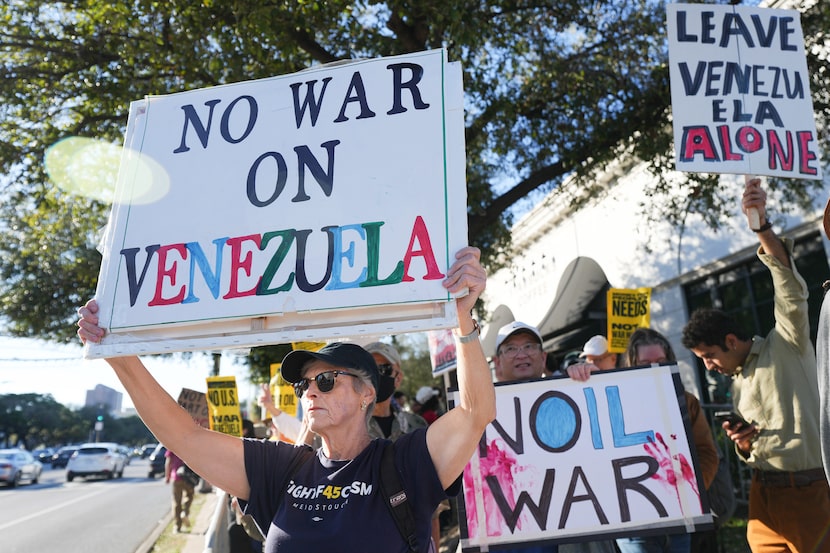
In an impassioned statement, Dallas resident Finnegan Motz remarked, “Having respect for the rule of law is the only thing that separates nations from despotic rogue states.” As the situation unfolds, the legitimacy of the U.S. government’s involvement in Venezuela is under scrutiny.
Adding fuel to the fire, critics are pointing to the recent actions surrounding former Honduran President Juan Orlando Hernández, who was convicted of drug smuggling but later pardoned by Trump. Analysts question the consistency of U.S. policy regarding foreign leaders accused of similar offenses.
The political landscape has further heated up, with some accusing the Biden administration of hypocrisy. Just before leaving office in January 2025, Biden’s team offered $25 million for information to arrest Maduro, and yet, now, they express outrage over his detention.
“The people of Venezuela were making their voices heard,” stated Thomas Urech, a Richardson resident. “Now, self-determination has been ripped away from their hands. A hostile foreign adversary has imposed itself.”
As discussions about accountability and rule of law gain traction, the anniversary of the January 6, 2021 Capitol riot looms large. Many are reflecting on the lessons learned from that day, further intertwining the current political atmosphere with calls for vigilance and remembrance.
Congressional leaders are now facing immense pressure to respond decisively. Advocates for justice assert that the American public deserves clarity and a thorough examination of the administration’s military engagements abroad.
The ramifications of these developments extend far beyond Venezuela, as they highlight the broader implications of U.S. foreign policy, the integrity of democratic processes, and the responsibilities of elected officials. As the situation remains fluid, citizens are urged to stay informed and engaged, as the potential for significant geopolitical shifts hangs in the balance.
What happens next will be crucial. Will Congress assert its authority, or will the current administration continue its controversial tactics unchallenged? The eyes of the world are watching closely as this urgent situation evolves.