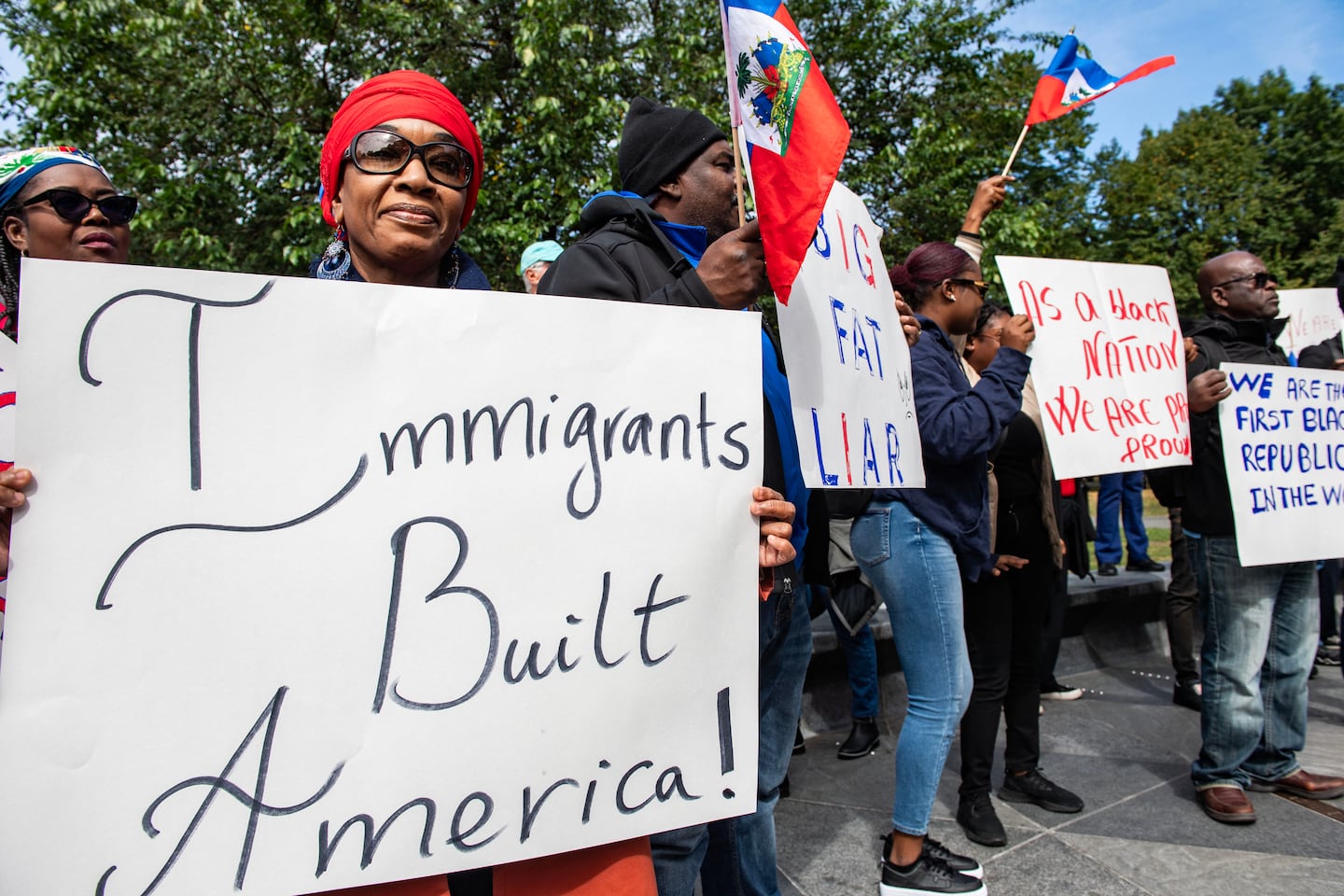
UPDATE: A federal judge has temporarily blocked the Trump administration’s attempt to end Temporary Protected Status (TPS) for approximately 45,000 Haitians living in Greater Boston. This urgent decision comes just hours before a planned revocation set for February 3, 2025. As uncertainty looms, advocates and affected workers breathe a sigh of relief while remaining anxious about the future.
Late Monday, a federal judge in Washington halted the administration’s move, stating that the deportation of TPS holders is not in the national interest. However, the Department of Homeland Security has announced plans to appeal to the U.S. Supreme Court, leaving many in limbo. Haitian immigrants have faced escalating anxiety, with many fearing job losses and separation from their families.
In Boston, home to the country’s third-largest Haitian community, the emotional impact of this ruling is palpable. John Randall, CEO of Amego, Inc., shared that his organization had prepared to terminate 24 Haitian employees due to the impending TPS expiration. Following the judge’s ruling, Randall quickly notified them that their jobs were safe, stating, “Everyone is in a holding pattern but they’re still employable and legal today.”
The tension surrounding TPS has led to widespread confusion and fear among Haitian workers. Nicole Albert, who runs the Gilbert Albert Community Center in Dorchester, noted a dramatic drop in attendance for English classes, from 200 students a week to just 40, as many fear deportation. “People were starting to hide, thinking, ‘I don’t want to get deported and then my kids stay behind,’” she explained.
The potential end of TPS is not just a humanitarian issue but a significant economic one. Public officials and immigrant rights advocates warn that losing these essential workers could devastate local businesses. “This is just a write-off of an entire section of our workforce,” Randall said, highlighting that many Haitian workers have been employed for over a decade.
Reports indicate that more than 100 TPS holders have already lost their jobs at Logan Airport and other local organizations amid the uncertainty. Christopher White, CEO of Road to Responsibility, which serves individuals with developmental disabilities, has seen a mass exodus of Haitian workers, forcing him to hire temporary staff and pay overtime, costing the organization $24,000 every two weeks. “These are good, hard-working people,” White emphasized, underlining the vital role these workers play in the community.
Dr. Karen Scanlan, whose severely autistic daughter relies on a Haitian caretaker, expressed her distress over the situation. “It’s just heartbreaking to me that she can’t work because of this,” she stated, highlighting the personal toll of the TPS uncertainty.
As the legal battle continues, Haitian immigrants remain caught in a web of fear and confusion. Many are considering fleeing to Canada or returning to Haiti, a country plagued by violence and instability. One TPS holder, who wished to remain anonymous, described the horrifying conditions that forced her to flee Haiti, stating, “I don’t have anywhere to go.”
This developing story underscores the urgent need for clarity and compassion as tens of thousands of families navigate this precarious situation. The fate of these workers hangs in the balance as the Supreme Court prepares to weigh in on the future of TPS. With the community watching closely, all eyes are on the next steps in this high-stakes legal drama.
Stay tuned for updates as this situation unfolds.