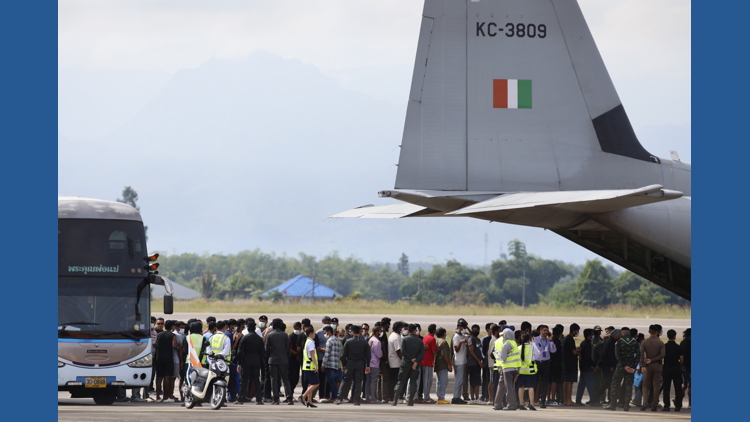
UPDATE: In a significant crackdown, the Myanmar military has reportedly shut down the notorious scam compound known as KK Park along the Thai-Myanmar border, leading to the escape of approximately 1,500 workers from various countries. This urgent development highlights the ongoing struggle against a burgeoning illegal industry that has ensnared tens of thousands in forced labor across Southeast Asia.
Victims, including a large number from India, China, the Philippines, and Vietnam, are being repatriated, with the first group of workers flown home by the Indian Air Force on Thursday, and more flights scheduled for next week. The Thai military has confirmed that troops demolished several structures within the compound, but civil society groups warn that parts of KK Park remain operational.
Scam centers like KK Park are proliferating in rural areas of Southeast Asia, often operating under the protection of local elites. These sprawling complexes house workers who are lured by promises of high salaries for office jobs but instead face harsh conditions, including confiscation of passports and physical punishments for underperformance.
The scope of this problem is staggering. A recent report from the United Nations Office on Drugs and Crime estimates that over 120,000 people in Myanmar and around 100,000 in Cambodia are trapped in forced labor linked to online scams. Despite government crackdowns, these operations have proven resilient, with new centers continuously emerging.
Scammers target individuals globally, employing advanced tactics including AI-powered translation tools to communicate in multiple languages. For example, a recent operation in the Philippines involved scammers posing as high-ranking officials from the state-owned China National Petroleum Corporation, deceiving victims into investing in fake oil futures.
In 2024 alone, Americans lost an estimated $10 billion to scams based in Southeast Asia, with one case involving a victim who lost $400,000 in cryptocurrency. The tactics vary widely, from fake investment schemes to online tasks requiring upfront payments. Scammers create a sense of urgency, pressuring targets to act quickly to avoid missing out.
Despite significant efforts by authorities to dismantle these networks and rescue victims, activists like Jay Kritiya, coordinator of the Civil Society Network for Victim Assistance in Human Trafficking, warn that without targeting the masterminds behind these operations, the cycle of exploitation will continue. “If we only rescue the victims, and don’t arrest anyone, especially the Chinese mafia and those transnational syndicates, then there will be no point,” Kritiya stated.
As the situation develops, the international community is urged to pay attention. The ramifications of these scams extend beyond Southeast Asia, affecting victims worldwide and highlighting the urgent need for comprehensive action to combat human trafficking and fraud. Authorities continue to monitor the situation, and more raids are anticipated as they strive to dismantle this illicit industry.