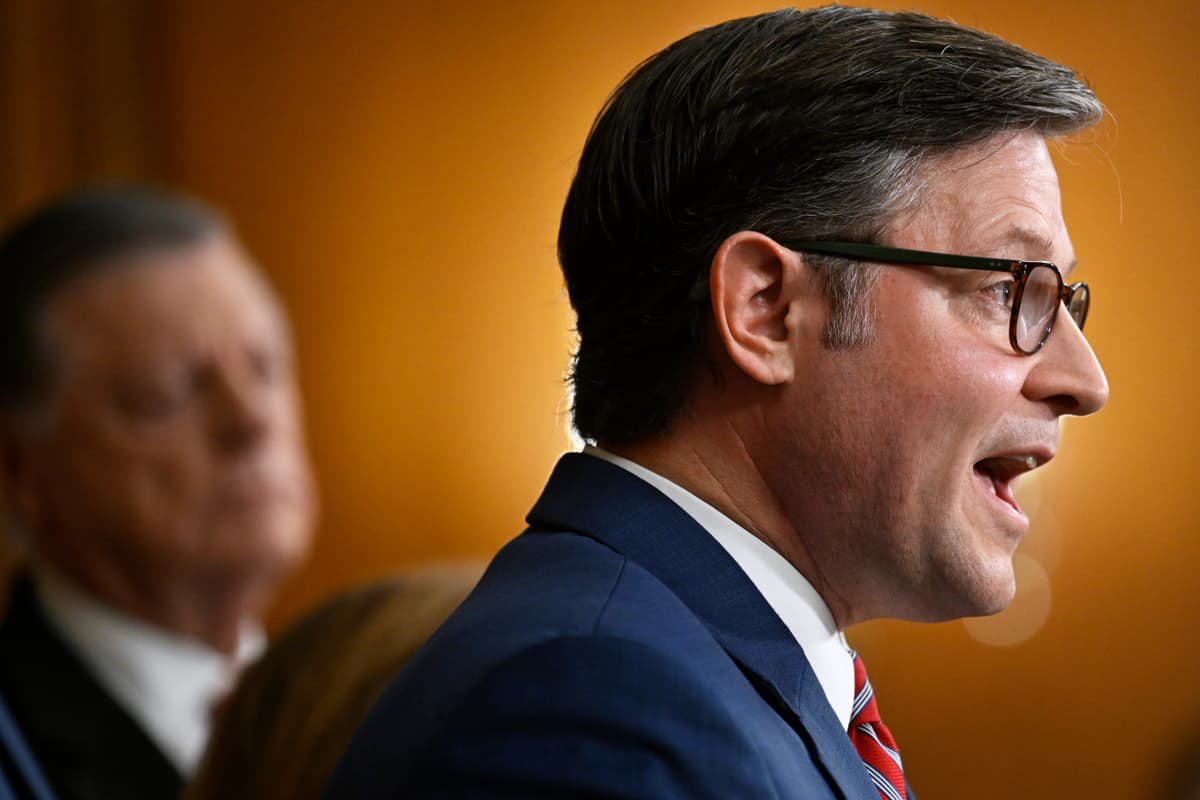
UPDATE: A catastrophic spike in health care costs looms over Washington as Congress struggles to address the issue, just weeks before enhanced tax credits under the Affordable Care Act expire on December 31. Speaker Mike Johnson and his colleagues have made little progress, leaving millions of Americans facing triple-digit percentage increases in their premiums.
As bipartisan efforts falter, it is increasingly clear that Congress may fail to act before the end-of-year deadline. Despite attempts by Democrats to leverage the recent government shutdown to gain traction on health care subsidies, a small group of lawmakers managed to re-open the government, but yielded little in terms of substantial progress on health care costs.
On Thursday, 35 House Republicans and Democrats gathered in the Capitol to advocate for a proposal that would extend tax credits for at least two more years while implementing critical reforms. Their plan aims to lower the income cap for subsidy eligibility and extend open enrollment until next spring. Congressman Mike Lawler emphasized the need for bipartisan support to effect real change, stating, “If you want to make lasting change in this country… it cannot be done without bipartisan support.”
The urgency is palpable as lawmakers face a looming deadline. “We have a responsibility before the end of the year to pass a bill that will address the issue of health care costs in this country,” Mr. Lawler declared. However, the House Freedom Caucus remains a significant hurdle, adamantly opposing any extension of the ACA subsidies. They argue that these tax credits were intended as temporary measures, which have inadvertently allowed wealthier Americans to qualify for government assistance.
Former President Trump has not provided clarity on these internal party divisions, stating he would engage with Democrats only after the government was re-opened. So far, there have been no substantial talks with the minority party, exacerbating frustrations. “Doing nothing is not an option,” Republican Congressman Kevin Kiley remarked, highlighting that 22 million people could face exorbitant health care costs without legislative action.
Critics point to the eight-week recess during the government shutdown as a missed opportunity for crafting a bipartisan solution. “This has not exactly been the finest hour for the U.S. House of Representatives,” Mr. Kiley noted, underscoring the need for immediate action.
With Congress heading for a vacation in just two weeks, the clock is ticking. Lawmakers are under increasing pressure to deliver a solution that could significantly impact health care affordability for millions. The next few days will be crucial in determining whether they can come together to address this urgent crisis.
As developments unfold, Americans are left watching closely, knowing their health care costs hang in the balance.