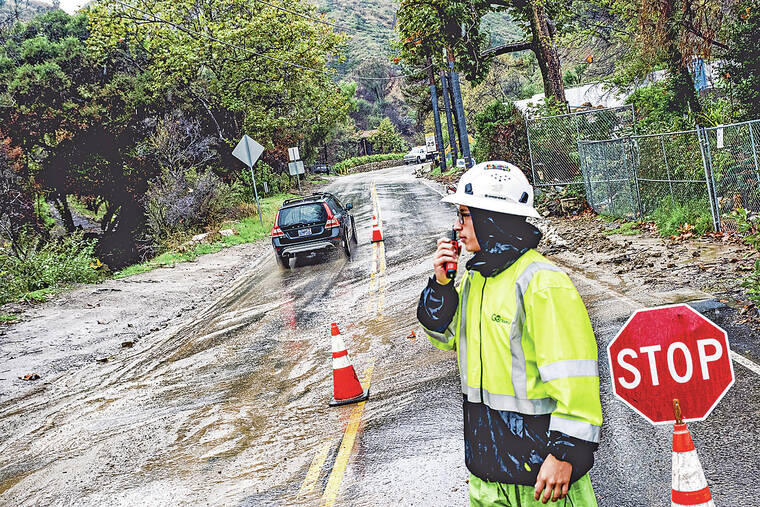
UPDATE: A powerful storm system has unleashed heavy rains across Southern California, prompting urgent evacuations and leading to at least two confirmed deaths. This severe weather, linked to an atmospheric river, has wreaked havoc since Thursday night, with the most intense rainfall occurring on Saturday.
As of Saturday afternoon, the National Weather Service reported impressive rainfall totals, including over 8 inches in some mountain regions of Santa Barbara County and more than 4 inches recorded in downtown Santa Barbara. Downtown Los Angeles saw nearly 2 inches of rain since Friday, which is more than double the city’s average November rainfall of 0.78 inches.
Officials have issued evacuation warnings for areas in Los Angeles County affected by recent wildfires, including regions scarred by the Palisades Fire. Residents in these areas are being urged to prepare for rapid evacuation as the risk of flash flooding and dangerous debris flows remains high.
The storm, which has stalled over the region, continues to draw moisture from the Pacific Ocean, increasing the likelihood of thunderstorms and strong winds throughout the evening. Flood warnings that were in effect expired at 2 p.m., but forecasters caution that additional bursts of rain could occur.
“The moisture will hit those mountains dead on,”
said Park Williams, a climate scientist at UCLA. He explained how the coastal mountains are perfectly positioned to amplify the storm’s impact, leading to significant rain and potential urban flooding.
Tragically, the storm has claimed lives. A father and his 5-year-old daughter were swept out to sea at Garrapata State Beach on Friday due to waves estimated at 15 to 20 feet. The Monterey County Sheriff’s Office confirmed the father’s death, while the child remains missing. Additionally, a 71-year-old man in Sutter County died after his vehicle was overwhelmed by floodwaters.
Reports of minor flooding have emerged across the region, with rocks obstructing canyon roads. Residents are advised to remain vigilant as conditions can change rapidly. The heightened risk of debris flows is particularly concerning in areas previously affected by wildfires, where vegetation loss has left the soil vulnerable.
As the storm continues to affect coastal regions between Orange and San Diego counties, authorities are monitoring the situation closely. Emergency responders are prepared for potential rescues and further evacuations as the weather system moves inland into southeastern California and southern Nevada.
The National Weather Service continues to provide updates, emphasizing the importance of staying informed about potential flash floods and hazardous conditions. Stay tuned for further developments as this urgent situation evolves.