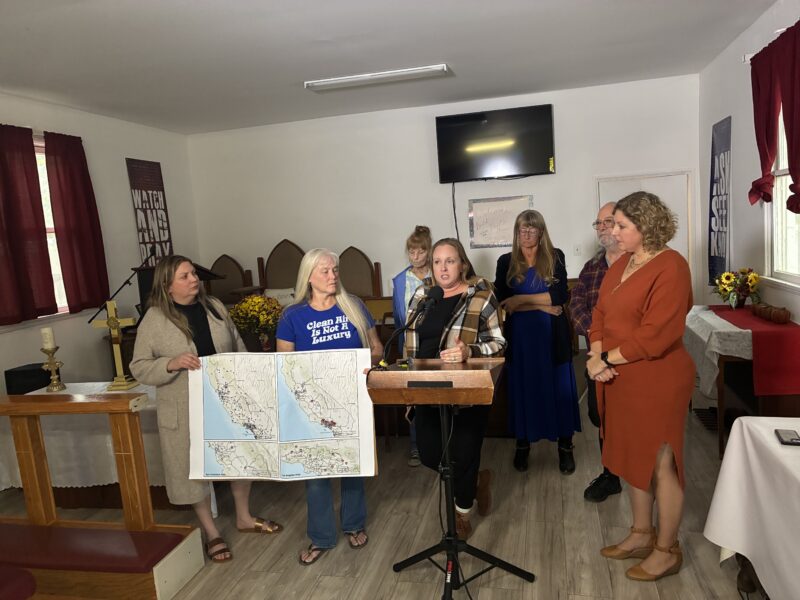
UPDATE: Assemblywoman Pilar Schiavo has confirmed alarming news regarding the Chiquita Canyon Landfill: a fire burning underground is projected to last for at least 20 years. During a press conference at the Castaic Community AME Church, Schiavo described the situation as a “literal dumpster fire,” revealing that the issue has tripled in size since it first emerged.
This urgent update comes as residents express growing concern about air quality and safety in their community. The landfill, located in the Santa Clarita Valley, has been plagued by what officials call an “elevated temperature landfill event,” where buried trash is incinerated at approximately 240 degrees.
Schiavo urged residents to engage with upcoming regulatory measures aimed at addressing the crisis. “We’re here to work towards real solutions at the California Air Resources Board,” she stated, emphasizing the need for transparency and community protection from the ongoing catastrophe.
Local residents shared personal accounts of how the landfill’s issues have disrupted their lives. Many believe that the proposed regulations could have prevented the current crisis. Jane Williams, executive director of California Communities Against Toxics, highlighted that the landfill’s problems stem from a malfunctioning methane-extraction system, exacerbated by outdated regulations.
The Chiquita Canyon Landfill is one of 11 landfills in California experiencing elevated temperatures for over three years. Williams pointed to known combustible materials, such as metallic dross and wildfire ash, as potential contributors to the fires.
“Without updated regulations for landfill emissions, we can expect these incidents to continue,” Williams warned. She criticized current EPA policies that allow landfills to exceed temperature limits, likening it to “hot-rodding” a vehicle in a school zone.
In response to the escalating crisis, Schiavo has reintroduced Assembly Bill 28, aimed at tightening landfill regulations. Additionally, a public hearing is scheduled for 9 a.m. Thursday, where residents can voice their concerns regarding methane emissions and air quality. Information on how to participate online will be available soon.
The California Air Resources Board estimates that increased gas capture could lead to a reduction of 17,000 metric tons of methane emissions annually, translating to avoided social costs ranging from $56 million to $178 million over a three-year period.
As the situation develops, community members are encouraged to submit electronic comments to ensure their voices are heard. The upcoming meeting is a crucial opportunity for residents who feel the impact of the landfill’s problems.
This urgent call to action emphasizes the need for immediate regulatory changes to prevent future disasters like the one unfolding at Chiquita Canyon. Residents and officials alike are grappling with the pressing challenge of restoring safety and health to their community as they navigate this ongoing crisis.
Stay informed and engaged as more details emerge.