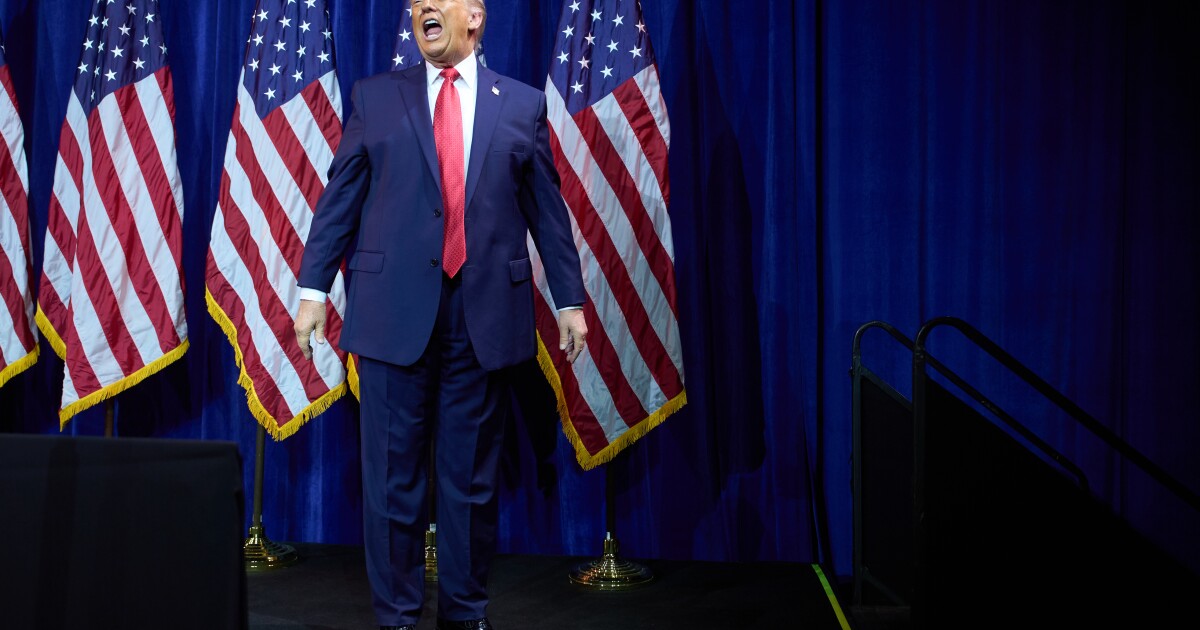
URGENT UPDATE: A critical vote on the War Powers Resolution is scheduled for Thursday in the Senate, aiming to limit President Donald Trump‘s military authority regarding Venezuela. This bipartisan initiative comes as concerns mount over potential U.S. military actions in Venezuela and beyond.
The resolution seeks to prohibit President Trump from taking further military action in Venezuela without explicit congressional authorization. The measure, championed by Democratic Senator Tim Kaine of Virginia and Republican Senator Rand Paul of Kentucky, could reshape U.S. military engagement in the region if it passes both chambers of Congress. However, uncertainty remains about whether it has sufficient support to become law, especially after a similar measure failed late last year.
Lawmakers are also eyeing future votes to restrict presidential military powers in other nations. Recent comments from the Trump administration hint at possible military involvement not just in Venezuela, but also in Colombia, Cuba, and even Iran, indicating a broadening scope for U.S. military operations.
Experts highlight a troubling trend of presidential overreach regarding military actions. David Janovsky, a researcher at the Project On Government Oversight, noted, “There is a longstanding institutional reluctance by Congress to not get too involved in this.” He pointed out that while Article One of the Constitution grants Congress the power to declare war, it has often hesitated to enforce this authority, allowing presidents from both parties to use military force without prior approval.
Despite President Trump asserting that the United States is not at war with Venezuela, he maintains that informing Congress of every military plan could risk leaks. However, any congressional limitations on military force deployment would significantly influence U.S. strategy in Venezuela and potentially alter broader regional dynamics.
White House adviser Stephen Miller emphasized the importance of U.S. military presence off the coast of Venezuela, claiming, “By definition we are in charge because we have the United States military stationed outside the country. We set the terms and conditions.”
As the situation develops, all eyes are on the Senate, where the outcome of this vote could redefine U.S. military policy in Latin America and reshape the balance of power between the executive and legislative branches. Stay tuned for updates as this story unfolds.