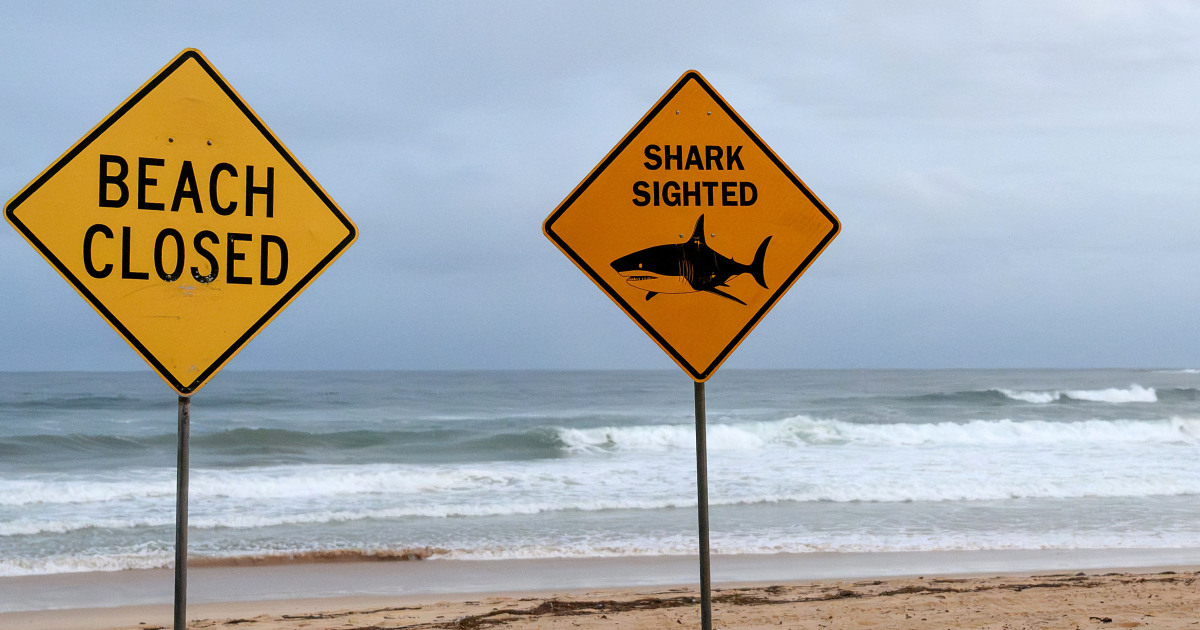
Australian authorities have closed numerous beaches along the east coast due to a surge in shark attacks, coinciding with an investigation into the death of a woman possibly killed by dingoes. The incident has raised safety concerns as officials work to address the dual threats to beachgoers during the height of summer.
A 19-year-old Canadian woman, whose identity has not been disclosed, was found dead on K’gari, also known as Fraser Island, a popular tourist destination in Queensland. Police received reports early on January 8, 2024, and discovered her body near the Maheno shipwreck, a well-known site for visitors. According to Police Inspector Paul Algie, the body was surrounded by a pack of about ten dingoes when discovered.
Inspector Algie confirmed to reporters, “I can confirm there were markings on her body consistent with having been touched and interfered with by the dingoes.” While the exact cause of death has yet to be determined, authorities have not ruled out the possibility that she may have drowned while swimming. Algie noted that preliminary results should be available by January 10, 2024.
“She was a young, healthy Canadian woman who was enjoying the trip of a lifetime,” Algie emphasized, describing the tragic circumstances surrounding her death. He urged the public to refrain from approaching dingoes, which are a protected native species in K’gari’s World Heritage-listed national park. Although attacks on humans are rare, the incident points to the potential dangers of wildlife interactions. In 2023, a group of dingoes had nearly attacked a jogger in the same region.
Simultaneously, the threat from sharks has prompted widespread beach closures across New South Wales. Following four shark attacks over a two-day period, authorities shut down beaches to safeguard public safety. Two individuals remain in critical condition after these incidents.
In Port Macquarie, a shark attack on January 7, 2024, left a 39-year-old surfer with minor injuries. Local news reported that Steve Pearce, chief executive of Surf Life Saving New South Wales, advised beachgoers to opt for swimming pools instead. “At this stage, we’re advising that the beaches are unsafe,” Pearce stated, attributing increased shark activity to murky waters caused by recent heavy rains.
In Sydney’s Northern Beaches area, another surfer suffered serious leg injuries on January 8, 2024, after being bitten at North Steyne Beach. This individual, also in his 20s, is in critical condition. Northern Beaches Mayor Sue Heins expressed her shock over the recurrence of shark attacks, particularly given the recent loss of local surfer Mercury Psillakis to a great white shark in September 2023.
In a separate incident earlier on January 8, a boy narrowly escaped injury when a shark bit his surfboard at Dee Why Beach. All nearby beaches are closed through at least January 10, 2024.
The recent spate of attacks has drawn attention to the risks associated with swimming in Australian waters, especially during the summer months when beaches are typically crowded with locals and tourists. While shark attacks are infrequent, averaging around 20 incidents that result in injury each year, the number of fatalities remains relatively low, with fewer than three deaths annually, according to the Australian Shark Attack File.
As officials continue their investigations, both incidents highlight the need for heightened awareness and safety measures for those enjoying Australia’s beautiful beaches.