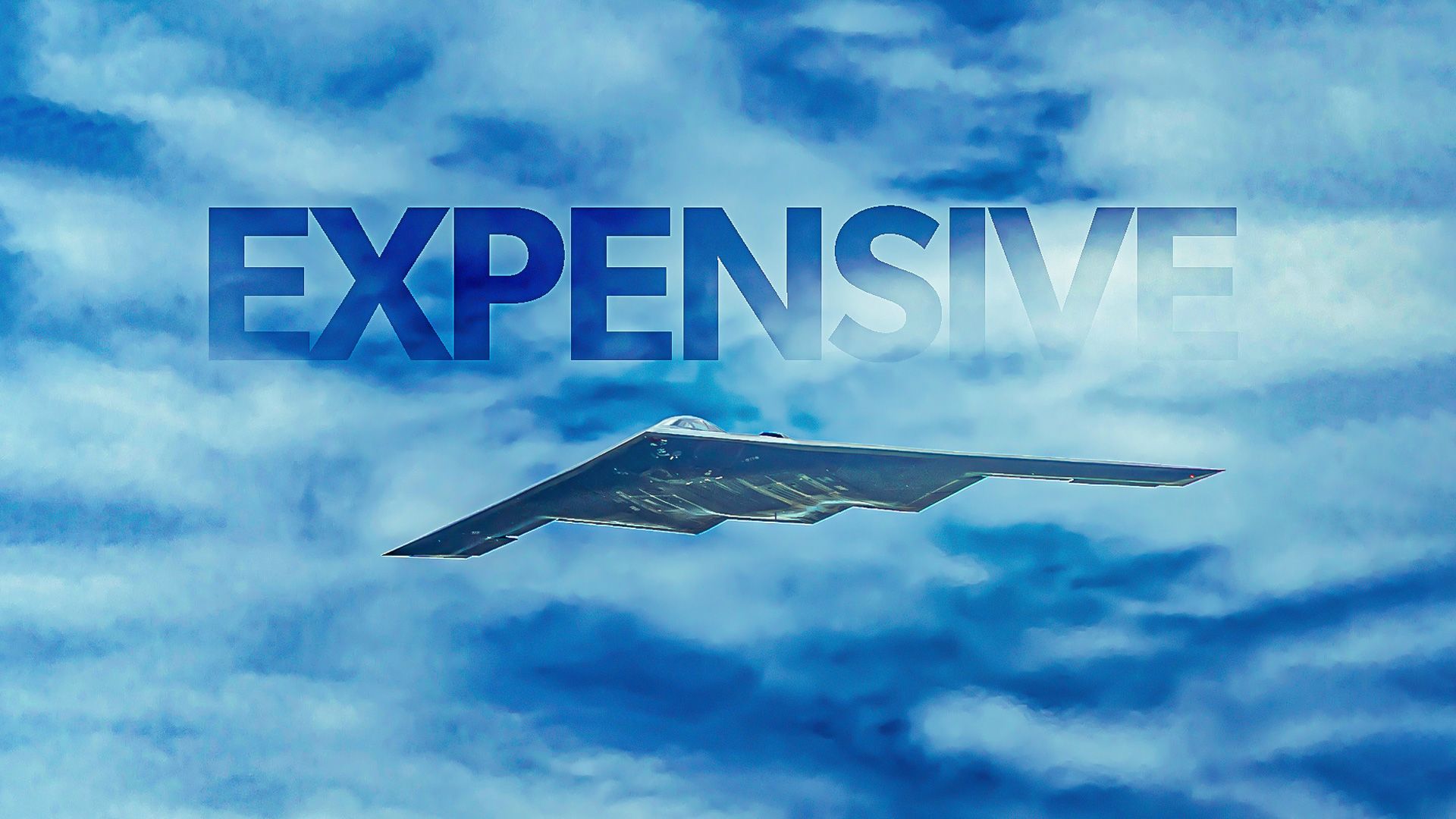
The operating costs of the Northrop Grumman B-2 Spirit bomber are prompting discussions about its early retirement from service. Acquired by the United States Air Force, the B-2 is renowned for being the most expensive aircraft ever procured, with a staggering price tag of over $2 billion per unit. While its expensive production is well-documented, less attention has been given to its ongoing maintenance costs, which are significantly driving its operational expenses.
Originally intended to replace the Boeing B-52 Stratofortress, the B-2 Spirit is now facing a retirement timeline that may see the older bomber outlast its more modern counterpart. As the US shifts focus to the forthcoming sixth-generation B-21 Raider, analysts note that the B-52 is poised to remain in service alongside it for decades.
One of the primary factors contributing to the B-2’s high maintenance costs is the ratio of maintenance hours to flight hours. Reports indicate that for every hour the B-2 flies, it requires approximately 50 to 60 hours of maintenance. This extensive upkeep is a testament to the aircraft’s advanced, yet sensitive, technology. The B-2 suffered its only airframe loss due to a mishap involving water damage to an air data sensor, underscoring its vulnerability.
Challenges of Maintenance and Production
The development and procurement of the B-2 Spirit faced significant obstacles from the outset. The program’s short production run meant that fixed costs were distributed over a limited number of units, exacerbating its already high price. The B-2’s production was curtailed following the end of the Cold War, which eliminated potential economies of scale. This scenario often leads to what is called a “death spiral” in defense aerospace, where reduced production quantities lead to higher costs per unit, further diminishing demand.
The B-2’s limited production run also resulted in a tiny pool of skilled labor and suppliers, which escalates maintenance expenses. The need for specialized training and a constrained supply chain means that spare parts cannot be ordered in bulk, driving up costs even further.
The aircraft is housed at Whiteman Air Force Base, where it is kept in climate-controlled hangars to protect its radar-absorbent material (RAM) from environmental degradation. This maintenance requirement, along with the aircraft’s sophisticated technology, results in a high operational footprint.
Complex Systems and Long Maintenance Cycles
The B-2 Spirit is equipped with advanced capabilities that support its role as a stealth bomber, including a specialized radar system designed to evade detection. However, these advanced systems introduce complexity into maintenance processes. The aircraft has more than 130 specialized onboard systems, each requiring careful oversight and extensive manual checks.
Every seven years, each B-2 undergoes Programmed Depot Maintenance (PDM), a process that can take over 400 days. This lengthy maintenance cycle involves a complete overhaul of the aircraft, during which it is stripped down to its frame and rebuilt with new parts. These extensive requirements contribute to the overall cost of operating the B-2, with estimates suggesting that flight costs can range from $130,000 to $200,000 per hour.
The B-2’s design, which lacks traditional stabilizers, relies heavily on computer systems to maintain stability during flight. Its passive navigation unit, an advanced astro-inertial navigation system, enables the aircraft to operate without reliance on electronic signals, providing a crucial backup in case of satellite or GPS failure.
As the US military anticipates the roll-out of the B-21 Raider, strategic discussions are shifting towards ensuring a sustainable mix of high-tech and traditional bomber capabilities. The B-21 is designed to avoid the pitfalls faced by the B-2, with a commitment to produce at least 100 units, thus creating a more viable operational framework.
In contrast, the B-52 remains a cost-effective solution for long-range strike missions, particularly with recent upgrades that include new engines and radar systems. By maintaining high mission-capable rates and lower operational costs, the B-52 will continue to serve as a reliable backbone for US air power.
As the B-2 Spirit nears the end of its operational life, its legacy will serve as a lesson in the complexities of modern military procurement and maintenance, highlighting the challenges of balancing advanced technology with practical operational sustainability.