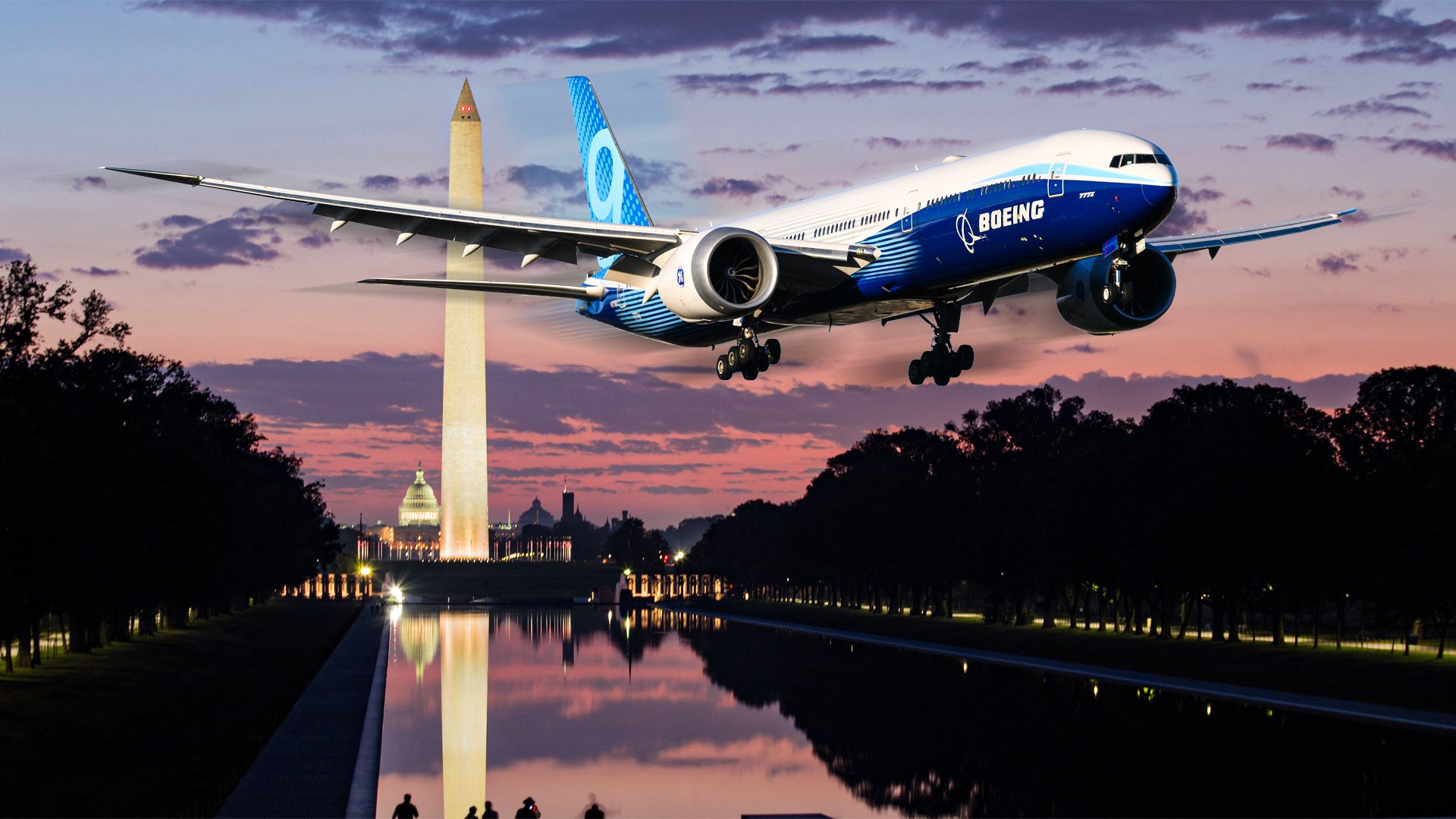
Boeing is grappling with significant certification challenges for its 777X aircraft, raising concerns across the aviation sector. After more than a decade of development, the long-delayed 777X is still undergoing testing, and each technical issue that arises adds uncertainty to its expected entry into service. With stakeholders including the US aviation industry, regulators, and airline customers closely monitoring the situation, the pressure is mounting for Boeing to navigate these hurdles effectively.
Overview of the Boeing 777X
The Boeing 777X represents the latest advancement in the company’s 777 widebody family, aiming to be the largest and most efficient twin-engine aircraft ever produced. The program includes two primary passenger variants, the 777-8 and the larger 777-9, along with a freighter version, the 777-8F. Drawing on the success of earlier 777 models, the 777X incorporates cutting-edge technologies from the Boeing 787.
A standout feature of the aircraft is its composite wing, which is significantly longer than previous 777 variants. To facilitate compatibility with existing airport gates, Boeing has integrated folding wingtips. Additionally, the aircraft is powered by the General Electric GE9X engines, the largest commercial aircraft engines ever created, designed specifically for this model. These engines promise substantial improvements in fuel efficiency and operating costs compared to older models.
Inside the cabin, Boeing has included enhancements inspired by the 787, such as larger windows, improved humidity control, and upgraded lighting. Airlines are expected to utilize the 777X primarily on high-capacity long-haul routes where efficiency and range are paramount. Despite these advancements, the aircraft’s journey to commercial service has not been straightforward.
Initially expected to enter service in 2020, the timeline has been pushed back, with the most recent estimates suggesting a commercial debut in March 2027—approximately seven years later than originally planned. Currently, Boeing has secured over 600 orders for the 777X from airlines worldwide, indicating robust long-term demand for large, efficient widebody aircraft. The largest order comes from Emirates, which has committed to 270 aircraft.
Certification Process and Regulatory Challenges
The US is particularly concerned about potential bottlenecks in the certification process, especially following the overhaul of aviation regulations after the Boeing 737 MAX crisis. In response to fatal accidents in 2018 and 2019, the US government introduced the Aircraft Certification Reform and Accountability Act in 2020, implementing stringent changes to the certification process. These reforms necessitate deeper safety analyses and increased regulatory scrutiny for aircraft derived from existing models, impacting the 777X.
The Federal Aviation Administration (FAA) has shifted towards a more rigorous review process, which includes a reduced reliance on delegated authority previously granted to manufacturers. Although these reforms aim to enhance safety and transparency, they significantly extend the certification timeline and increase the complexity of obtaining approval. For Boeing, this means navigating a far stricter regulatory environment compared to earlier aircraft programs.
Certification is not a single milestone but a multi-step process involving several stages before an aircraft can transport passengers. A critical phase for the 777X is the Type Inspection Authorization (TIA), which allows FAA pilots and engineers to engage directly in flight testing. Once TIA is granted, the aircraft enters the final certification testing phase, where regulators verify safety and performance requirements under real-world conditions.
Unfortunately, the 777X program has faced numerous challenges, including unresolved design or mechanical issues that can delay the TIA phase. The introduction of new engines, structural modifications, and advanced systems means regulators must thoroughly evaluate how these components interact, leading to a potentially prolonged process.
Emerging technical issues have further complicated the situation. Boeing has encountered significant challenges during testing, necessitating flight test pauses. For example, cracks were discovered in a structural link connecting the engine to the wing, leading to a temporary grounding of test aircraft. Recently, concerns have also emerged regarding components related to the aircraft’s engines, prompting further analysis and potential design changes.
Each of these issues, while seemingly minor, can significantly impact the certification timeline. When engineers alter a component, additional tests and documentation are often required, delaying progress and creating a backlog of work.
Economic and Strategic Implications
The implications of these certification delays extend beyond technical concerns; they carry significant economic and strategic weight for the US. Boeing is a vital exporter and a cornerstone of the aerospace industry, with widebody aircraft like the 777X representing high-value products that support thousands of jobs across manufacturing and engineering sectors.
Delays in certification can have cascading effects throughout the industry. Major airlines, including long-standing Boeing customers such as All Nippon Airways and Singapore Airlines, have ordered the 777X to replace aging fleets and expand capacity on long-haul routes. Each delay forces these airlines to reevaluate their fleet strategies, potentially extending the life of older aircraft.
Moreover, Boeing faces intense competition from Airbus, which has already established a foothold in the long-haul market with its A350 family. Prolonged delays for the 777X could further disadvantage Boeing in the widebody segment, potentially allowing Airbus to capture additional market share.
As Boeing continues to advance its testing and production preparations, the coming years will be critical. Navigating the complex certification process will determine whether the company can finally bring its next-generation widebody aircraft into commercial service. The stakes are high, given the years of delays and the billions of dollars in additional costs already incurred. The aviation world will be watching closely as Boeing strives to overcome these hurdles.