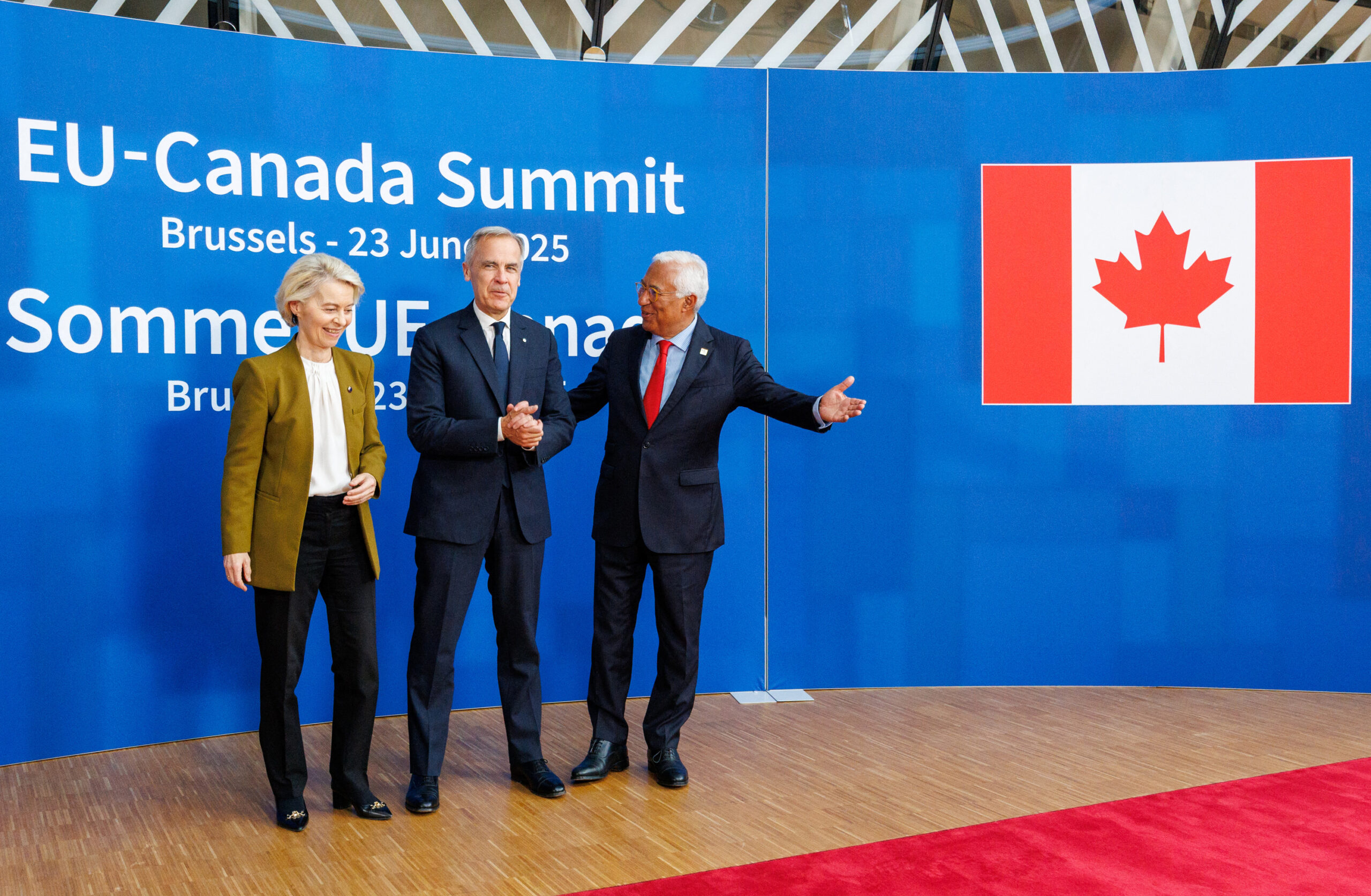
Canada has officially become the first non-European Union country to participate in the EU’s Security Action for Europe (SAFE) program, an initiative designed to strengthen military capabilities across the bloc. Prime Minister Mark Carney announced the agreement this week, highlighting the potential financial benefits for Canadian defense procurement.
The SAFE program, which allocates €150 billion for military procurement loans, aims to enhance readiness and collaborative efforts among member states. Carney emphasized that joining SAFE will provide “billions of dollars in potential defense opportunities for Canadian businesses,” while attracting new suppliers for the Canadian Armed Forces.
Details of Canada’s Involvement in SAFE
Canada is currently assessing its next-generation fighter jet procurement strategy. The country has already committed funds for 16 initial F-35 aircraft, but it is also considering the addition of the Swedish-made Gripen to its fleet. The government’s collaboration with the EU under the SAFE initiative could play a significant role in shaping these defense acquisitions.
While the specifics of the arrangement remain to be finalized, Ottawa and the EU are working on a bilateral agreement that may allow Canada to bypass certain eligibility requirements. According to SAFE regulations, no more than 35% of a project’s component costs can come from outside the EU, the European Economic Area, or Ukraine in order to qualify for funding. However, countries can negotiate access through a financial contribution.
The exact financial commitment from Canada has not yet been disclosed, raising questions about whether it will be a one-time payment or linked to ongoing procurement efforts. Last month, similar negotiations with the United Kingdom were stalled due to disagreements over the size of the financial commitment, which the EU had proposed to be between €4 billion and €6.5 billion. The U.K. was willing to contribute only €200 million to €300 million.
Exploring Defense Opportunities
As Canada pursues substantial procurement goals, including next-generation fighter jets and conventional submarines, experts believe SAFE could also fund various defense projects. Roger Hilton, a Canadian defense fellow at the think tank GLOBSEC, anticipates funding may extend to maritime domain awareness systems, drones, and anti-submarine warfare platforms.
SAFE projects typically require participation from at least two partners, which could involve two EU member states, one member state and Ukraine, or an EFTA/EEA nation. Hilton posits that Canada is likely to collaborate with European nations that share overlapping strategic interests, particularly regarding Arctic security and North Atlantic defense.
He noted that Canada may gravitate towards countries with robust aerospace and naval industries, such as France, Germany, Italy, Sweden, and Spain. These nations possess the industrial capacity and design authority that are integral to the SAFE consortium model.
As negotiations continue, the implications of Canada’s participation in SAFE could reshape its military procurement landscape and enhance its defense capabilities in collaboration with European partners.