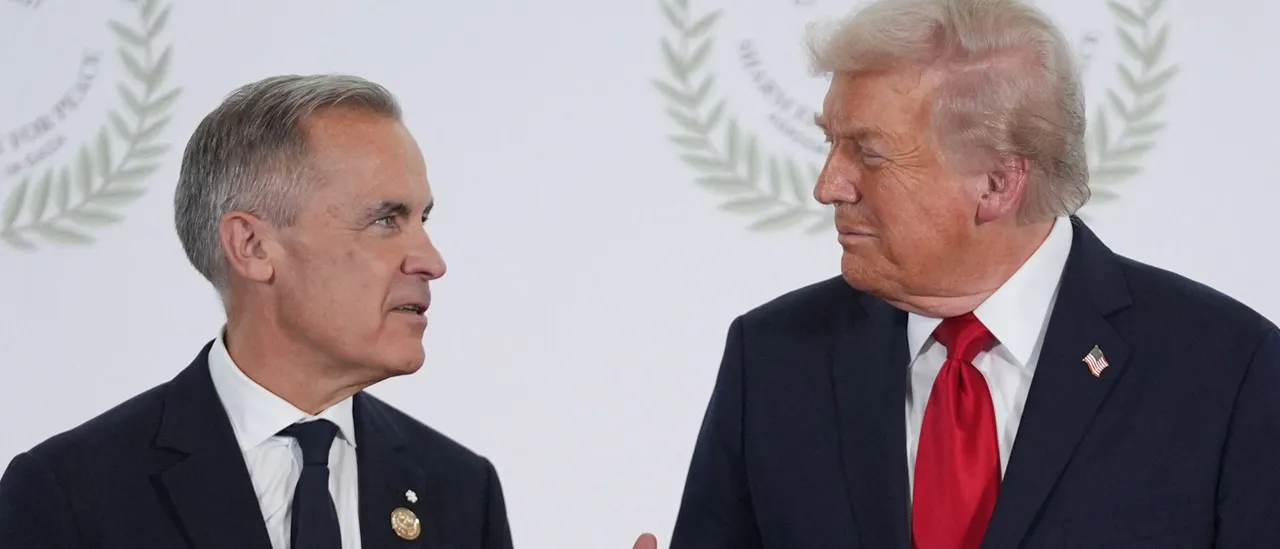
Canadian Prime Minister Mark Carney firmly rejected U.S. President Donald Trump’s proposal to acquire Greenland, asserting that the future of the Arctic territory should be determined by Greenland and Denmark. Carney made these statements during a diplomatic visit to China on January 16, 2026, where he called on NATO allies to uphold their commitments to international sovereignty and security.
Speaking at a press conference in Beijing, Carney emphasized, “The future of Greenland is a decision for Greenland and for the Kingdom of Denmark.” His comments came after he engaged in discussions with Chinese President Xi Jinping, where he also highlighted Canada’s unwavering support for Danish and Greenlandic sovereignty.
Trump’s administration has intensified its interest in Greenland recently, arguing that the territory is crucial for U.S. security interests. The White House indicated that various options are under consideration, including the potential use of military resources. When questioned about the possibility of acquiring Greenland “by force,” Trump denied making such claims, stating, “No, you’re saying that. I didn’t say it.”
During his remarks, Carney reiterated Canada’s strong commitment to NATO, referencing Articles 2 and 5 of the treaty, which promote peaceful international relations and affirm that an attack on one member is an attack on all. The Canadian Prime Minister’s stance contrasts sharply with Trump’s framing of the issue, which positions Greenland as a strategic counter to perceived threats from Russia and China. Despite these concerns, Nordic leaders have downplayed the notion of an immediate threat from either nation, a sentiment echoed by Moscow.
Canada’s Strategic Partnership with China
Throughout his visit, Carney expressed a desire to strengthen Canada’s ties with China, declaring it an opportunity to forge a new strategic partnership. He stated that the world has changed significantly since the last visit by a Canadian Prime Minister nearly a decade ago, and the partnership with China is critical for Canada’s future.
In conjunction with this visit, Canada and China announced a wide-ranging trade agreement. This deal includes a significant reduction of tariffs on Canadian canola seed by 70% and a drop in tariffs on Canadian seafood exports. The agreement also facilitates the entry of Chinese electric vehicles into the Canadian market, marking a pivotal moment for bilateral trade.
Carney articulated that Canada is committed to diversifying its trade partnerships, acknowledging China as the world’s second-largest economy and a vital source of opportunities for Canadian workers. He noted, “Canada’s new government is working with urgency and determination to catalyse massive new levels of investment.”
When asked to clarify his earlier remarks about a “new world order,” Carney explained that the current multilateral system is facing challenges. He stated, “The multilateral system that has been developing is being eroded. So the question is, what gets built in that place?” This reflects a broader recognition of shifting global dynamics and the need for countries to adapt accordingly.
As the discussions with Xi concluded, Carney emphasized the importance of collaborative efforts among nations. He noted that while countries may not agree on every issue, like-minded coalitions can form to address shared challenges.
The unfolding geopolitical landscape, particularly in relation to Greenland and broader international relations, underscores the complexities faced by leaders on the world stage. Carney’s clear stance on Greenland, alongside his efforts to strengthen Canada-China relations, reflect a strategic approach to navigating these challenges.