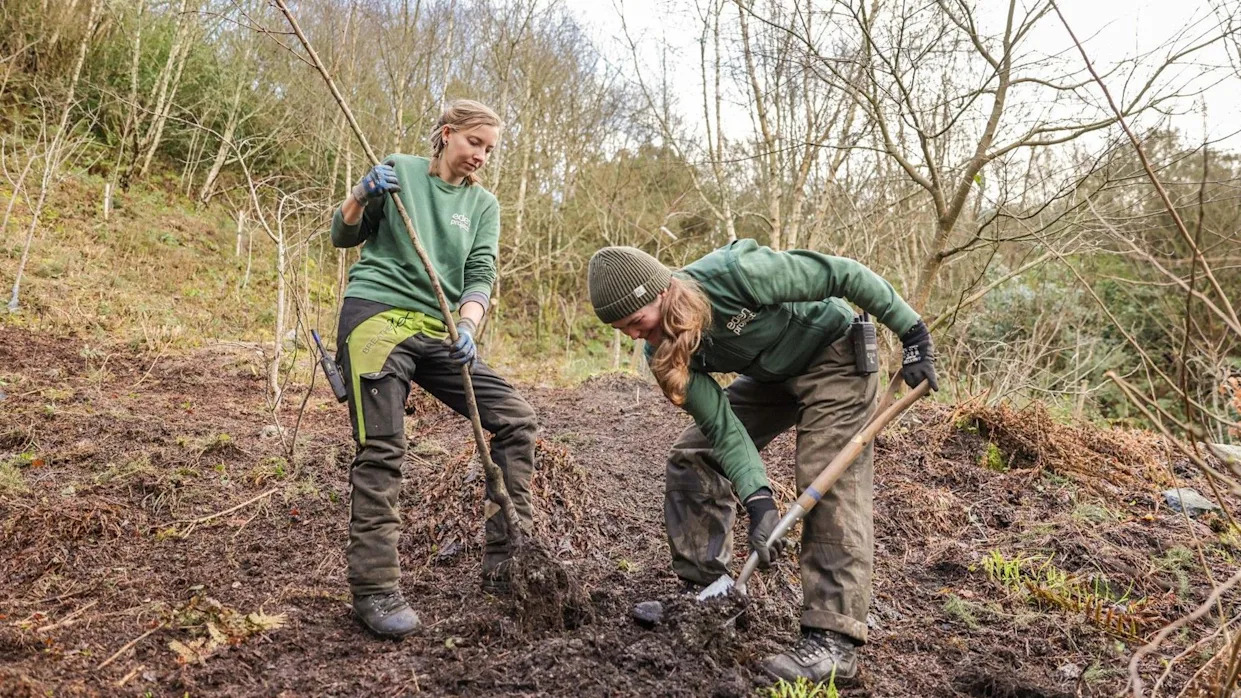
Dozens of cherry blossom trees have been planted at the Eden Project in Cornwall, marking a celebration of the enduring friendship between Japan and the United Kingdom. As part of the Sakura Cherry Tree Project, the Eden Project has introduced 50 cherry trees into its Japanese Garden, a project initiated in 2017. These trees are intended to symbolize cultural connections and the importance of plants in global heritage.
The newly planted cherry trees consist of three distinct varieties, each showcasing unique seasonal colors. According to Julie Kendall, the Eden Project’s outdoor horticulture manager, these trees will serve as “a living reminder of the enduring friendship between Japan and the UK for generations to come.” She emphasized the trees’ role in illustrating humanity’s reliance on plants and their rich cultural and historical significance.
Cherry blossoms hold profound cultural meaning in Japan, often representing the fleeting nature of life and beauty. The seedlings planted at the Eden Project are expected to take between three and five years to establish fully. The first to bloom will be the Prunus x yedoensis, also known as the Yoshino cherry. This variety is the most commonly planted cherry in Japan and is known for its lightly fragrant, pale pink flowers that transition to pure white blossoms by late March.
The Eden Project has also included the Prunus ‘Tai-haku’, or great white cherry, which is a rarer type typically found only in specialty collections. This particular variety was saved from extinction in the early 20th century by a single tree discovered in Sussex, which was later reintroduced to Japan in 1932. Additionally, the Prunus ‘Beni-yutaka’ variety will add to the garden’s springtime beauty with its soft pink blossoms, which typically appear in mid-to-late April.
The planting of these cherry trees not only enhances the Eden Project’s landscape but also fosters an appreciation for the cultural links between the UK and Japan. The initiative reflects a broader commitment to education about biodiversity and the importance of plant conservation.
Through this project, the Eden Project continues to engage visitors by providing a living testament to the shared history and friendship between these two nations, promising a future of beauty and connection that will flourish for years to come.