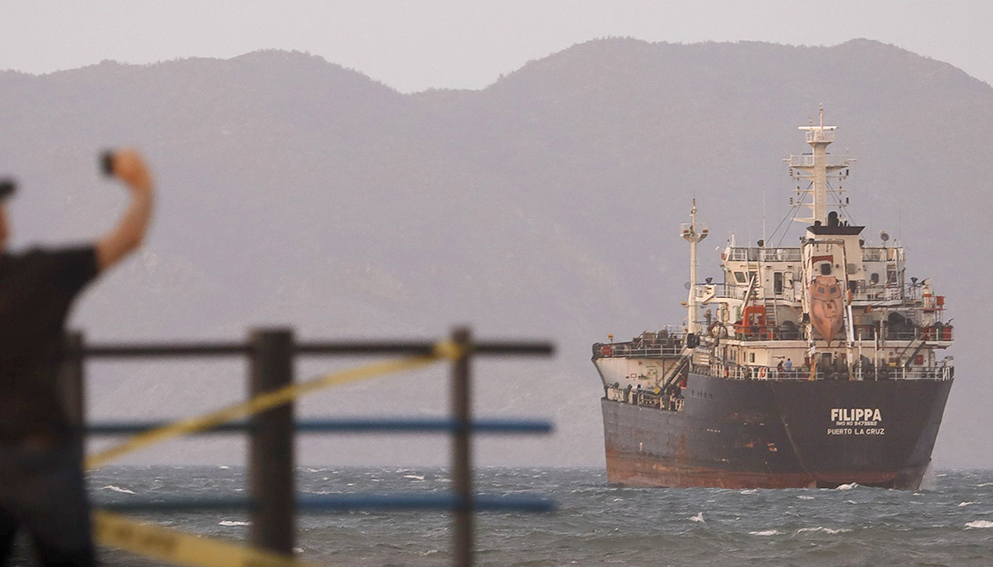
China has condemned the United States for its recent seizure of oil tankers off the coast of Venezuela, signaling its support for the Venezuelan government amid rising tensions with Washington. The U.S. actions are part of a broader strategy to tighten the blockade on Venezuelan oil exports, which the Trump administration views as a way to undermine the economic foundation of President Nicolás Maduro‘s government.
During a press briefing in Beijing on October 23, 2023, Lin Jian, spokesman for the Chinese Foreign Ministry, stated, “The U.S. practice of arbitrarily seizing other countries’ vessels grossly violates international law.” His remarks reflect China’s firm stance against actions perceived as infringing on national sovereignty. Lin emphasized that China opposes any acts of unilateralism or coercive measures that threaten the security and independence of other nations.
The U.S. has intensified its efforts to target Venezuelan oil shipments, reportedly pursuing a third oil tanker in this latest operation. The intent is to disrupt the flow of oil from Venezuela, which is a critical economic lifeline for the country, largely controlled by state-owned Petróleos de Venezuela SA. This company primarily exports its oil to China, often utilizing older vessels known as dark-fleet tankers. These ships, which have unclear ownership, facilitate the transportation of sanctioned oil from Venezuela, as well as from countries like Iran and Russia.
Lin further asserted that “Venezuela has the right to independently develop mutually beneficial cooperation with other countries,” reinforcing Beijing’s support for Caracas in its pursuit of economic partnerships. This backdrop of escalating diplomatic friction coincides with ongoing efforts by the U.S. to isolate the Maduro government and restrict its access to international markets.
China’s condemnation of the U.S. actions underscores the broader geopolitical implications of the situation. As the U.S. seeks to enforce its sanctions, the support from China not only highlights the complexities of international law but also reflects the shifting alliances in global energy markets. The tensions between these two nations could have significant repercussions for regional stability in Latin America and beyond, as both sides remain steadfast in their respective positions.
As the situation develops, the potential for an increased economic confrontation between the U.S. and Venezuela, with China firmly in the corner of Caracas, raises questions about the future of international relations in this context. The stakes are high, and the implications of these actions extend beyond oil, affecting diplomatic ties and trade relations across multiple fronts.