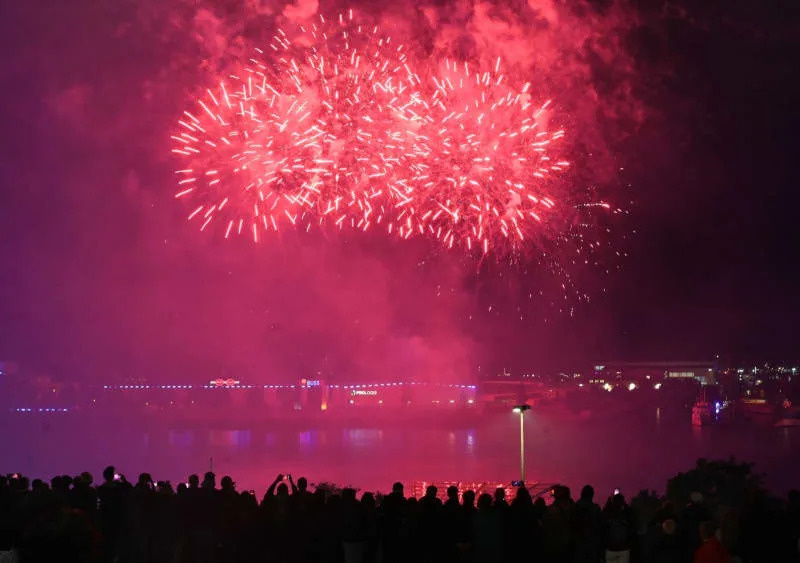
Demand for fireworks in Germany is on the rise this year, with major manufacturers reporting increased availability despite ongoing criticism of the industry. According to WECO, the country’s largest fireworks producer, the volume of rockets, firecrackers, and other pyrotechnics in stores is about 10% higher than last year. Rival company COMET has also noted a moderate increase in supply, a trend that aligns with the expectations of the German Association of the Pyrotechnics Industry, which foresees higher availability across the sector.
Fireworks are permitted for sale in Germany from December 29 to 31, and unsold items can be returned to manufacturers. Notably, WECO reported a lower-than-expected return rate last year, indicating strong consumer interest. The company, based in Eitorf and Kiel, employs around 260 people and generates a turnover of over €136 million (approximately $160 million) in the 2023-24 financial year. Despite being the largest fireworks manufacturer in Germany, WECO produces only 15% of its products domestically, with the remainder sourced from China.
Mixed Reactions to Fireworks Celebrations
While many Germans eagerly anticipate New Year’s Eve celebrations marked by colorful displays, others voice strong concerns. Animal welfare and environmental groups highlight the distress fireworks cause to wildlife, particularly birds, which can deplete vital energy reserves during winter. In urban areas like Berlin, New Year’s Eve festivities have been likened to scenes from a war zone due to the noise and debris generated.
The GdP police union has joined the call for a fireworks ban, citing an increase in attacks on officers involving fireworks. This growing tension has led to disputes among regional governments regarding potential restrictions. Recently, a court overturned a ban on private fireworks displays on the North Sea island of Föhr, leaving many to question the future of pyrotechnics in Germany.
Klaus Gotzen, head of the pyrotechnics sector association, noted a shift towards combined fireworks products. These allow consumers to ignite a single fuse that triggers a series of fireworks, creating extended displays lasting several minutes.
Industry Perspective on Fireworks Demand
Despite the criticisms, WECO’s head of sales, Oliver Gerstmeier, interprets the rising demand as an indication that many Germans appreciate the tradition of welcoming the New Year with fireworks. He argues that this sentiment deserves respect rather than repeated calls for a ban. “Ringing in the New Year with a colorful firework is a beautiful thing for many people,” Gerstmeier stated, emphasizing the cultural significance of fireworks in New Year’s celebrations.
The fireworks industry maintains that issues typically stem from a minority of individuals causing disturbances in major cities. According to Gotzen, the negative impact is not representative of the majority who enjoy and celebrate with fireworks. As the New Year approaches, Germany’s fireworks industry is preparing for a bustling season, reflecting both the enduring popularity of pyrotechnics and the challenges posed by growing dissent.