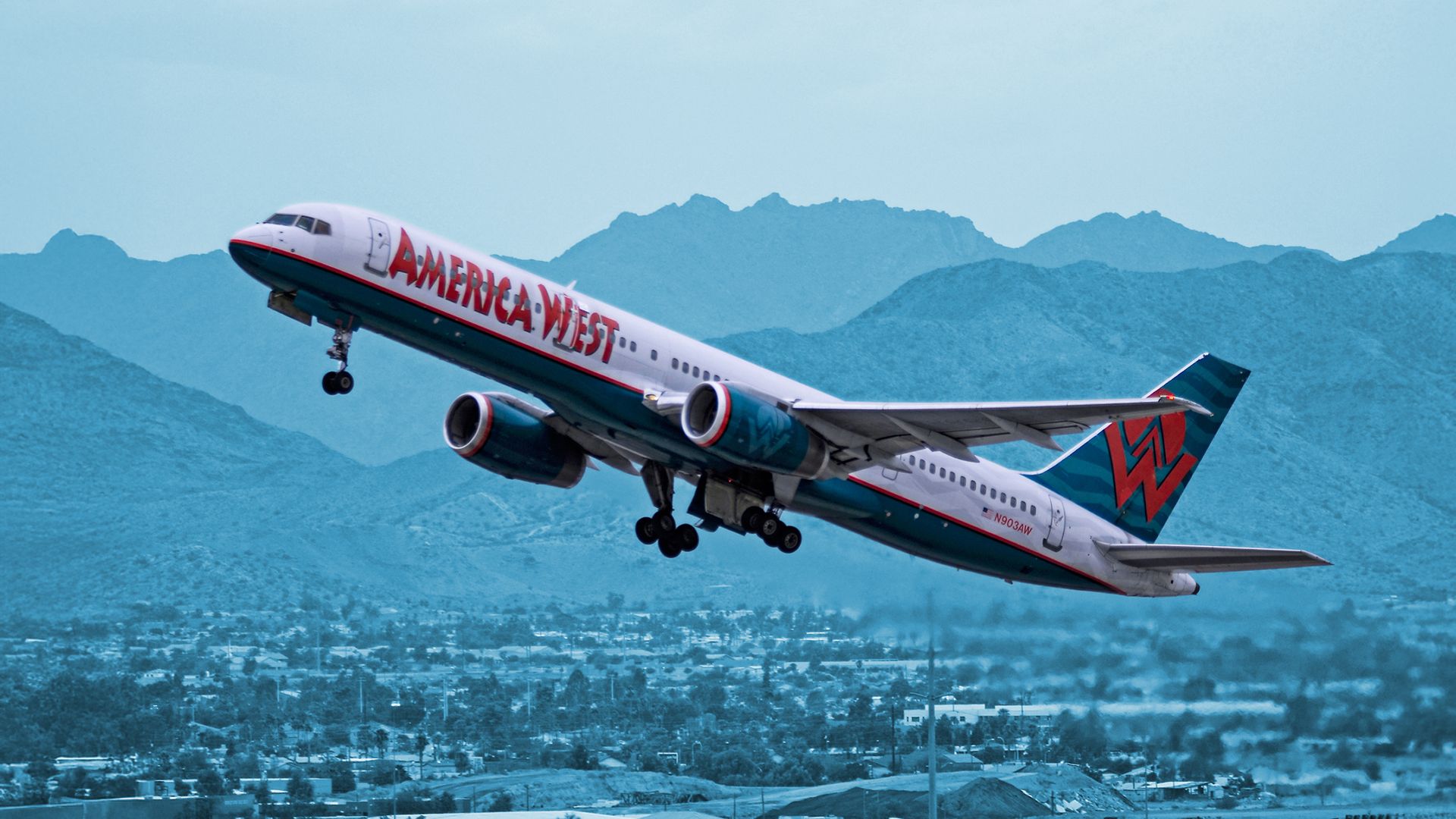
The Boeing 757, a prominent narrowbody jet, has undergone significant transformations since its introduction in the early 1980s. Initially designed without blended winglets, the aircraft’s configuration has adapted to meet evolving market demands and rising fuel costs. Today, many 757s feature these winglets, which enhance fuel efficiency and extend operational capabilities.
The Timing of Design Choices
When Boeing launched the 757 in February 1982, the aviation industry was in a different landscape. At that time, blended winglets—characterized by their smooth, curved shape—were not yet proven on large commercial jets. The 757 entered service in 1983, when the focus was primarily on angular, canted winglets, such as those later used on the Boeing 747-400.
Boeing aimed to quickly replace the aging 727 with a new narrowbody model. This urgency led engineers to bypass untested wingtip designs, which could have introduced additional costs and certification challenges. The primary goal was to create a reliable aircraft that met performance expectations without the added complexity of winglets.
The Advanced Wing Design
Despite the absence of winglets, the 757 featured one of the most sophisticated wing designs of its time. It utilized a supercritical wing measuring approximately 2,000 square feet (185 m²), which was specifically engineered to minimize drag and enhance fuel efficiency during high-speed cruising. This innovative wing design allowed the original 757-200 to achieve a range of about 3,700 nautical miles (6,880 kilometers), sufficient for transcontinental and transatlantic routes.
Adding winglets later on resulted in only a modest increase in range to approximately 3,900 nautical miles (7,250 kilometers). The initial design already delivered strong performance in terms of climb rate and fuel efficiency, reinforcing the rationale behind Boeing’s decision to forgo winglets during the aircraft’s initial production.
The Shift in Market Conditions
The landscape began to change dramatically between 2004 and 2008 as fuel prices surged. During this period, even minor improvements in fuel efficiency became crucial for airlines. The introduction of the Aviation Partners Boeing retrofit program allowed airlines to add blended winglets to their existing 757 fleets, which provided around a five percent fuel savings. This enhancement proved economically beneficial for operators, especially those flying fuel-intensive narrowbody jets.
Airlines such as Continental, now part of United Airlines, capitalized on the new capabilities offered by winglet-equipped 757-200s. With improved range, airlines could serve “long and thin” routes that lacked sufficient demand for larger aircraft. For instance, these aircraft were effectively utilized on routes from Newark to smaller European cities like Lisbon and Porto.
Design Limitations and Adaptations
A common question among aviation enthusiasts concerns the absence of the dramatic “Split Scimitar” winglets on the 757, which are prominently featured on newer Boeing models. The primary reason relates to ground clearance. The 757’s design does not provide enough height to accommodate the downward-angled tip of a split winglet without risking contact with ground equipment.
Moreover, implementing a split scimitar design would necessitate reinforcing the wing structure, which could be prohibitively expensive given the aircraft’s age and remaining market viability. Instead, many airlines opted for a refined version known as the “scimitar blended winglet,” which offers an approximate one percent increase in fuel efficiency without the complications associated with split designs.
The 757’s Ongoing Relevance
Although Boeing ceased production of the 757 in 2004, the aircraft remains a significant component of various airline fleets. Delta Air Lines operates over 120 units of both the -200 and -300 models, deploying them on busy domestic routes and select long-haul flights. United Airlines utilizes winglet-equipped 757-200s for premium transcontinental services and select East Coast to European routes.
In the cargo sector, the 757 continues to excel. Companies like FedEx Express and UPS Airlines rely on its capabilities for medium-lift freight operations. The aircraft’s combination of payload capacity, range, and ability to operate from shorter runways has made it a versatile choice, particularly in regions where larger aircraft struggle to land.
The integration of blended winglets on the 757 is emblematic of how a well-designed aircraft can adapt to changing market conditions. While initial design decisions did not include winglets, the aircraft’s strong performance allowed it to thrive in an evolving aviation landscape. As newer models gradually replace the 757 on various routes, its unique capabilities and established presence will ensure that it remains a valued asset in both passenger and cargo operations for years to come.