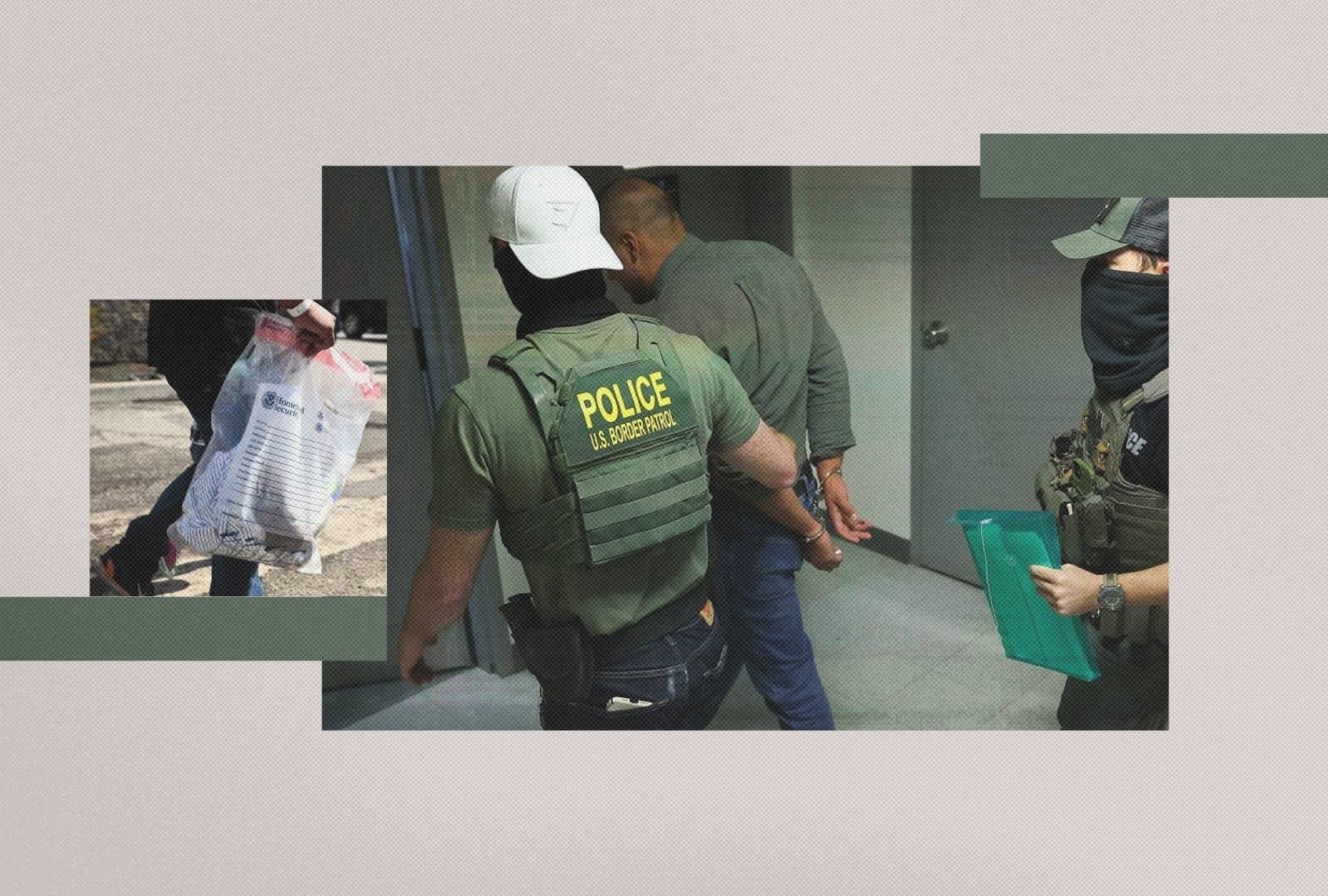
Many immigrants released from detention by Immigration and Customs Enforcement (ICE) and Border Patrol are discovering that their troubles do not end with their release. Reports indicate that government agents have been misplacing government documents, personal items, and essential belongings, leaving many former detainees without crucial documentation and in precarious situations.
Legal experts and individuals who have experienced detention describe a troubling pattern where ICE and Border Patrol agents neither acknowledge the loss nor return confiscated items. A persistent call from an attorney may be the only impetus for officers to locate and return these possessions. Even in instances where belongings are returned, the delay often exacerbates the vulnerabilities faced by the individuals involved.
The Impact of Lost Belongings
Mo Goldman, an immigration attorney based in Arizona, highlighted the ongoing issue, stating, “Not returning confiscated belongings has been a pattern in practice for a long time. The more recent mass arrests have amplified it.” He pointed out that the negligence displayed by officers may not be entirely accidental, questioning why the agency fails to return personal documents upon release.
Federal law mandates that non-citizens carry proof of their lawful status. Without identification, individuals struggle to prove their legal status, exposing them to the risk of re-arrest. The Department of Homeland Security has not responded to inquiries regarding the handling of personal documents or whether guidelines on the storage of seized items have been updated since 2011.
According to the 2011 guidelines, immigrants’ belongings should be secured in a “secured locker” within ICE facilities, but the lack of transparency has left many questioning the integrity of this process. The frequent transfer of detainees—often from one state to another—compounds the likelihood of lost or discarded belongings. For instance, an immigrant might be arrested in New York, processed in New Jersey, and then transported to a facility in Louisiana, with their possessions failing to accompany them on this journey.
Legal Challenges and Emotional Toll
A recent federal class-action lawsuit highlighted the plight of refugees arrested in Minnesota and subsequently released in Texas, without any personal documents. One immigrant, who sought asylum in the U.S. in 2021, recounted his experience of losing critical documents during his detention from August 2025 to February 2026. After being apprehended, he had his clothes discarded and his legal documents confiscated, only to receive them a month post-release.
“I gave them my social security card, work permit, and driver’s license, and they never returned it to me,” he shared, wishing to remain anonymous. The loss of identification left him unable to work or access basic necessities, relying on his cousin for legal assistance. It was only after his cousin engaged a lawyer that he managed to retrieve his documents.
The complications arising from lost belongings often have significant financial implications. Goldman noted that one of his clients faced a bill of approximately $4,000 to reclaim a vehicle due to accumulating impound fees. The costs can quickly escalate as towing companies may auction off unclaimed vehicles after a certain period.
Delia Salvatierra, another immigration attorney, emphasized the detrimental effects of this situation on legal representation efforts. She stated, “If they’re being released in the United States, and the court order determined that their detention was unlawful, it would behoove the government to return them to the status they had prior to being arrested.” In some cases, attorneys have had to file habeas corpus petitions to compel the return of belongings, but compliance with court orders has not been guaranteed.
The emotional and practical consequences of losing personal belongings extend far beyond material loss. Many individuals walk away from detention without essential documents or family heirlooms, complicating their ability to reintegrate into society. The sheer volume of arrests and the system’s complexities mean that not every individual can access the legal support they need to reclaim their possessions.
As these issues persist, the call for accountability and reform in the handling of immigrant belongings continues to grow. The ongoing struggle highlights the need for improved protocols to ensure that those released from detention are not left vulnerable and without the means to restart their lives.