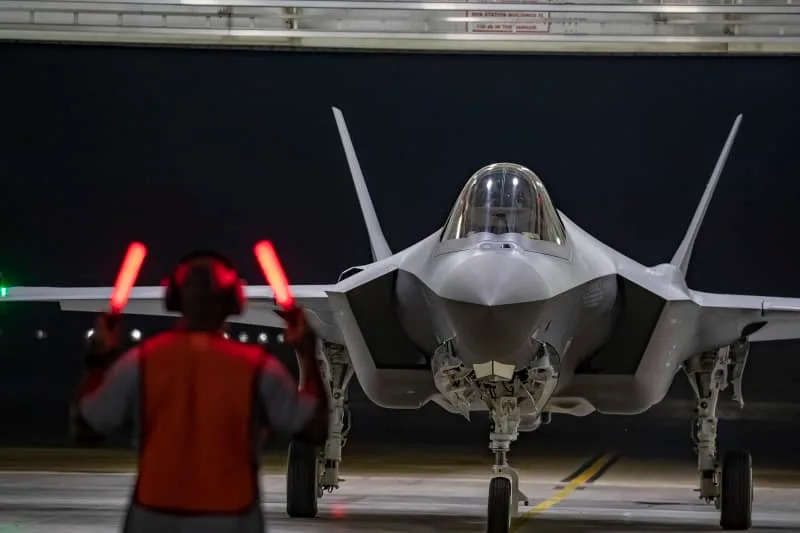
The head of the Iranian Broadcasting Corporation (IRIB), Peyman Jabali, has publicly admitted that the military’s claims of downing two Israeli F-35 fighter jets during Operation Rising Lion were false. This revelation, made during a discussion with students at Shahid Beheshti University, highlights significant issues regarding the reliability of information disseminated by state media.
Jabali explained that IRIB did not directly observe the incident or monitor defense systems, relying instead on conflicting information from military sources. He acknowledged that this miscommunication had serious implications, stating that the erroneous reports damaged the credibility of IRIB. “Were we in the sky to witness the fighter jet crash? Were we behind the defense system? Someone from the military officials informed us, and then they eventually realized… that the information was not credible,” Jabali said.
In light of the false reporting, Jabali emphasized the importance of media independence. He stated, “Media officials should not make their credibility dependent on the credibility of other institutions and organizations.”
In a broader context, Jabali extended his comments to suggest that Israeli Prime Minister Benjamin Netanyahu anticipated the collapse of Iran following an attack on IRIB’s headquarters. He claimed Netanyahu believed that Iran would be defeated on June 16 with the bombing of the Iranian Broadcasting Corporation’s building. “We were proud in the war, we were proud, we resisted, we stunned the world, we pushed the regime back for years,” he said.
Jabali further asserted that Israel’s military miscalculations were influenced by perceived internal weaknesses within Iran. He noted that the narrative of weakness had been propagated internally, contributing to Israel’s erroneous judgments. “Those who made the narrative of weakness prevail over the narrative of strength; those who did not see the capabilities, highlighted the weaknesses,” he added.
He contended that these internal signals of weakness not only shaped Israel’s perceptions but also reflected a broader misunderstanding of Iran’s military capabilities. “That calculation and false image were not created only by the Zionist regime’s think tanks and Western think tanks; we created it internally,” Jabali remarked, underscoring the complexity of misinformation in military and political contexts.
This incident raises significant questions about the reliability of state media in conflict reporting and the impact of military communications on public perception. As these developments unfold, the emphasis on accurate reporting becomes increasingly crucial in the landscape of international relations and military engagements.