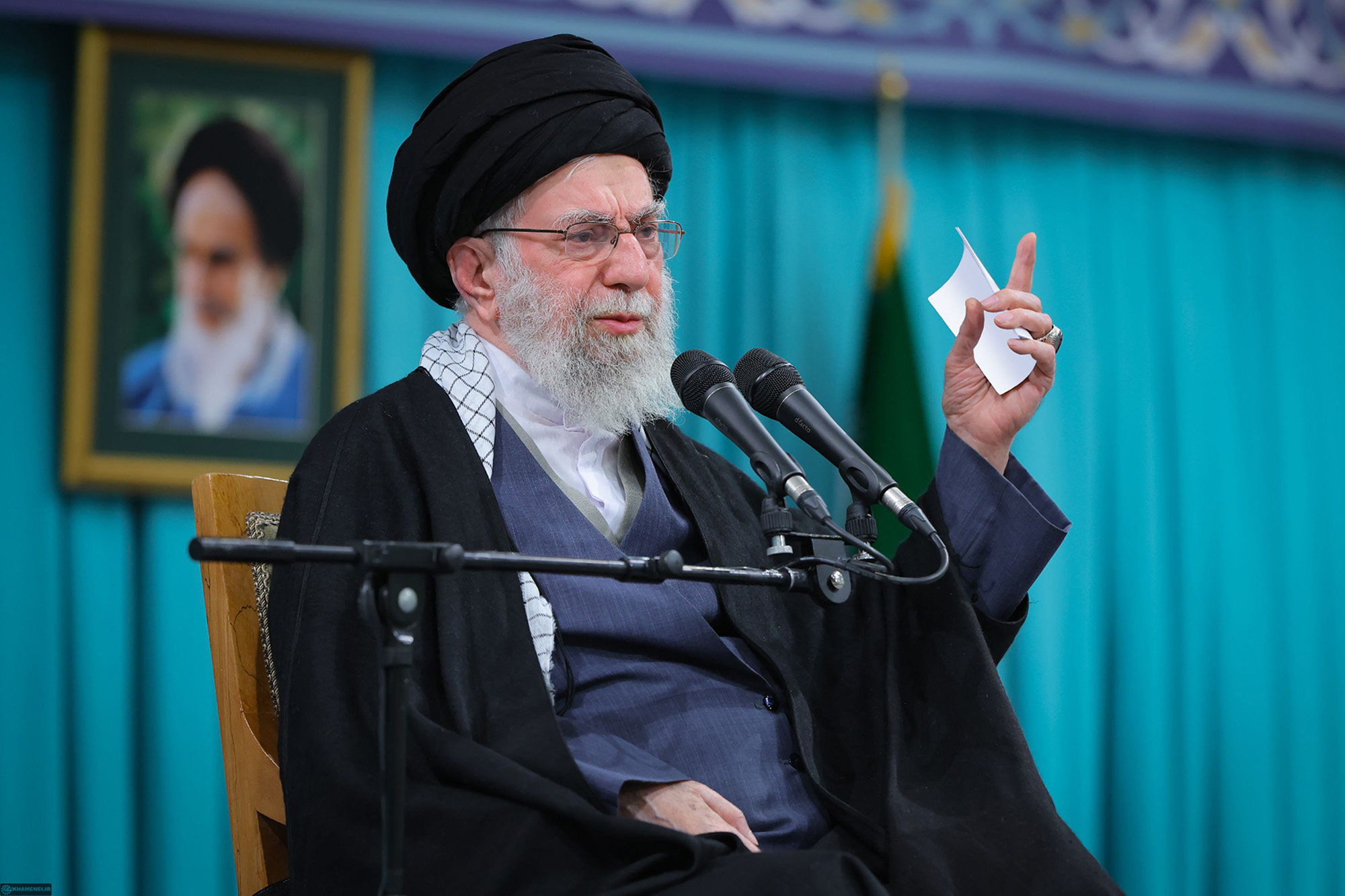
Ayatollah Ali Khamenei, Iran’s supreme leader, has reportedly retreated to a fortified underground bunker in Tehran due to escalating tensions with the United States. This development comes as the USS Abraham Lincoln Carrier Strike Group approaches the Persian Gulf, raising concerns about a potential U.S. airstrike aimed at Iranian leadership.
According to Iran International and the Jerusalem Post, Khamenei’s move to a secure shelter follows warnings from senior military officials about an increased likelihood of U.S. military action. The 86-year-old leader has entrusted daily operations of the Islamic Republic to his youngest son, Masoud Khamenei, who is now tasked with communicating with the regime’s executive branch.
The situation escalated significantly after U.S. President Donald Trump announced on March 15, 2023, that naval forces were being dispatched to the region as a deterrent against Iran. Trump characterized the deployment as a massive military “armada,” which includes three destroyers accompanying the Abraham Lincoln. This show of force is part of a broader context of heightened rhetoric between the U.S. and Iran.
Despite these tensions, Iranian officials have not shown signs of backing down. President Masoud Pezeshkian warned that an attack on Khamenei would be regarded as “an all-out war against us.” Additionally, Iran’s national security parliamentary commission declared that any assault on the supreme leader would prompt a declaration of jihad, according to the Iranian Students News Agency.
Khamenei, known for his active presence on social media, has not posted on X since January 17, 2023, leading to speculation about his current situation and the timing of his retreat. It is unclear when he began hiding in the bunker, but this is not the first instance of Khamenei going underground. Last June, during a brief conflict with Israel, he also sought shelter, reportedly preparing for potential successors in the event of his demise.
The backdrop to these developments includes ongoing protests in Iran, fueled by economic distress stemming from severe drought conditions. These protests have resulted in significant violence, with reports indicating that regime forces have killed at least 3,000 civilians. Some sources claim the death toll could be as high as 20,000, highlighting the internal strife the regime faces alongside external pressures.
As tensions escalate, the international community continues to monitor the situation closely, aware that the implications of a U.S.-Iran conflict could extend far beyond the region.