Jimmy Lai, the former media tycoon and pro-democracy advocate, has been sentenced to 20 years in prison for violating a stringent national security law in Hong Kong. The sentence, handed down on December 4, 2023, marks the longest punishment imposed to date under the controversial law that has effectively stifled dissent in the city.
Lai, aged 78, was convicted of conspiring with foreign forces to endanger national security and of conspiracy to publish seditious articles. The maximum penalty for these charges could have been life imprisonment. Co-defendants, including six former employees of his now-defunct newspaper, Apple Daily, received sentences ranging from 3 years and 3 months to 10 years for similar collusion-related charges.
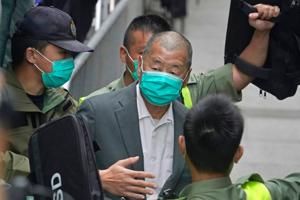
Upon his arrival at the courtroom, Lai smiled and waved to supporters but left with a more serious demeanor as some in attendance expressed their sorrow. His lawyer, Robert Pang, declined to comment on the possibility of an appeal.
The case has raised alarms regarding the erosion of press freedom in Hong Kong, a city previously celebrated for its media independence. The government maintains that the case is not about press freedom, arguing that the defendants used journalism as a guise for actions detrimental to Hong Kong and China.
Concerns Over Press Freedom and International Reactions
Lai was one of the first prominent figures arrested under the national security law in 2020. His arrest and subsequent trial have sparked widespread concerns about the implications for journalism and activism in the region. Critics, including U.S. President Donald Trump and British Prime Minister Keir Starmer, have condemned the verdict. Trump expressed deep concern over the ruling, indicating he discussed Lai’s situation with Chinese leader Xi Jinping and urged him to consider Lai’s release. Starmer’s government has similarly called for his release, with U.K. Foreign Secretary Yvette Cooper labeling the prosecution as politically motivated.
The Australian government has also voiced its serious concerns regarding the lengthy sentences, with Foreign Minister Penny Wong expressing dismay over the ruling.
Lai’s son, Sebastien Lai, described the prison sentence as “draconian” and life-threatening for his father. He stated, “It signifies the total destruction of the Hong Kong legal system and the end of justice.” His sister, Claire Lai, echoed these sentiments, calling the sentence “heartbreakingly cruel” and warning that if carried out, it would turn Lai into a martyr.
The Legal Framework and Broader Implications
Hong Kong leader John Lee defended the sentence, stating that it underscored the rule of law due to the serious nature of Lai’s offenses. The judges involved noted that Lai was seen as the mastermind behind the conspiracies, which warranted a heavier sentence. They also acknowledged his age and health challenges, suggesting that his solitary confinement would add to the burdens of his imprisonment.
Legal experts, such as Urania Chiu from Oxford Brookes University, have raised alarms about the broad interpretation of laws regarding seditious intent and collusion with foreign forces. Chiu indicated that legitimate critiques of the state could now easily be classified as collusion, posing a significant threat to journalists and academics alike.
Lai has been in custody for over five years, and health concerns have been reported, including issues such as heart palpitations and diabetes. The prosecution, however, stated that his general health remained stable, and the government claimed that his solitary confinement was at his request.
The former Apple Daily employees and activists pleaded guilty to charges connected to their collaboration with Lai in soliciting foreign sanctions against Hong Kong and China. Their cooperation with the prosecution led to reduced sentences for some.
The sentencing of Lai and his associates has drawn significant public attention, with supporters lining up outside the court in advance of the ruling. The closure of Apple Daily in June 2021 was a pivotal moment in Hong Kong’s media landscape, further highlighting the city’s decline in press freedom. According to Reporters Without Borders, Hong Kong now ranks 140th out of 180 territories in their global press freedom index, a stark fall from 18th place in 2002.
The harsh ruling against Lai has been characterized by human rights organizations as excessively punitive, with Human Rights Watch Asia Director Elaine Pearson labeling it effectively a death sentence for the former media mogul. The Hong Kong government has announced plans to confiscate assets related to Lai’s alleged crimes, further intensifying the scrutiny of its actions in the ongoing crackdown on dissent.