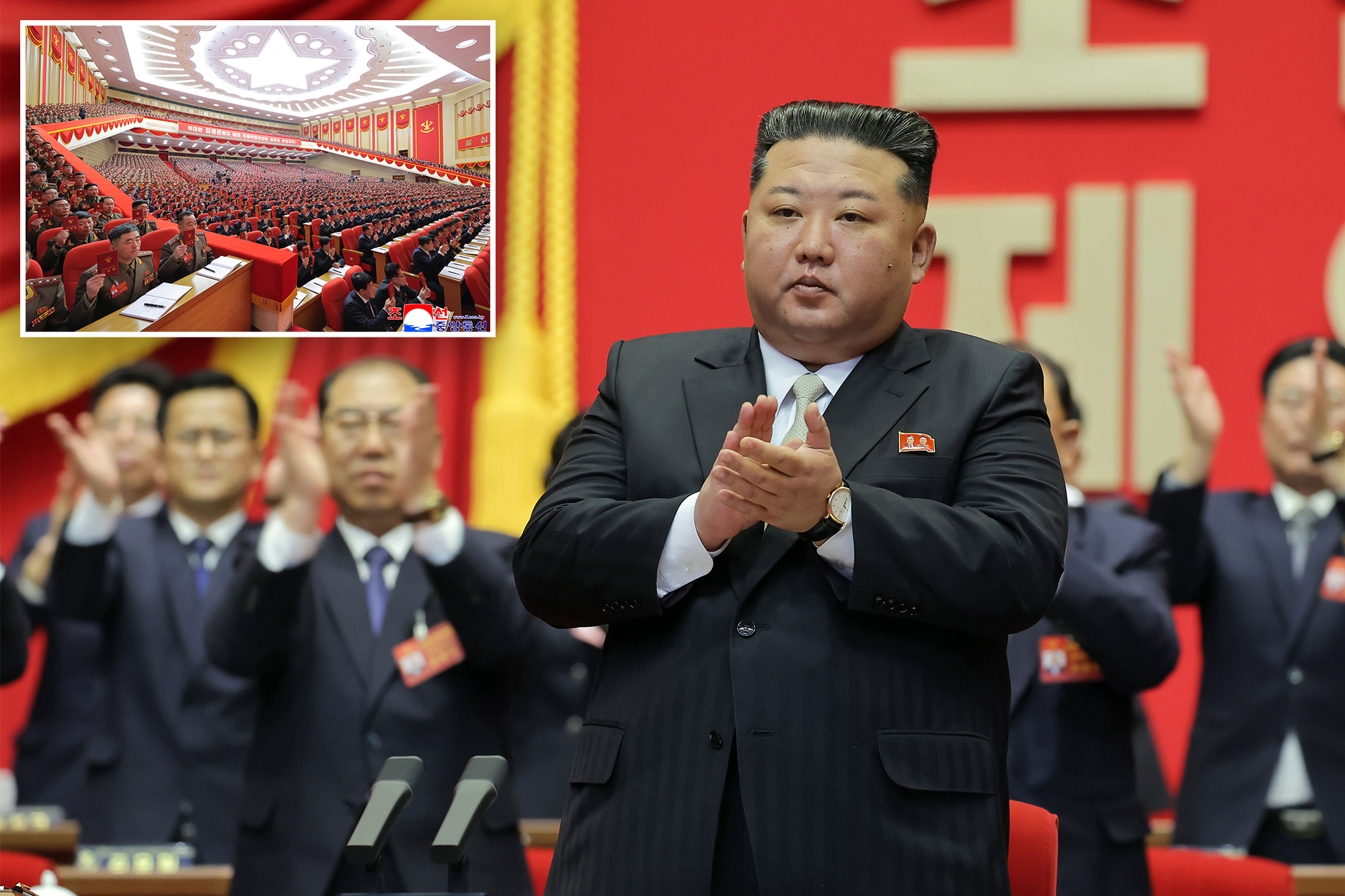
North Korean leader Kim Jong Un has been re-elected as the general secretary of the ruling Workers’ Party of Korea. The announcement was made by the state-run Korean Central News Agency (KCNA) on February 22, 2023, during the party’s Ninth Congress. KCNA characterized this decision as a reflection of the “unanimous desire” of party members, the military, and the public, emphasizing Kim’s role as the “centre of unity and leadership.”
The press release praised Kim for his contributions to strengthening the country’s nuclear deterrence and for advancing both economic and military development. The lengthy statement from KCNA highlighted various achievements over the past five years, including improvements in national defense capabilities and economic planning. It reaffirmed Kim’s position as the guiding figure in the country’s “socialist construction.”
Kim Jong Un, who has been in power since 2011, previously assumed the title of general secretary of the Workers’ Party in 2021, a position once held by his late father, Kim Jong Il. His re-election comes at a time when North Korea is expected to unveil new strategic weapons and demonstrate progress under its 2021–2025 military modernization plan, according to an analysis by the American Enterprise Institute (AEI).
Military Modernization and Economic Planning
The AEI report suggests that North Korea may use the conclusion of the Ninth Party Congress to showcase advancements in various military technologies. These may include intercontinental ballistic missiles, submarine-launched ballistic missiles, and hypersonic glide vehicles. The aim is to enhance the survivability and accuracy of the country’s nuclear arsenal.
Furthermore, the report indicates that Kim is likely to outline modernization goals for the period from 2026 to 2030. Emphasis may be placed on improving second-strike capabilities, achieving faster launch readiness, and diversifying delivery systems.
Beyond military issues, the analysis also points out that Kim may frame the current five-year economic plan as a success. This includes highlighting increased trade with Russia and China, as well as initiatives under his “20×10 Regional Development Policy” aimed at reducing disparities between rural and urban areas.
As North Korea navigates these significant developments, Kim Jong Un’s leadership continues to play a central role in shaping the country’s future direction, both militarily and economically. The re-election of Kim is a critical moment in the ongoing evolution of the regime and its strategic objectives on the international stage.