The geopolitical landscape in Libya is shifting as a rising youth movement seeks to restore the nation’s constitutional monarchy, presenting a potential opportunity for the United States to regain influence in the region. Amid increasing Chinese investments, which include ambitious infrastructure projects, the situation in Libya could represent a critical juncture for American foreign policy.
For years, Libya was relegated to a distant concern for Washington, viewed as too chaotic to address effectively. During this period, China recognized Libya’s strategic importance as a key energy hub and a gateway to North Africa. In just two years, Beijing has initiated a significant expansion in the Mediterranean, with plans for a $50 billion development scheme in Tobruk, a $10 billion refinery, and a $20 billion high-speed rail line connecting to Egypt. These initiatives also include enhancing diplomatic ties and establishing a direct freight corridor into the Mediterranean. Analysts caution that these projects may have military and intelligence implications, potentially allowing China to establish a foothold that connects Europe, Africa, and the Middle East.
Historically, Libya was a vital component of American strategy in the region. The United States once operated the Wheelus Air Base, one of its most important facilities outside Europe, and American companies thrived in Libya’s oil sector. This fruitful relationship began to unravel following the overthrow of the monarchy by Muammar Gaddafi, leading to years of instability and strategic losses for the U.S.
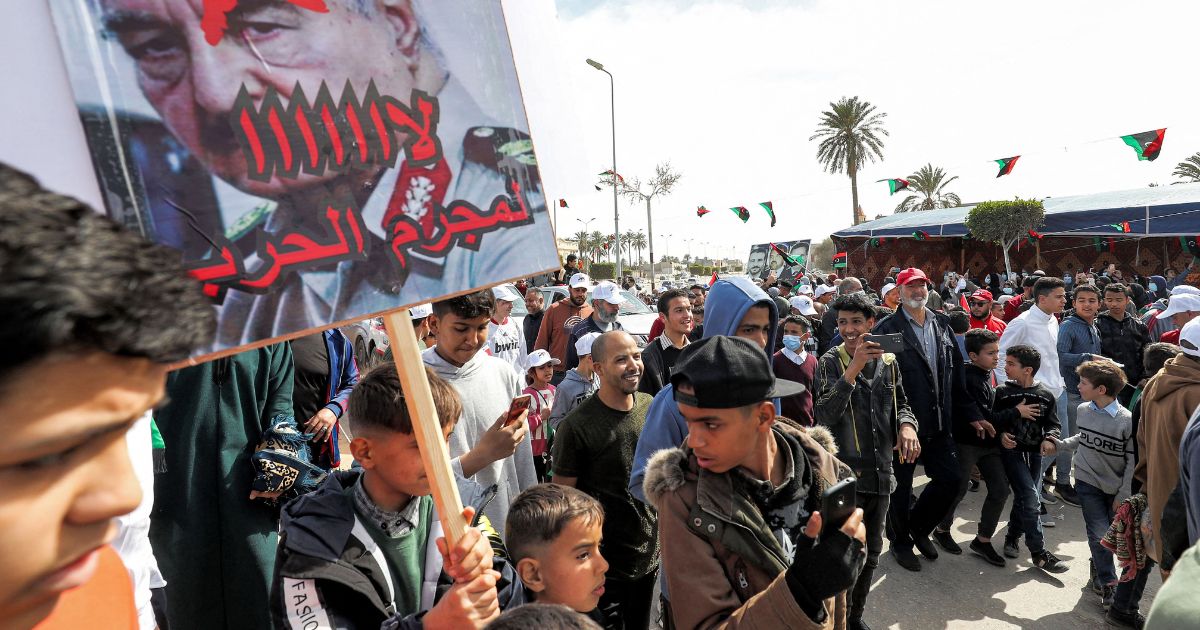
Today, the narrative is changing as Libya’s youth, comprising nearly 60 percent of the population, are actively engaging in politics. They are advocating for the restoration of the 1951 Independence Constitution and the reinstatement of the constitutional monarchy under Crown Prince Mohammed El Senussi. This movement is not merely nostalgic; it represents a call for unity and effective governance in a country that has struggled with division and turmoil. Youth activists argue that the constitution was never legally annulled and remains the last valid framework for national governance.
This grassroots movement gained momentum from 18 months of national dialogue led by Crown Prince Senussi, which included Libyans from various regions, many discussions taking place in cities across Europe. Now, the dialogue has shifted to the streets and conference halls of cities such as Tripoli, Benghazi, Misrata, and Fezzan. Women, youth, tribal communities, and civil society groups are uniting politically in a manner not witnessed for decades.
For the United States, the implications of a stabilized Libya are profound. The country is home to significant mineral reserves that could lessen reliance on China and stabilize energy markets, thus alleviating inflationary pressures. Additionally, Libya occupies strategic maritime routes on NATO’s southern flank and controls billions in frozen assets that could be utilized for national recovery.
A stabilizing force in Libya could also provide Washington with strategic leverage in the Sahel region, where France and Russia have faced challenges from jihadist militias. By supporting Libyan stability, the U.S. could disrupt illicit gold smuggling operations that funnel resources to its rivals, particularly Russia.
Amidst these developments, a shift in American policy thinking is emerging. Ambassador Tom J. Barrack has emphasized the effectiveness of benevolent monarchies, suggesting that constitutional monarchies can offer the stability that fractured republics often lack. This perspective aligns with President Trump’s evolving strategy for the region.
The situation in Libya also connects to the ongoing civil war in Sudan, where smuggled gold traverses Libyan territory, ultimately benefiting adversaries of the U.S. A focus on aiding Libya could disrupt this flow, potentially undermining Russian financial interests and diminishing its influence in the Red Sea.
Libya’s youth have provided Washington with a rare second chance. They are coalescing around a democratic framework that predates the chaos and seeks to re-establish a partnership that was once among the closest in U.S.-Libya relations. Ignoring this moment could mean relinquishing a critical geoeconomic opportunity that spans from the Mediterranean to the Sahel and beyond.
As the U.S. contemplates its role, the potential benefits of a stable Libya extend far beyond North Africa. A resurgence of American influence in Libya could help counterbalance China’s grip on rare earth minerals, reduce Russia’s sway within OPEC+, and challenge the Belt and Road Initiative while creating new avenues for engagement in Latin America and the Middle East.
The path forward is not merely about Libya; it represents a crucial opportunity for the United States to restore its presence and power across the Mediterranean, Africa, and the global energy market. With decisive leadership that recognizes the value of allies and prioritizes stability, Washington could rebuild a partnership with Libya that should never have been abandoned. The question remains: Will the United States seize this moment, or allow China to dictate Libya’s future?