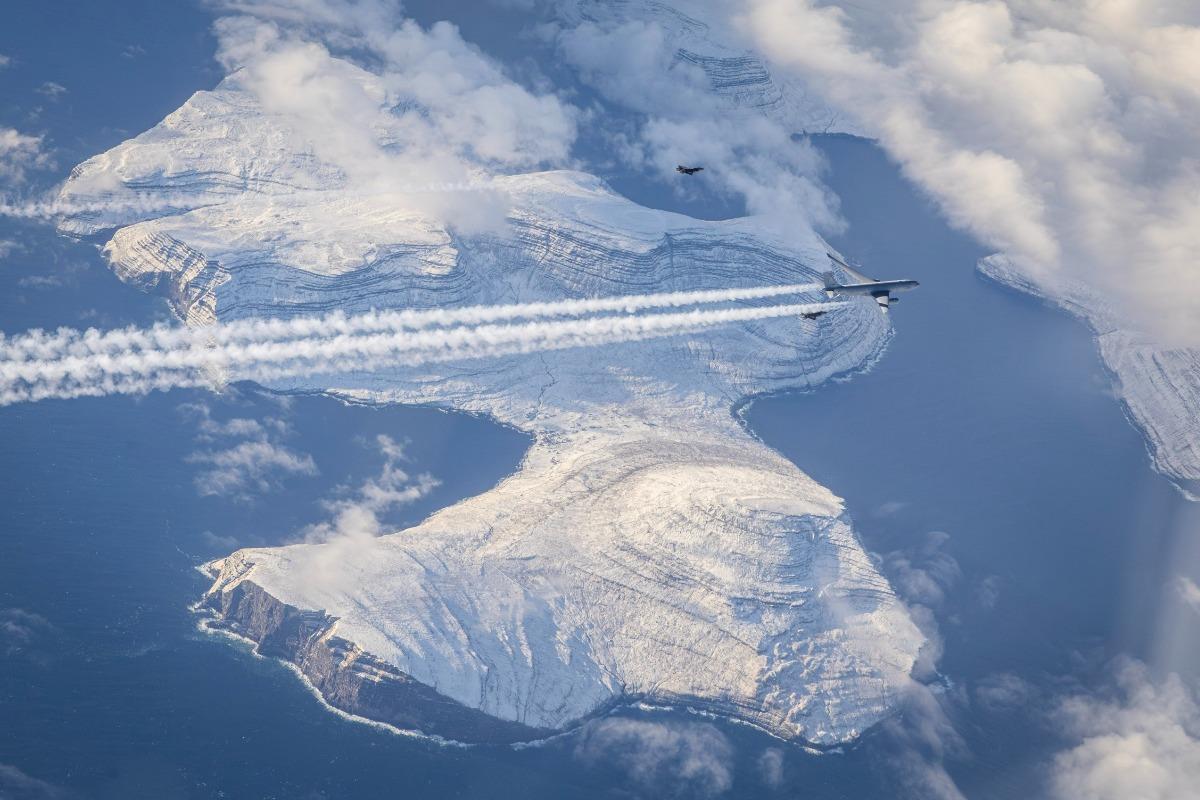
NATO has launched a new multi-domain operation named **Arctic Sentry** in the High North, aiming to address increasing military activities by Russia and growing interest from China in the Arctic region. This operation, announced on **March 6, 2025**, marks NATO’s third major initiative in the past year to enhance security in this strategic area.
Arctic Sentry follows the **Baltic Sentry**, initiated on **January 14, 2025**, and **Eastern Sentry**, which began on **September 12, 2025**. Each operation targets specific security challenges; Baltic Sentry aims to safeguard critical infrastructure in the Baltic Sea, while Eastern Sentry focuses on deterring incursions by Russian aircraft and unmanned aerial vehicles (UAVs) in NATO airspace.
The operation is led by **Joint Force Command** based in Norfolk, Virginia. It incorporates various NATO and allied activities into a unified operational strategy, which includes exercises such as Denmark’s **Arctic Endurance** and Norway’s upcoming **Cold Response**, scheduled from **March 9-19, 2025**.
According to NATO, Russia has significantly ramped up its military presence in the Arctic. The nation has established a new Arctic command, reopened Soviet-era military facilities, and is actively testing advanced weaponry. Additionally, China’s involvement in the region is expanding as it seeks access to energy resources, critical minerals, and vital shipping lanes. The growing collaboration between Russia and China presents further strategic challenges for NATO, impacting its deterrence and defense strategies in the Arctic.
In a press conference on the announcement day, NATO Secretary General **Mark Rutte** emphasized the importance of cohesive command: “By overseeing NATO activities in the Arctic under one command, we can leverage our efforts more effectively and identify areas that require attention.”
Multiple NATO member states have pledged support for Arctic Sentry. **Sweden**, which became a NATO member in 2024, announced plans to deploy **JAS 39 Gripen** fighters to operate around **Iceland** and **Greenland**. Prime Minister **Ulf Kristersson** remarked, “As a NATO Ally, Sweden has a responsibility to contribute to the security of the entire territory of the Alliance. The Arctic region is becoming increasingly important from a strategic perspective.”
Swedish Defense Minister **Pål Jonson** noted the urgent need for a consolidated presence in the Arctic, stating, “When Russia arms itself and cooperation between Russia and China intensifies, the Alliance must strengthen its situational awareness in the Arctic region.”
In addition, **Germany** has committed to participating in the initial phase of Arctic Sentry, with Defense Minister **Boris Pistorius** confirming the deployment of four **Eurofighter** jets and air-to-air refueling capabilities. Meanwhile, **Denmark** will coordinate efforts closely with **Greenland** and the **Faroe Islands** to bolster regional security. Danish Defense Minister **Troels Lund Poulsen** stated, “We will contribute substantially and maintain momentum to ensure that the Arctic is reflected in NATO’s long-term plans and exercises.”
The **United Kingdom** also announced plans to double its troop presence in Norway, increasing from **1,000 to 2,000 personnel** over three years. U.K. Defense Secretary **John Healey** characterized Russia as “the greatest threat to Arctic and High North security that we have seen since the Cold War.”
NATO’s strategic shift towards the Arctic underscores the evolving security landscape, where both military posturing and international cooperation will be pivotal in maintaining stability in this vital region.