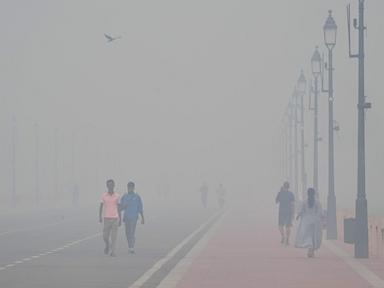
Thick smog enveloped New Delhi on November 14, 2023, following widespread firework displays that marked the Hindu festival of Diwali. The celebrations, which continued late into the night, significantly elevated air pollution levels across the city. By Tuesday morning, the Air Quality Index (AQI) surged above 350 in several neighborhoods, categorizing the air quality as “severe” and dangerous for breathing, according to the World Health Organization.
Visibility deteriorated in various parts of the city, cloaked in a gray haze that obscured streets, buildings, and historical landmarks. “I have never seen anything like this before. We can’t see anything here because of pollution,” remarked Vedant Pachkande, a tourist in the capital.
Regulations and Reactions to Air Quality Deterioration
In the days leading up to Diwali, India’s Supreme Court lifted a complete ban on firecrackers, permitting the use of “green firecrackers” designed to produce fewer pollutants. These firecrackers, developed by federal research institutes, are intended to reduce particulate and gas emissions by approximately 30%. The court allowed their use during specific hours from November 11 to November 14, but, as in previous years, many residents disregarded these rules.
New Delhi, along with its metropolitan area—home to over 30 million people—is frequently ranked among the most polluted cities globally, especially during winter months when Diwali coincides with stagnant weather and smoke from crop residue burning in neighboring states.
Authorities in New Delhi have enacted several measures to mitigate pollution, including restrictions on construction activities and limitations on diesel generator use. Despite these efforts, environmentalists argue that lasting solutions, such as transitioning to cleaner energy and imposing stricter vehicle emissions regulations, are crucial to addressing this recurring issue.
Impact of Pollution on Sunshine and Health
Recent studies have shown that rising pollution levels in India are reducing the amount of sunshine reaching the ground. A report published in Scientific Reports, a journal by Nature Portfolio, indicates that sunshine hours have diminished across much of India due to increasing aerosol concentrations. These aerosols stem from industrial emissions, biomass burning, and vehicle pollution.
Manoj K. Srivastava, a scientist at Banaras Hindu University and co-author of the study, noted, “We see a greater impact in more polluted regions such as northern India.” The reduction in sunlight not only affects solar energy generation but also has implications for agricultural productivity and public health.
The ongoing crisis highlights the urgent need for comprehensive strategies to tackle air pollution in New Delhi and similar urban centers. As the city grapples with hazardous air quality, the focus must shift towards sustainable practices that can ensure a healthier environment for its residents.