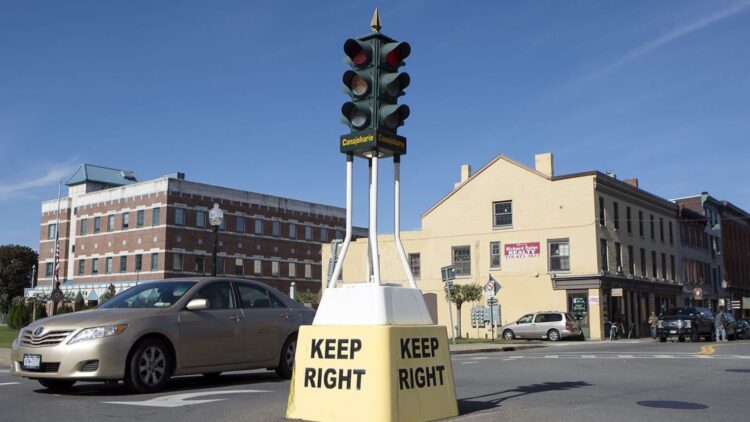
New York City is home to the oldest operating traffic lights in the United States, dating back nearly a century. Known as dummy lights, these historical signals are still in use today, creating confusion among drivers accustomed to modern traffic control systems.
Evolution of Traffic Control in the U.S.
The history of traffic lights in the United States began in the early 20th century, when police officers managed traffic flow at intersections. As vehicle numbers surged, this method became impractical. In 1912, the first electric traffic light was installed, featuring a simple green and red light system. By the 1920s, a yellow light was added, establishing the familiar three-color system we recognize today.
These initial traffic lights, referred to as dummy lights, were introduced to replace officers at intersections. Over time, newer models emerged, leading to the gradual replacement of the older systems. Yet, in certain neighborhoods of New York, these historic signals remain operational, raising concerns about road safety.
Community Sentiment on Historical Preservation
In areas such as Beacon and Croton-on-Hudson in the Hudson Valley, residents advocate for the preservation of these vintage traffic lights, viewing them as symbols of their community’s character. Despite their age, the lights have been retained due to local pride and a desire to preserve history.
Similar sentiments are echoed in Canajoharie, located in the Mohawk Valley. Although these lights were previously removed due to safety concerns, they were reinstated in May 2023 after community members rallied for their return, emphasizing their historical significance.
While these old traffic lights serve as landmarks, they can pose safety risks. Their distinctive designs and diminished visibility create potential hazards for drivers, particularly those unfamiliar with their operation.
Addressing Safety Concerns
Authorities have acknowledged the risks associated with the continued use of these vintage traffic lights. In response, they have implemented safety measures, including the application of reflective paint, raising the bases of the signals, and installing warning signs to enhance visibility.
Despite the potential for confusion, the lights maintain a color code that resembles modern traffic signals, allowing drivers to interpret their meanings. This contrasts with other outdated systems, such as the blue traffic lights still in use in Japan, which can confuse drivers unfamiliar with their purpose.
The ongoing debate surrounding these historic traffic lights highlights the tension between preserving cultural heritage and ensuring public safety. As New York City grapples with the challenge of maintaining its historical identity while protecting its residents, these nearly century-old signals stand as a testament to a bygone era of traffic management.