In a significant shift in military procurement strategy, leaders from Nordic countries are insisting that new weapons systems must have demonstrated effectiveness in the ongoing conflict in Ukraine. This demand was articulated during a recent panel discussion at the AUSA (Association of the United States Army) event in Belfast, where military officials underscored the increased importance of proven technology in modern warfare.
Maj. Gen. Peter Harling Boysen, the chief of the Royal Danish Army, stated, “For new supply chains and new technologies, I’m never going to buy anything that hasn’t worked in Ukraine.” This statement reflects a growing consensus among military leaders that operational success in Ukraine serves as a vital benchmark for assessing the reliability of new weaponry.
Operational Effectiveness Takes Center Stage
During the discussion, Lt. Gen. Pasi Välimaäki, Commander of the Finnish Army, echoed Boysen’s sentiments, emphasizing the importance of practical demonstrations. He remarked that products showcased at AUSA are less convincing than those that have successfully operated in the field. “That’s the secret,” he added, highlighting the need for equipment that has been battle-tested to capture his interest.
Välimaäki also pointed out the urgency of securing contracts within a two-year window, which necessitates a focus on mature systems that have proven efficacy. “You’re either in or you’re out,” he stated, reflecting the decisive nature of current procurement strategies.
Latvia’s state secretary, Aivars Purinš, further reinforced this sentiment, urging manufacturers to test their technologies in conditions that closely mimic real combat scenarios. “We have had too many stories… where the best technology solutions were deployed, and suddenly they didn’t work as they were supposed to,” he warned, advocating for practical testing environments.
Drone Innovation and Collaborative Efforts
Latvia is actively working on enhancing its military capabilities through the establishment of a drone competency center in Riga. This facility aims to foster the development and integration of drone technologies for the Latvian National Armed Forces. According to a statement from the Latvian Ministry of Defense, the center will ensure a continuous supply of drone systems during crises and support local companies in creating tailored solutions.
Maj. Gen. Lars Lervik, chief of the Norwegian army, highlighted Norway’s own advancements in drone technology. The country has allocated 1.5 billion Norwegian Krone (approximately $1.49 million) over the next decade to enhance its drone initiatives. Lervik stated that the overarching goal is to improve value for money concerning new acquisitions while ensuring that drone innovation occurs across all military branches.
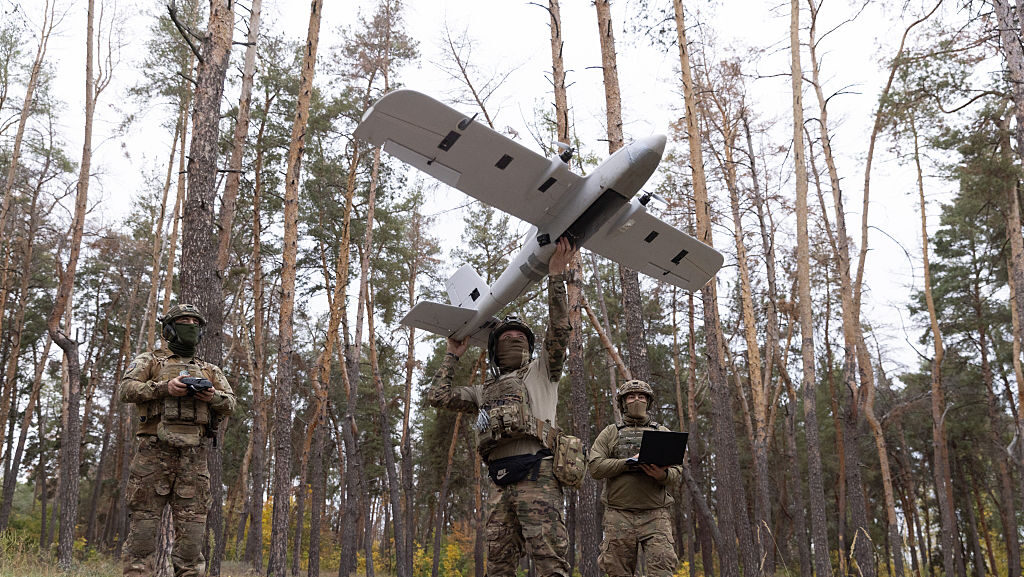
Norwegian forces recently initiated a drone swarm pilot program, featuring the Six Robotics Valkyrie autonomous drones, which are designed for intelligence, surveillance, and reconnaissance missions. Lervik expressed his aspiration to integrate various drone types, including attack drones, into coordinated swarms for enhanced operational capability.
As European nations respond to the increasing threat posed by Russian drones, there is a collective push for improved air defense systems. NATO’s presence on the Eastern Flank has been bolstered, and the European Union is exploring the development of a comprehensive air defense network, including counter-drone technologies.
Challenges in Procurement and Future Contracts
While progress is being made, challenges remain in the procurement landscape. Norway’s acquisition of long-range precision fire systems has faced delays due to various factors, including the need for information from potential vendors. Lervik hopes to finalize vendor comparisons and present recommendations to the government by Christmas, with a contract award anticipated for early 2026.
Two primary contenders in this procurement process are Lockheed Martin’s M142 High Mobility Artillery Rocket System (HIMARS) and South Korea’s Hanwha Aerospace K239 Chunmoo Multiple Launch Rocket System (MLRS). Additionally, Norway is considering a joint procurement plan for up to 80 BAE Systems CV90 infantry fighting vehicles, aligning its strategy with Estonia, Finland, Lithuania, the Netherlands, and Sweden.
As military leaders across the Nordic region emphasize the necessity for combat-proven technologies, the landscape of defense procurement is shifting towards a more rigorous evaluation of weapon systems, driven by the realities of modern conflict.