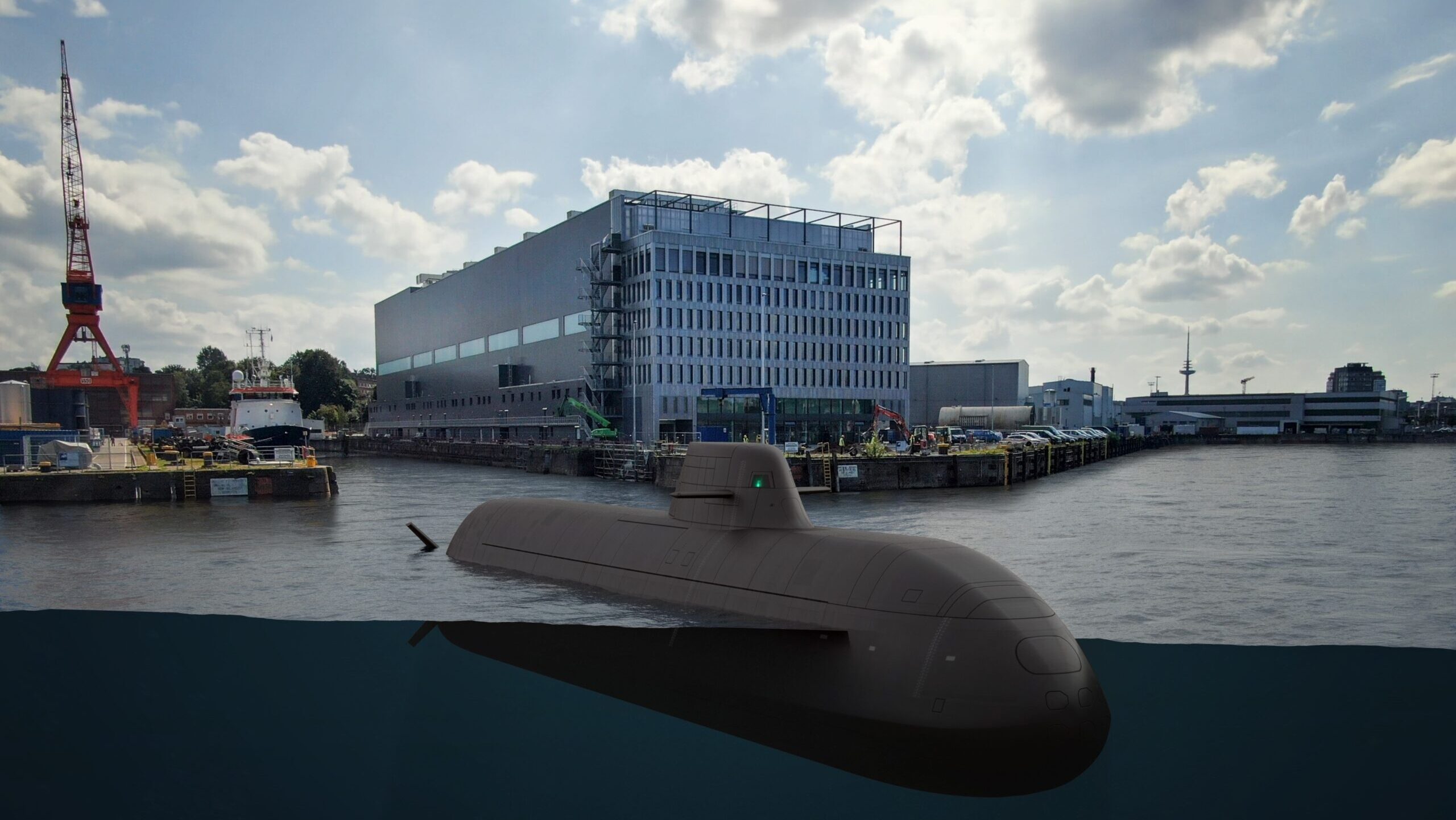
Norway’s government has introduced a proposal to parliament for the acquisition of two additional submarines, advancing its long-term defense strategy. This initiative confirms the earlier decision to expand the submarine fleet to a total of six new vessels, which is expected to bolster NATO’s capabilities in the North Atlantic and the High North. Defense Minister Tore O. Sandvik emphasized that the new additions would provide a “strong deterrent effect on any potential adversary.”
The new Type 212CD submarines, manufactured by ThyssenKrupp Marine Systems (TKMS), will increase the overall program cost to 98 billion kroner (approximately $9.69 billion). The two newly proposed submarines, along with their necessary weapons and integration, are expected to cost around 46 billion kroner (about $4.54 billion). This figure exceeds initial estimates for the first four submarines, a situation attributed to inflation in the defense sector and rising costs for raw materials, according to the Norwegian Defense Ministry’s bill.
The funding will also account for adjustments to the original contract for the first four submarines, primarily covering additional armaments and spare parts, as well as Norway’s contribution to establish a second production line in Germany. The collaboration between TKMS and Kongsberg Defence & Aerospace (KDA) aims to develop a comprehensive combat system for these submarines. Currently, the first two Norwegian submarines are under construction in Germany, with the initial vessel set to be delivered to the Norwegian Navy in 2029. The remaining four will be delivered progressively, culminating with the final submarine scheduled for 2038.
Modernizing Norway’s Naval Capabilities
The initiative to modernize Norway’s submarine fleet aims to replace the aging Ula-class submarines, which have been operational since the late 1980s. The new submarines are designed to enhance endurance, operational flexibility, and interoperability with allied forces. The Norwegian Defense Ministry highlighted the strategic importance of submarines in defending NATO’s northern flank, particularly in light of Russia’s substantial naval presence on the Kola Peninsula and its focus on long-range weapons in the High North.
In conjunction with the submarine proposal, the Norwegian government has also suggested allocating 19 billion kroner (approximately $1.87 billion) for long-range precision strike systems for the army. This new capability aims to establish a Rocket Artillery Battalion, which will be stationed in Inner Troms, northern Norway. The advanced systems will enable the army to accurately strike targets at distances of up to 500 kilometers, a move that Sandvik described as a “strategically vital investment.”
Denmark’s Maritime Defense Enhancement
In a parallel development, Denmark confirmed its commitment to bolstering maritime security by allocating funds for a new surveillance vessel. The Danish Ministry of Defense, supported by a broad parliamentary majority, announced the purchase aimed at monitoring critical undersea infrastructure. This dedicated surveillance ship will enhance the capability to detect and respond to activities near subsea power cables, data cables, and gas pipelines in Danish waters.
Danish Defence Minister Troels Lund Poulsen remarked on the evolving nature of threats in underwater environments, stating, “This is an area where threats are constantly evolving, and where we must be able to react quickly and independently.” The specific technical details and delivery schedules for the new vessel have yet to be disclosed, but the initiative aligns with Denmark’s ongoing efforts to enhance its surveillance capabilities.
Both Norway’s and Denmark’s recent defense initiatives reflect a broader commitment to strengthening national and regional security in an increasingly complex geopolitical landscape. These enhancements signal a proactive approach to maritime defense, emphasizing the need for advanced technology and capable forces to ensure stability in northern European waters.