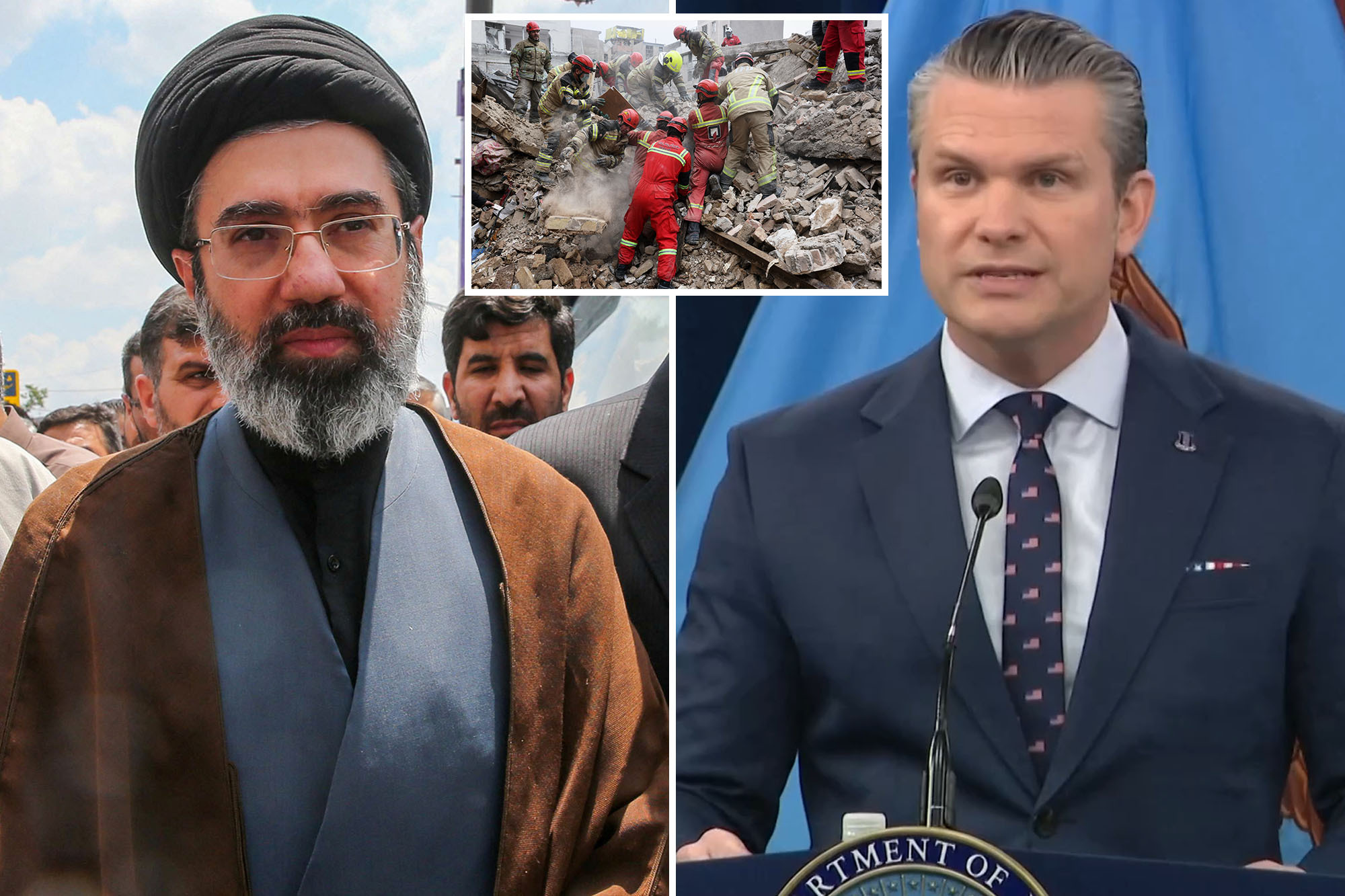
The Pentagon’s chief, Pete Hegseth, recently criticized Iran’s leadership, asserting that new Supreme Leader Mojtaba Khamenei is “likely disfigured” and that the country’s ruling officials are “hiding underground.” During a press conference on Friday, Hegseth described the Iranian leadership as “desperate,” claiming they have retreated from public view due to internal challenges.
Hegseth’s remarks included a derogatory characterization of Iranian officials, referring to them as “rat-like executives” who are evading scrutiny. He stated, “Iran’s leadership is in no better shape, desperate and hiding. They’ve gone underground, cowering. That’s what rats do.” He amplified his criticisms by suggesting that the public communications from Khamenei are weak, noting the absence of video or audio in a recent statement.
Despite Hegseth’s claims about the Iranian leadership’s seclusion, visual evidence contradicts his assertions. On the same day, numerous high-ranking officials were seen participating in events in Tehran for Quds Day, an annual pro-Palestinian observance. Reports from Israeli, Turkish, and Arab news outlets indicated that prominent figures including President Masoud Pezeshkian, Foreign Minister Abbas Araghchi, National Security Adviser Ali Larijani, and Chief Justice Gholam-Hossein Mohseni-Ejei were visibly active in the public demonstration.
The stark contrast between Hegseth’s statements and the actions of Iranian officials raises questions about the actual state of Iran’s leadership. As tensions remain high between the United States and Iran, the narrative surrounding the Iranian government continues to evolve. Hegseth’s comments underscore a broader perspective within the U.S. defense establishment regarding the challenges faced by Tehran.
This ongoing situation reflects the complexities of international relations in the region. With Iran’s leadership publicly asserting their presence while facing internal scrutiny, the implications for both domestic stability and international diplomacy remain significant. As the situation develops, observers from around the world will be keen to monitor both the actions of Iranian officials and the responses from U.S. leadership.