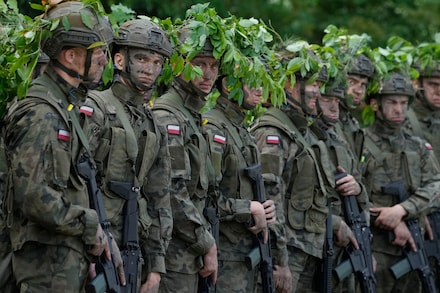
Following Russia’s invasion of Ukraine in 2022, Poland has emerged as a key player in reshaping Europe’s military landscape. This shift has prompted various European nations to adopt Poland’s approach by enhancing their military capabilities. Governments across the continent have initiated significant investments in defense, signaling a collective pivot towards stronger military preparedness.
As countries reassess their security needs, many have redirected industrial efforts. Factories that once focused on civilian products are now retooling to manufacture military equipment, including tanks and fighter jets. This transformation highlights a broader trend within Europe to prioritize defense spending and military readiness.
In response to escalating tensions, NATO members made a momentous commitment to allocate 5 percent of their gross domestic product (GDP) towards security, defense, and related infrastructure. This agreement, reached in 2023, has further solidified a commitment to military enhancement among member states, inspired in part by advocacy from then-U.S. President Donald Trump.
Shifts in Defense Strategy Across Europe
The invasion of Ukraine has acted as a catalyst for many European nations to reconsider their defense strategies. Countries that previously maintained minimal military forces are now investing heavily in modernization efforts. This shift reflects a broader recognition of the changing geopolitical landscape and the necessity for robust national defense.
Poland, having built the largest military in the European Union, serves as a model for these initiatives. The Polish government has undertaken substantial reforms and investments to strengthen its armed forces since the onset of the conflict. This includes not only increasing troop numbers but also enhancing military infrastructure and capabilities.
The response from European governments indicates a significant shift in public and political sentiment regarding defense spending. The urgency to bolster military preparedness has taken precedence over other budgetary considerations, with many countries planning to expand their defense budgets significantly in the coming years.
Economic Implications of Military Expansion
The implications of this military expansion extend beyond national security. Increased defense spending is anticipated to stimulate economic growth in various sectors, particularly manufacturing. As factories transition to produce military hardware, new job opportunities will arise, potentially benefiting local economies.
However, this drive towards militarization also raises concerns regarding the balance of national budgets. Countries must navigate the complexities of funding defense initiatives while ensuring continued investment in essential public services, such as healthcare and education. As European nations ramp up military spending, the challenge will be to maintain public support for such initiatives amid competing priorities.
In conclusion, Poland’s leadership in military expansion following Russia’s invasion of Ukraine has set a new course for European defense policy. As nations across the continent commit to increasing their military capabilities, the landscape of European security is undergoing a profound transformation. The long-term effects of these changes will shape not only military readiness but also the economic and political dynamics within Europe.