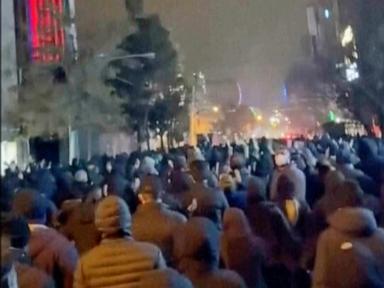
Nationwide protests in Iran challenging the theocracy have surged for over two weeks, resulting in a death toll of at least 116 people, according to activists. Demonstrators filled the streets in Tehran and Mashhad, igniting fears of escalating violence as the Iranian government enforces a crackdown amid an internet blackout and disrupted phone services. The Human Rights Activists News Agency, based in the United States, reported that around 2,600 individuals have been detained during the unrest.
The protests began on December 28, 2023, primarily triggered by the collapse of the Iranian rial, which currently trades at over 1.4 million IRR to $1. This economic turmoil has exacerbated public dissatisfaction with the regime, leading to widespread demands for reform and challenges to the ruling theocracy.
Government Response and International Reactions
In response to the protests, Iranian authorities have warned that participants will be treated as “enemies of God,” a charge that carries the potential for severe penalties, including the death penalty. Mohammad Movahedi Azad, Iran’s attorney general, made this statement on Iranian state television, signaling an impending clampdown on dissent.
As the Iranian government attempts to control the narrative, state media reported on supposed calm in various cities while neglecting to cover the unrest in Tehran and Mashhad. Meanwhile, U.S. President Donald Trump expressed support for the demonstrators, stating on social media that “Iran is looking at FREEDOM, perhaps like never before. The USA stands ready to help!!!” Reports suggest that Trump has been presented with military options regarding Iran, although no final decision has been made.
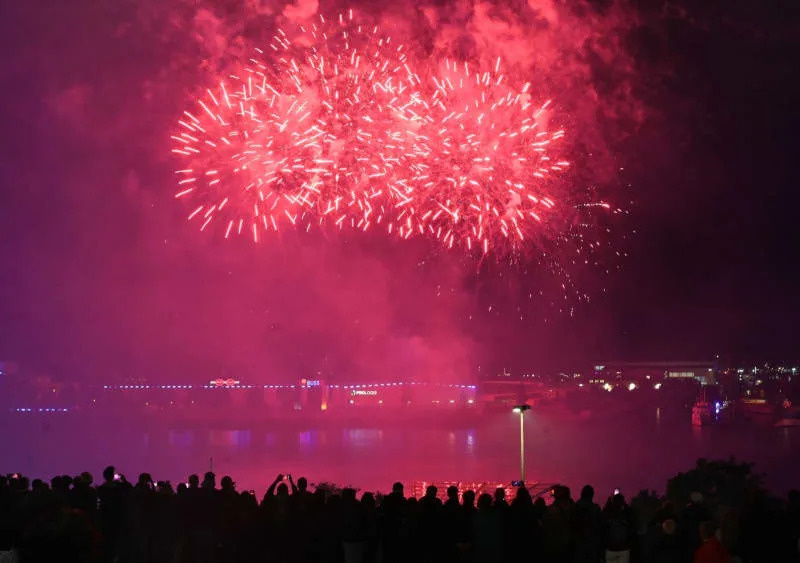
Activists fear that the ongoing internet blackout will embolden hard-liners within Iran’s security services to escalate their violent response to the protests. Despite these challenges, videos reportedly taken with satellite technology have surfaced, showing demonstrators in Tehran’s Punak neighborhood, where protesters waved lit mobile phones and made noise with metal objects amidst fireworks.
Significant Locations and Symbolism
Protests have also erupted in Mashhad, Iran’s second-largest city, located approximately 725 kilometers (around 450 miles) northeast of Tehran. Footage from Mashhad depicted clashes between protesters and security forces, with debris and dumpsters obstructing roadways. The protests in Mashhad are particularly noteworthy due to the city’s significance in Shiite Islam, being home to the Imam Reza shrine.
In addition to Tehran and Mashhad, demonstrations have been reported in Kerman, located 800 kilometers (about 500 miles) southeast of the capital. Citizens in these regions have taken to the streets, calling for change and expressing their grievances against the ruling regime.
Exiled Iranian Crown Prince Reza Pahlavi has encouraged demonstrators to continue their protests, urging them to carry national symbols from the pre-revolution era to reclaim public spaces. This call to action has drawn mixed reactions, as some protesters express support for the time before the 1979 Islamic Revolution, while the implications of Pahlavi’s ties to Israel remain controversial.
As the situation evolves, the Iranian government continues to grapple with both internal dissent and international scrutiny, leaving many to wonder how long this wave of protests will continue and what consequences may arise for the regime.