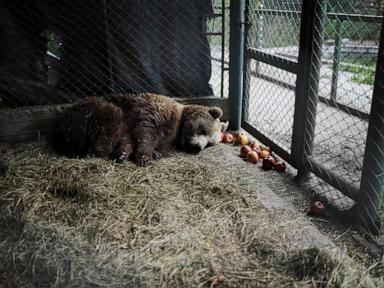
LIONS, tigers, and bears are finally receiving urgent veterinary care after years of neglect at the now-closed Lujan Zoo in Argentina. On Thursday, 62 big cats and two brown bears awaited evaluation and treatment, marking the beginning of a significant rescue operation. This initiative follows an agreement between the Argentine government and the international animal welfare organization, Four Paws, aimed at relocating these animals to larger wildlife sanctuaries abroad.
The Lujan Zoo, located on the outskirts of Buenos Aires, was shut down in 2020 due to escalating safety concerns. The facility had gained notoriety for allowing visitors to closely interact with the animals. In the years since its closure, conditions for the remaining creatures have deteriorated. Only a handful of dedicated zookeepers continued to care for the animals, but many did not survive the harsh conditions.
When Four Paws first assessed the zoo in 2023, caretakers reported a distressing decline in the population, with only 112 lions and tigers remaining, down from over 200 at the time of closure. Tragically, nearly half of these animals succumbed to various illnesses related to malnutrition, injuries from fights, and a lack of veterinary care.
Luciana D’Abramo, the chief program officer at Four Paws, expressed her shock at the situation. “Overcrowded is an understatement,” she noted, highlighting a cramped 3-meter by 3-meter cage housing seven female lions. The unnatural social interactions among the animals exacerbated their stress, with different species housed together in close quarters.
Following a memorandum of understanding with the Argentine government earlier this year, Four Paws formally took responsibility for the surviving wild animals in Lujan last month. The agreement includes a commitment from Argentina to ban the sale and private ownership of exotic felines, a significant step in animal welfare for the country.
Dr. Amir Khalil, the veterinarian leading the mission, pointed out the unprecedented scale of this operation. “This is one of our biggest missions… not only in Argentina or Latin America, but worldwide,” he stated. The organization has previously rescued animals from war-torn regions, but the sheer number and adverse conditions at Lujan posed unique challenges.
Veterinarians have begun assessing each animal individually, many of whom had not received basic medical care such as vaccinations or sterilization. The team quickly moved to treat the animals, performing emergency surgeries as necessary. One tiger received treatment for a bleeding gash, while others underwent procedures for dental issues and claw problems due to their confined living conditions.
As the rescue progresses, plans are underway for the relocation of these animals to more expansive sanctuaries where they can thrive in environments that closely resemble their natural habitats. Some former zookeepers express relief at the improved conditions, though they recall the zoo’s past fondly.
Alberto Díaz, who dedicated 27 years to caring for the big cats at Lujan Zoo, reflected on the emotional connection visitors had with the animals. “I’ve seen people cry because they could touch a lion or feed a tiger with a bottle,” he shared. The transition from a popular tourist attraction to a rescue operation highlights the urgent need for reformed animal welfare practices.
The rescue of these animals signifies not only a new chapter in their lives but also a broader commitment to addressing animal welfare issues in Argentina. As Four Paws continues its crucial work, the hope remains that these animals will soon experience a life free from confinement and neglect.