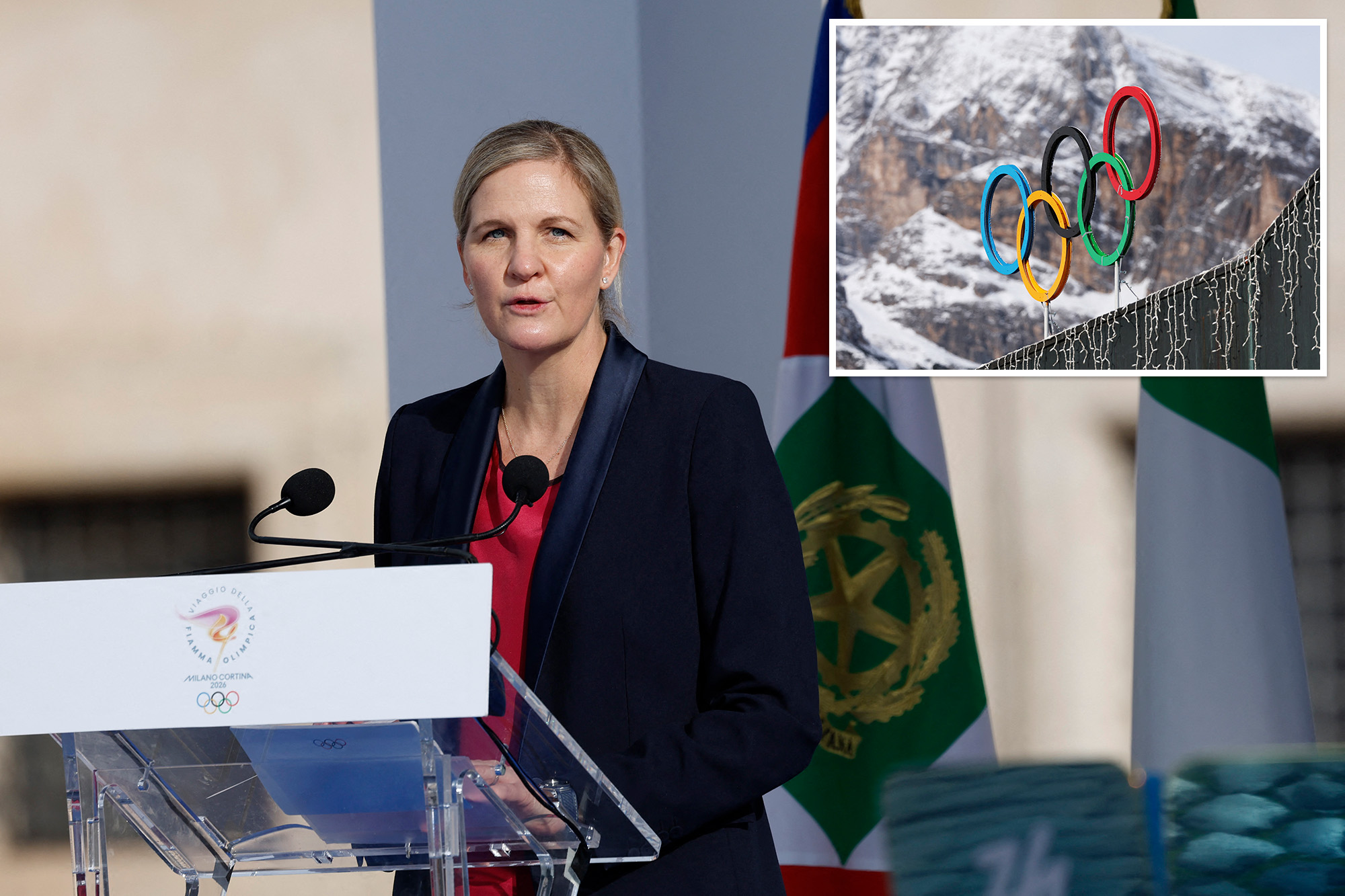
Russian athletes will not be allowed to compete under their national flag at the upcoming Milano Cortina 2026 Olympic Winter Games, even if a peace agreement is reached regarding the ongoing conflict with Ukraine. Kirsty Coventry, President of the International Olympic Committee (IOC), confirmed this decision in an interview with the Italian newspaper Corriere della Sera on Friday, stating, “At this stage, nothing would change the Committee’s decision.” The Winter Games are scheduled to take place from February 6 to 22, 2026.
The IOC is maintaining the sanctions imposed nearly four years ago following Russia’s invasion of Ukraine in February 2022. Coventry emphasized that dialogue remains open with the Russian Olympic Committees, but discussions with Russian President Vladimir Putin have not been confirmed.
Restrictions on Participation for Russian Athletes
Under the current regulations, athletes holding Belarusian or Russian passports can only participate as Individual Neutral Athletes (AINs). This status prohibits them from using their national flags, anthems, or team uniforms, and they are not permitted to compete in team events or take part in the opening ceremony. The IOC has yet to decide on the participation of AINs in the closing ceremonies, with the final decision expected during the Games.
The IOC’s website states that during victory ceremonies, AINs will have their own flag displayed and an anthem played, which notably has no lyrics. During the 2024 Olympic Games in Paris, 32 athletes with Russian or Belarusian passports from ten different sports competed without incident, demonstrating a relatively stable environment for individual competitors.
The IOC has clarified that athletes who openly support the war in Ukraine or are contracted to Russian or Belarusian military and national security agencies will be excluded from competition. This stance aligns with ongoing geopolitical tensions and the IOC’s commitment to maintaining the integrity of the Games.
Prospects for Peace and Implications for Sports
Ukrainian President Volodymyr Zelensky recently indicated that a U.S.-backed peace deal is “90% ready,” though he acknowledged that Russia’s hardline demands and lack of genuine concessions remain significant hurdles. These developments could potentially impact the future of Russian athletes in international competitions, depending on the evolution of the conflict and subsequent IOC decisions.
The continued exclusion of Russian athletes from representing their country raises questions about the intersection of sports and international politics. As the Winter Olympics approach, the situation remains fluid, with the IOC committed to upholding its regulations while navigating the complexities of global diplomacy.