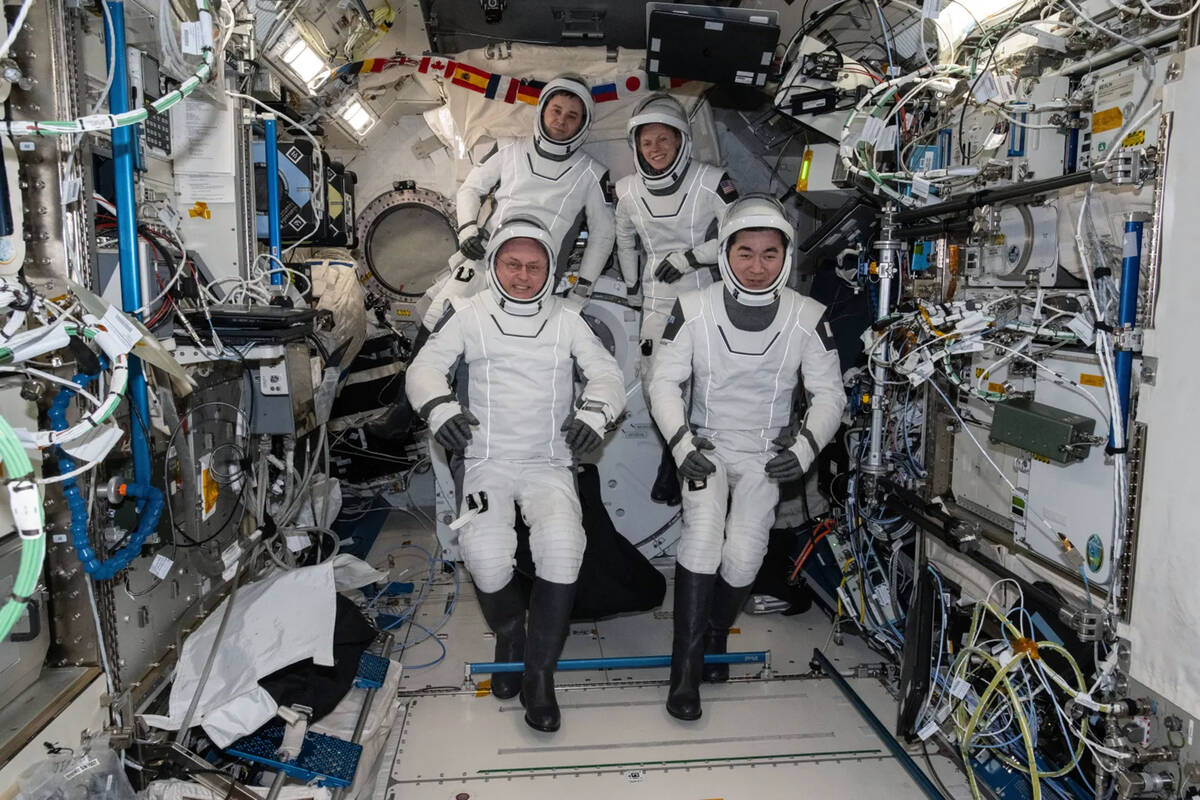
NASA has authorized the departure of SpaceX’s Crew-11 mission from the International Space Station (ISS), with a planned splashdown in the Pacific Ocean. The team, consisting of four astronauts, is set to leave the ISS on Wednesday at 17:05 ET and aims to land by 03:41 ET on Thursday. A live stream of the event will commence at 02:15 ET and can be accessed via NASA+, Amazon Prime, and NASA’s YouTube channel.
The Crew-11 mission includes NASA astronauts Zena Cardman as commander and Mike Fincke as pilot, along with Japan Aerospace Exploration Agency (JAXA) astronaut Kimiya Yui and Russian cosmonaut Oleg Platonov. Their return to Earth comes earlier than initially scheduled due to a medical issue affecting one of the crew members, although NASA did not disclose the specifics. This incident also led to the postponement of a planned spacewalk involving Cardman and Fincke.
Mission Highlights and Astronaut Backgrounds
The crew launched aboard the SpaceX Crew Dragon Endeavour from Kennedy Space Center on August 1, 2025. They were initially expected to remain on the ISS until late February, departing only after their relief team, Crew-12, arrived. With their early departure, the ISS population will decrease from seven to three, leaving behind NASA astronaut Chris Williams and cosmonauts Sergey Kud-Sverchkov and Sergei Mikaev, who arrived on a Soyuz spacecraft last November.
Fincke, who is on his fourth space mission, previously commanded the ISS during Expedition 74. He expressed mixed emotions about the early return, stating, “It’s bittersweet… it was really — it was a lot of fun.” Cardman, on her inaugural spaceflight, highlighted the camaraderie developed among the crew, saying, “What was not surprising to me was how well this crew came together as a family to help each other.”
Platonov and Cardman are both on their first missions, while Yui has previously visited the ISS. Fincke’s astronaut career began in 1996, and he was part of the final flight of the Space Shuttle Endeavour in 2011. Cardman became the last member of her astronaut class from 2017 to reach space.
Future Missions and Ongoing Operations
With Crew-11’s departure, attention shifts to Crew-12, which is currently scheduled to launch no earlier than February 15 from the Space Coast. Discussions are ongoing between NASA and SpaceX regarding the possibility of advancing Crew-12’s launch timeline. NASA Administrator Jared Isaacman confirmed that operations for Crew-12 will not conflict with the upcoming Artemis II mission, which could launch as early as February 6 from Kennedy Space Center’s Launch Pad 39-B.
The ISS has maintained continuous human occupation for over 25 years, primarily hosting three-person crews from 2011 to 2020 following the conclusion of the Space Shuttle Program. SpaceX’s involvement has reestablished regular crewed flights, conducting 11 crew rotations since the test mission Demo-2 in May 2020.
As preparations for the Artemis II mission progress, NASA plans to roll out the Space Launch System rocket and Orion spacecraft for testing as early as Saturday. If successful, this could set the stage for a historic crewed mission in early February, with additional launch opportunities available in March and April.
The successful return of Crew-11 underscores the ongoing collaboration between NASA and SpaceX, as they continue to push the boundaries of human space exploration.