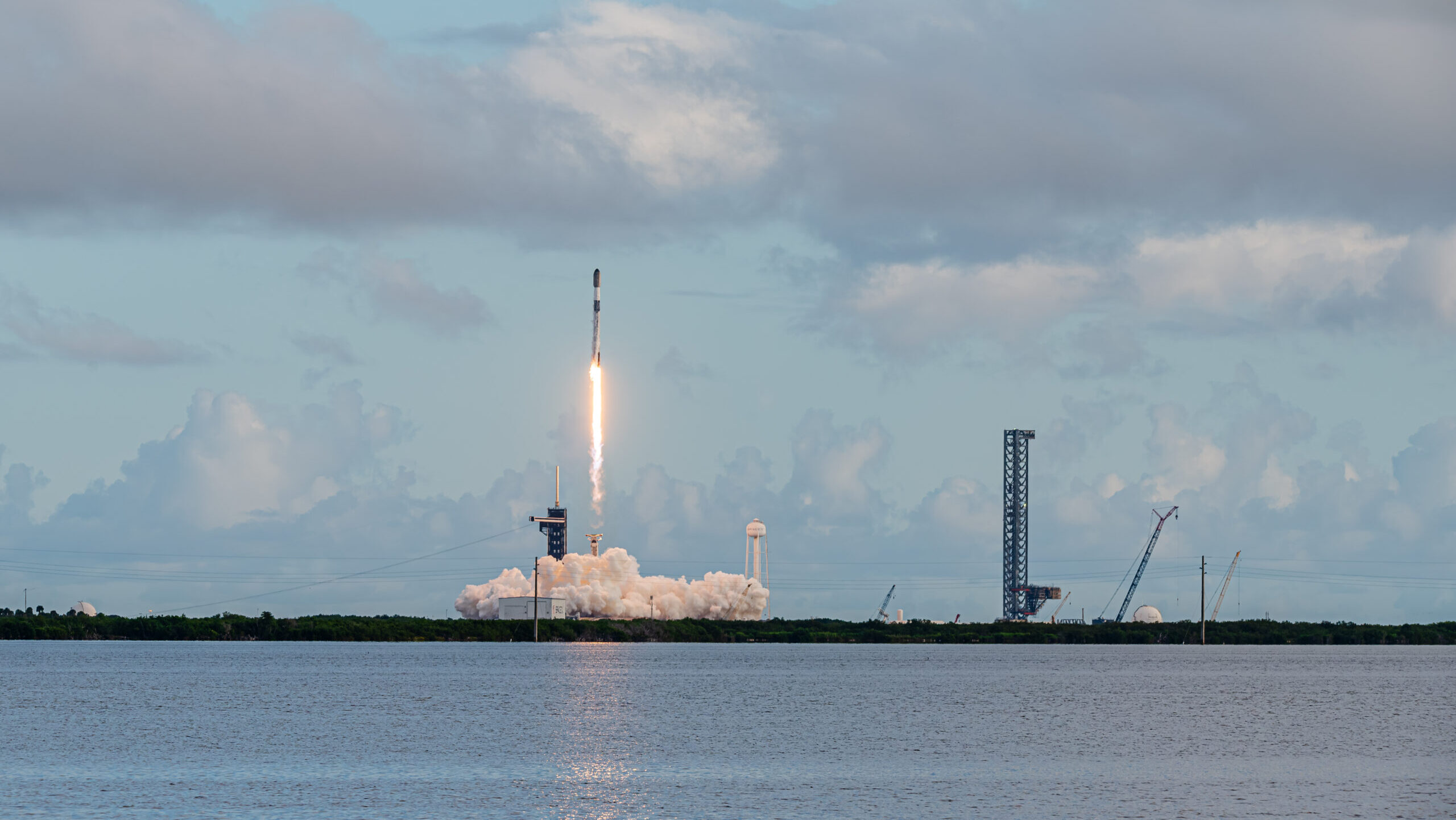
The global space supply chain is under increasing pressure, which could significantly impact the Pentagon’s plans for military space initiatives. In December 2023, China submitted an application to the International Telecommunication Union for a staggering 203,000 satellites, while SpaceX proposed a network of one million satellites. As nations and private companies ramp up their investments in satellite and launch vehicle production, experts warn that the current supply chain may not withstand the demands of this unprecedented growth.
Growing Demand for Satellites and Launch Vehicles
The surge in demand is driven primarily by the anticipated expansion of mega-constellations, particularly in low Earth orbit (LEO). Major players, including SpaceX with its Starlink and Amazon with its Project Kuiper, are racing to deploy large satellite networks. Amazon’s Project Kuiper, for instance, aims to establish a constellation of approximately 7,700 satellites, with 200 already in orbit.
As military forces worldwide seek to enhance their space capabilities, the U.S. Defense Department is at the forefront, striving to develop a more resilient space force structure. The Pentagon’s ambitious Golden Dome missile defense initiative is one example of this effort, which necessitates hundreds of new satellites in LEO and medium Earth orbit (MEO).
“I think demand is about to go through the roof for launch vehicles and satellite equipment in the next two to three years,” said Dave Cavossa, head of the Commercial Space Federation. He expressed concern that the U.S. industrial base may not be prepared to meet this escalating demand.
Potential Bottlenecks and Supply Chain Challenges
Industry experts note that the supply chains for commercial satellites closely overlap with those for defense systems, creating potential vulnerabilities. “Even vertically integrated companies depend on component suppliers for various parts like batteries and propulsion systems,” explained Scott Herman, chief technology officer at UK startup SatVu.
Identifying current and future bottlenecks is challenging, partly due to the competitive nature of the space industry. Tom Stroup, president of the Satellite Industries Association, emphasized the need for greater transparency in order to address supply chain issues effectively.
To tackle these challenges, the Aerospace Industries Association and the Commercial Space Federation are conducting studies to better understand the supply chain landscape. Findings from these studies are expected to be released soon, detailing specific risks and potential mitigation strategies.
Notably, recent remarks by Lt. Gen. Philip Garrant, commander of Space Systems Command, highlighted widespread concerns about supply chain issues related to critical components such as optical crosslinks and propulsion systems. These challenges could hinder the rapid development of new satellite constellations aimed at missile tracking and data transport.
Lockheed Martin’s Jeff Schrader noted a remarkable 632 percent increase in satellite and space vehicle deliveries compared to previous projections. To address potential supply shortages, Lockheed Martin is diversifying its supply chain, working with approximately 13,200 suppliers across 52 countries.
Critical raw materials, including rare Earth elements and specialized semiconductors, also pose significant supply chain challenges. The U.S. has become increasingly reliant on imports for these essential materials, with about 70 percent sourced from China, according to Travis Langster, former deputy assistant secretary of defense for international and industry engagement.
In response to these challenges, the U.S. Space Force has implemented various initiatives to monitor and address supply chain issues, including collaboration with organizations such as the Aerospace Corporation.
Market Dynamics and the Future of Military Contracts
The rapid commercial demand for satellite technology may shift the focus of manufacturers away from Department of Defense (DoD) contracts. Some industry insiders suggest that companies might prioritize lucrative contracts with commercial entities over defense contracts, given the economies of scale involved.
“The customer demand signal is lumpy and unpredictable,” stated Caleb Henry, director of research at Quilty Space. This unpredictability complicates suppliers’ ability to make informed investment decisions regarding scaling up production capabilities.
Several experts pointed to the inconsistency of DoD demand as a contributing factor to supply chain concerns. Chuck Beames, chairman of the SmallSat Alliance, asserted that the real issue lies not within the supply chain but in the DoD’s unclear demand signals. “When is the government going to put out RFPs [requests for proposals] to buy satellites?” he asked, highlighting the need for clarity in defense procurement.
Finally, ongoing tariffs and customs uncertainties, particularly those imposed during the Trump administration, have raised concerns about the cost of space-related components. “A lot of these are long-lead items,” Herman noted, emphasizing the importance of a stable economic environment for the industry.
The evolving landscape of the space supply chain presents both challenges and opportunities. As demand continues to surge, stakeholders will need to navigate these complexities to ensure the successful realization of both commercial and military space ambitions.