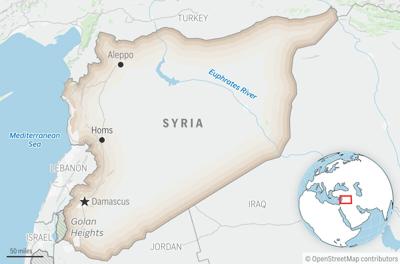
Thieves have stolen several ancient statues from the National Museum of Damascus, prompting the temporary closure of the facility. The theft, which involved artifacts dating back to the Roman era, was confirmed by officials from Syria’s Directorate-General for Antiquities and Museums. This incident highlights ongoing security challenges in a country grappling with the aftermath of a prolonged civil conflict.
The incident occurred on the night of Sunday, when thieves broke into the classical department of the museum. According to the officials, six marble statues were stolen, although one declined to specify the exact number of missing artifacts. The theft was discovered early Monday morning when museum staff found a broken door and several statues absent from their displays.
The National Museum of Damascus, located in the heart of Syria’s capital, houses a vast collection of antiquities that reflect the country’s rich historical legacy. Following the onset of the civil war, security measures were enhanced, with the installation of metal gates and surveillance cameras to protect the invaluable artifacts.
Despite these precautions, the recent theft underscores the vulnerabilities faced by cultural institutions in the region. The museum’s closure comes at a time when Syria is recovering from over 14 years of civil strife and the recent political changes following the fall of the Assad family’s 54-year rule.
Officials from the antiquities department, who spoke on the condition of anonymity due to government regulations, indicated that an investigation is currently underway. They emphasized the importance of recovering the stolen items and preserving Syria’s cultural heritage.
As the situation develops, the National Museum of Damascus remains a focal point for discussions about cultural preservation and security in a country that has endured significant turmoil. The theft serves as a stark reminder of the ongoing challenges in safeguarding historical artifacts amidst the complexities of political and social unrest.