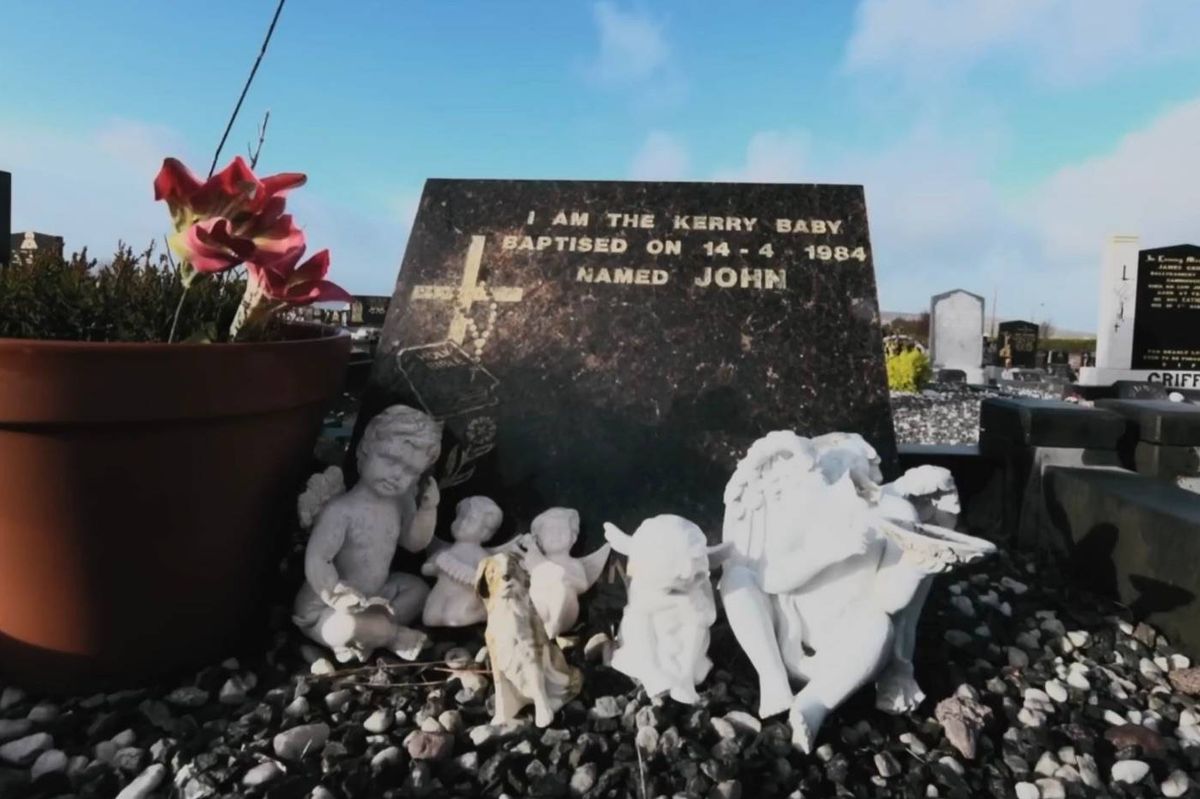
In a chilling case that has haunted Ireland for over four decades, the body of a five-day-old baby boy, later named Baby John, was found on White Strand beach in County Kerry on April 14, 1984. The infant had suffered 28 stab wounds and a broken neck, and despite extensive investigations, both the child’s parents and the perpetrator remain unknown.
Local farmer Jack Griffin discovered the lifeless body while jogging around 20:00. He described it as “pink in colour, face downwards with black hair,” a sight he initially tried to dismiss as a doll. The tragic reality dawned on him, leading to an immediate call to the authorities.
Upon arrival, the police murder squad from Dublin began to investigate the circumstances surrounding Baby John’s death. Their focus soon turned to Joanne Hayes, a 25-year-old receptionist and single mother from Abbeydorney, approximately 80 kilometers from the beach. Hayes had been admitted to a hospital on the same day Baby John was discovered, and medical staff confirmed she had recently given birth.
Investigators grew suspicious when there was no evidence of the baby she had conceived with a married man named Jeremiah Locke. Notably, she had a daughter, Yvonne, with him. As the investigation progressed, Hayes signed a confession stating she had given birth to Baby John and had killed him. Her family claimed they had disposed of his body in the sea. This led to charges of murder against Hayes, while her relatives faced related charges.
Yet, the confessions were soon retracted, with claims of coercion surfacing. During the same week Baby John died, Joanne had actually delivered a boy named Shane, who was either stillborn or died shortly after birth. She laid him to rest on her family farm. Blood type testing revealed that Shane’s blood type was O, matching his parents. In contrast, Baby John had a blood type of A, raising questions about Hayes’s involvement.
Despite the evidence suggesting otherwise, police speculated that Hayes may have experienced a rare case of superfecundation, where two babies could be conceived in quick succession by different fathers. This theory, however, lacked substantial backing and the case ultimately fell apart.
The fallout from the investigation led to the establishment of the Kerry Babies Tribunal, aimed at scrutinizing police conduct throughout the case. The inquiry faced severe criticism, especially regarding its treatment of Hayes, who, during testimony, became physically ill and had to leave the witness stand.
In a significant turn of events, DNA testing conducted in 2018 confirmed that Hayes could not have given birth to Baby John. Former Taoiseach Leo Varadkar issued a public apology to Hayes and her family for the wrongful accusations. The inquiry’s mishandling resulted in compensation of €2.5 million (approximately $2.9 million) for the family. Simon Harris, then Minister for Justice, called the treatment of Hayes “despicable and unacceptable,” marking a pivotal moment in Irish social history.
Although Joanne published a book titled My Story in 1985, she has largely remained out of the public eye since then. Recently, in 2023, two individuals—a man in his 60s and a woman in her 50s—were arrested in connection with the case but were released without charges. The mystery surrounding Baby John’s death continues, with his parents and killer still unidentified.
Speaking on the case’s ongoing investigation, Superintendent Flor Murphy reiterated the need for public assistance, stating, “I am again appealing to the public for any information in relation to the death of Baby John in 1984. Anyone who comes forward will be treated with sensitivity and compassion.” As the search for answers persists, the tragic legacy of Baby John remains a poignant reminder of unresolved loss and the need for justice in Ireland.