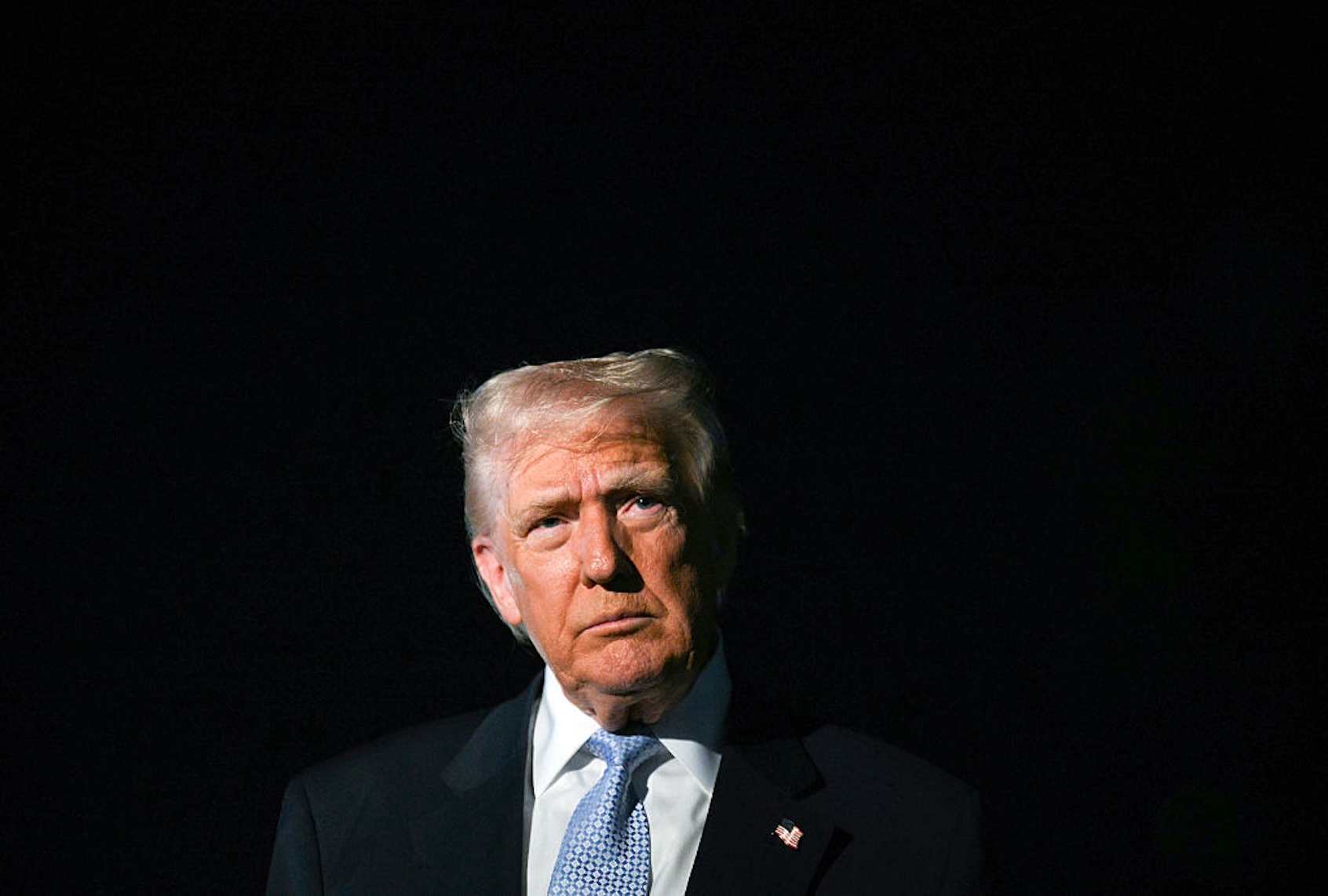
Former President Donald Trump recently stated that the only check on his power is his own sense of morality. In an interview with the New York Times, Trump made headlines by asserting that he is not constrained by any government entity, following a significant political incident involving the arrest of Venezuelan President Nicolás Maduro.
During the interview, which was shared on March 15, 2024, Trump was asked about the implications of his actions and the checks on his authority. He responded, “There is one thing. My own morality. My own mind. It’s the only thing that can stop me.” This candid admission raises questions about accountability and governance, particularly in light of Trump’s past political controversies, including multiple impeachments and ongoing legal challenges.
The former president’s comments come at a time when political tensions are high. He dismissed the need for international law, claiming he is “not looking to hurt people,” a statement that might be viewed as contentious given the context of his administration’s foreign policy decisions. Trump’s remarks come as the U.S. grapples with its role on the global stage, especially concerning relationships with countries like Venezuela and Taiwan.
In responding to the New York Times inquiry about the potential precedent set by Maduro’s arrest, Trump asserted that the situation in Venezuela represented a legitimate threat. He argued, “This was a real threat. You didn’t have drugs pouring into China. You didn’t have all of the bad things that we’ve had.” He emphasized that the circumstances surrounding Venezuela differ significantly from those in Taiwan, suggesting that such geopolitical dynamics influence his decision-making process.
Trump’s statements have sparked discussions regarding the implications of presidential power and the balance of authority in the U.S. government. Critics express concern that his view of accountability could lead to overreach, as he implies that his personal judgment is sufficient for making decisions that affect both domestic and international affairs.
As the political landscape continues to evolve, Trump’s remarks underscore a broader discourse on the limits of presidential power. With ongoing investigations into his actions during his presidency, his assertions may resonate differently with various segments of the population, raising fundamental questions about leadership and responsibility in a democratic society.
The implications of Trump’s claims are likely to be scrutinized closely as he navigates his post-presidency landscape. As the nation prepares for future elections, his comments serve as a reminder of the complex interplay between authority, morality, and accountability in political leadership.