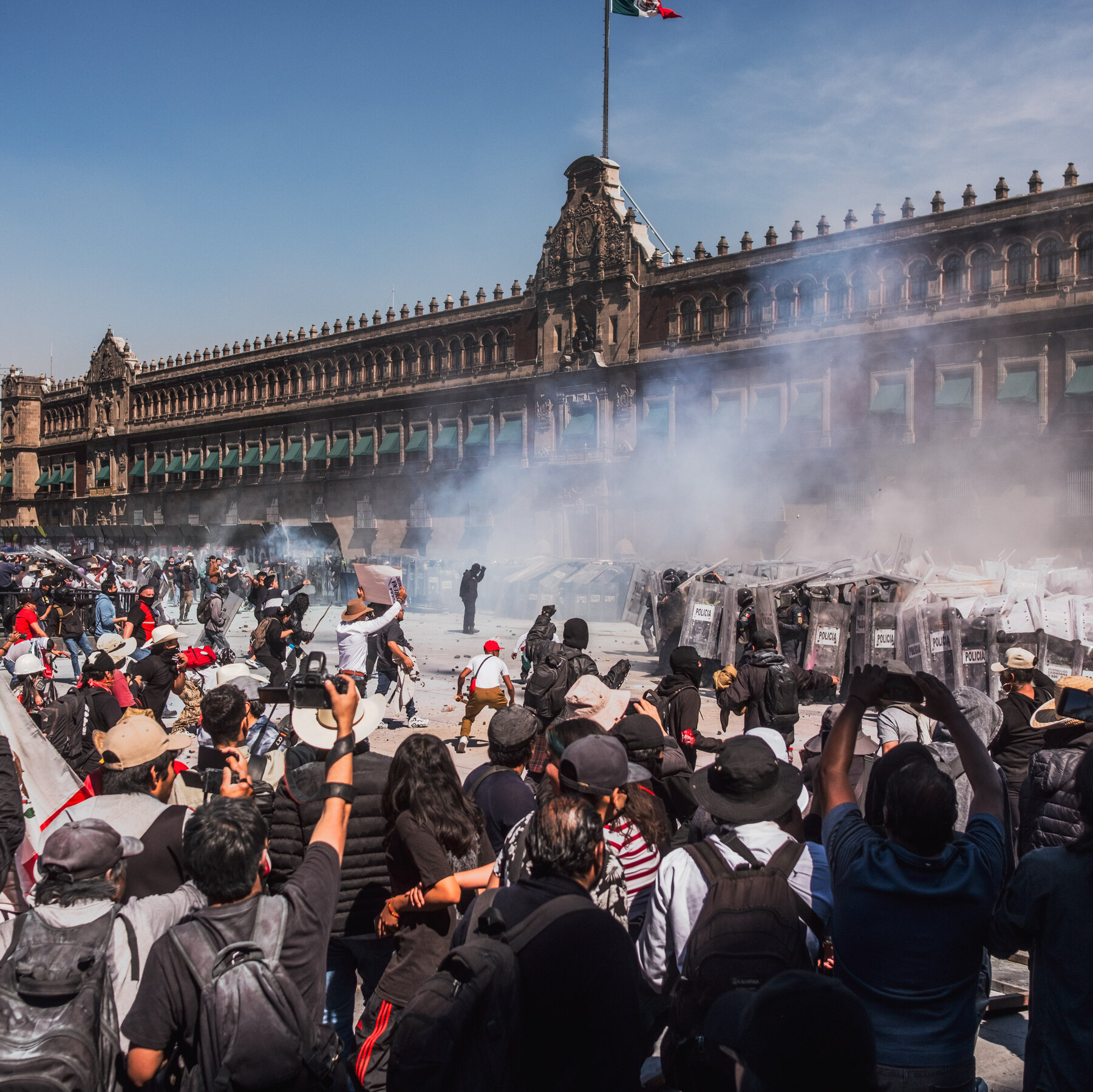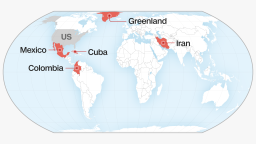
US President Donald Trump has expressed intentions to expand military efforts against Mexican drug cartels, a move he believes is essential for combating drug trafficking in the United States. This statement follows the US’s recent actions against Venezuelan leader Nicolás Maduro, who has been accused of “narco-terrorism.” During an appearance on the program “Fox and Friends,” Trump noted that the Mexican government has repeatedly rejected US proposals to “take out the cartels,” emphasizing the urgency of addressing the situation along the US-Mexico border.
In a follow-up statement, Trump reiterated his focus on targeting cartels on land after claiming that 97% of drugs entering the US by water have been intercepted. He stated, “We are gonna start now hitting land, with regard to the cartels.” The move may appear logical, given that Mexico is a significant source of fentanyl and serves as a primary transit route for cocaine from Colombia. However, experts caution that Trump’s understanding of the Mexican drug trafficking landscape is oversimplified.
Understanding the Complexity of Cartels
For decades, popular media has depicted Mexican cartels as hierarchical organizations led by infamous figures like Joaquín “El Chapo” Guzmán. In the 1980s and 1990s, a handful of cartels controlled the drug trade, primarily along the US-Mexico border. Today, this landscape has drastically changed. According to Eduardo Guerrero, director of Lantia Intelligence, approximately 400 different criminal groups now operate throughout Mexico—far more than in previous decades.
“The biggest ones have become more sophisticated and complicated,” Guerrero stated. The leading cartel, the Jalisco New Generation Cartel, comprises around 90 organizations, a significant increase from 45 in recent years. He explained that this fragmentation necessitates a more complex strategy to dismantle them, as merely apprehending top leaders would not significantly impact an industry valued at billions of dollars.
The prior attempts by Mexican authorities to follow a “kingpin” strategy have often backfired. A decade-long campaign launched around 2007 aimed at capturing prominent drug lords resulted in numerous arrests and deaths, but it failed to curb the flow of narcotics into the US. As Benjamin T. Smith, author of “The Dope: The Real History of the Mexican Drug Trade,” noted, taking down a cartel leader does not equate to stopping the drug supply. “As long as you have a major demand for the drugs, you’re not going to get rid of the supply,” he added.
The Political and Economic Intricacies
The situation is further complicated by the relationship between the cartels and the Mexican government. “No one is firmly in control, neither the cartels nor the government,” said researcher Falko Ernst. In certain regions, the government has established authority, while in others, armed groups dominate. This results in a complex power dynamic that does not lend itself to a simple solution.
Cartels have increasingly embedded themselves within the political structure, as evidenced during the 2024 national elections when crime groups attempted to install their own mayors in various regions. The campaign saw the assassination of over three dozen candidates due to intimidation, with many others withdrawing. The infiltration of local law enforcement by criminal organizations further complicates efforts to combat drug trafficking.
A study published in the journal Science estimated that Mexican cartels employ between 160,000 and 185,000 people nationwide, contributing to their resilience in the face of government crackdowns. Their ability to provide economic support to communities has solidified their power, making it increasingly difficult to dismantle their operations.
Following Trump’s remarks, White House spokeswoman Anna Kelly highlighted the administration’s commitment to enforcing the Monroe Doctrine, which aims to curtail external influence in the Western Hemisphere. She stated that the president has various options to protect the US from illicit narcotics that result in tens of thousands of American deaths annually.
In contrast, Claudia Sheinbaum, the president of Mexico, has maintained a cooperative relationship with the Trump administration while firmly asserting her country’s sovereignty. She emphasized that Mexico would not welcome US troops and is already taking measures to combat drug trafficking, such as deploying thousands of troops to the US border to intercept drugs and migrants.
Sheinbaum’s administration has also facilitated the transfer of numerous drug-trafficking suspects to the US, showcasing Mexico’s commitment to addressing the issue without direct military intervention from the United States.
Despite Trump’s assertions that “the cartels are running Mexico,” Sheinbaum downplayed his comments, noting that there has been effective communication between the two nations. She expressed confidence that US military action was unlikely, stating simply, “Yes,” when asked about its improbability.
Trump’s recent remarks have introduced a new level of uncertainty into US-Mexico relations. With military action against cartels now a topic of discussion, the implications could potentially strain ties with Mexico, which has become the US’s largest trading partner. As geopolitical expert Brenda Estefan noted, the US’s actions against Venezuela signal a shift in regional power structures that cannot be overlooked by any Latin American nation.
In summary, while Trump’s intentions to tackle drug cartels may stem from a desire to address a pressing issue, the complex reality of Mexico’s drug trade and its deep-rooted connections within both society and government present significant challenges. The path forward requires a nuanced understanding of the issues at play, rather than a singular military approach.