The United States Army is bolstering its defense capabilities through a significant partnership with the artificial intelligence startup TurbineOne. Under the directive of Secretary of Defense Pete Hegseth, the Army has entered into a $98.9 million contract with TurbineOne, aiming to integrate advanced AI technology into military operations. This collaboration marks a pivotal moment as the military adapts to modern warfare increasingly dominated by drones and AI-driven strategies.
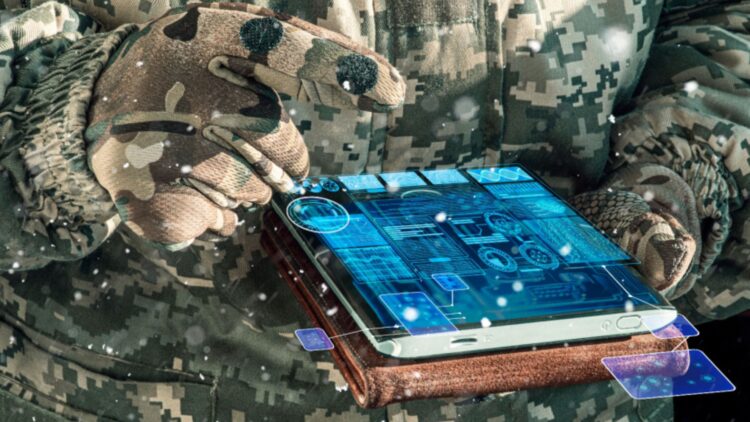
Founded by Ian Kalin, a former U.S. Navy nuclear engineer, TurbineOne has developed software designed to empower soldiers with enhanced threat identification and response capabilities. The software operates on various devices, including laptops, smartphones, and drones, ensuring that soldiers can access critical data even without a stable cloud connection. This advancement is essential in today’s fast-paced combat environment.
Enhancing Military Operations with Advanced AI
The U.S. Army is currently conducting tests of TurbineOne’s software within infantry and cavalry units, collecting valuable feedback that has led to over 200 software reviews in just one week. According to Andrew Evans, the director of strategy and transformation for the U.S. Army, the objective is to achieve a data processing speed that is 10 to 25 times faster than potential adversaries.
“This is the most volatile, complex, uncertain, and ambiguous environment in which we have operated,” Evans stated. “We are losing the advantage of being able to hide and conceal our footprint. Everyone is losing that advantage.” The integration of TurbineOne’s technology is seen as a critical step in maintaining a strategic edge in such conditions.
The software’s capabilities extend beyond simple data analysis; it can analyze large sets of infrared images, radar, and radio signals. Additionally, it can categorize threats and provide precise location information to assess risks effectively. Kalin emphasized that the technology addresses significant strategic threats faced by military forces, particularly in contexts where communication devices can inadvertently expose their positions.
Deployment and Future Implications
Moreover, the software allows for the coordination of drone swarms, an innovative feature that has already been tested in various military exercises. This capability enhances the Army’s operational flexibility, enabling coordinated attacks on targets.
The partnership with TurbineOne illustrates a broader trend in U.S. military strategy, where AI and technological advancements are increasingly relied upon to enhance national security. As military conflicts evolve, the integration of such technologies is vital for adapting to new challenges.
Kalin acknowledged the urgent need for advancements in military operations, stating, “In the war in Ukraine, the reality is somewhat dystopian, because if you turn on a cellphone or a radio signal, you become a target.” The lessons learned from ongoing conflicts continue to inform the development of technologies that aim to safeguard U.S. military personnel while improving their operational effectiveness.
The U.S. Army’s contract with TurbineOne is just one example of how artificial intelligence is reshaping national security strategies in 2026 and beyond. As military authorities continue to evaluate the software’s performance, the implications for future combat scenarios and defense policies are profound. With this partnership, the U.S. Army is positioning itself at the forefront of technological innovation in defense.