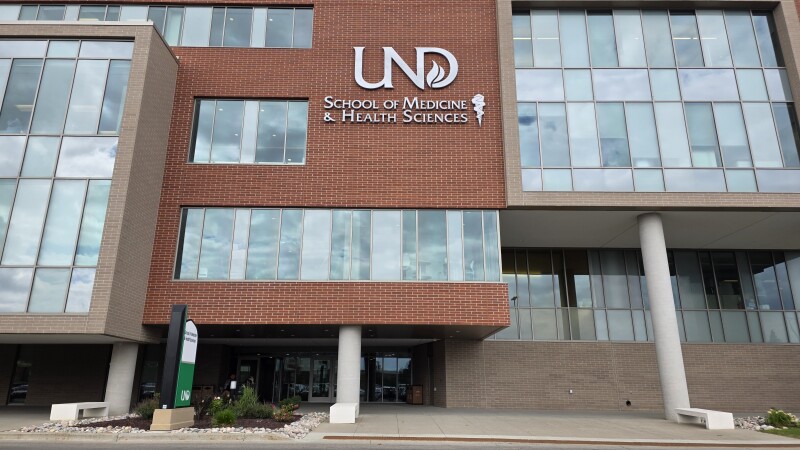
The University of North Dakota’s (UND) Department of Physical Therapy has achieved a significant milestone by receiving accreditation for its Physical Therapy (PT) Faculty Residency Program. This program is notable for being the fifth of its kind in the United States and the first to gain accreditation in the Midwest. The accreditation comes at a critical time when there is a nationwide shortage of qualified health care educators.
Gary Schindler, a professor of physical therapy at the UND School of Medicine and Health Sciences, emphasized the program’s objective: “Our goal is to prepare the resident to be the best faculty member they can be for a physical therapy department anywhere. This isn’t just good for UND. It’s good for the profession.”
Program Details and Structure
Each year, the Department of Physical Therapy will welcome one licensed physical therapist as a resident, allowing them to serve as a temporary faculty member while completing a two-year residency. During this time, residents will engage in teaching, curriculum design, and scholarly projects, alongside completing graduate-level coursework through the College of Education and Human Development. Upon completion, they will earn a College Teaching Certificate and have the opportunity to pursue an Ed.D. (Doctor of Education) or Ph.D. (Doctor of Philosophy).
As part of their training, residents will also participate in the Alice T. Clark mentoring program and a Faculty Development Workshop through the American Physical Therapy Association. Schindler noted that residents will not only teach but will also learn about governance in higher education and engage in research projects.
Addressing the Shortage of Educators
The shortage of physical therapists is a pressing issue across the United States, which has created a gap in the classroom for quality instructors. According to Cindy Flom-Meland, chair of the Department of Physical Therapy, this shortage is exacerbated by retiring faculty members. “What’s happening around the country is that people are retiring, resulting in faculty shortages. We see the residency as a pathway to additional faculty for us, and for Doctor of Physical Therapy programs in general,” she stated.
Furthermore, accrediting agencies require a certain number of research-oriented faculty with Ph.D. degrees to maintain program standards. Dave Relling, senior associate dean for health sciences at UND SMHS, highlighted that there are not many Ph.D.-trained physical therapists available, leading programs to develop their own faculty. He explained that a residency program can help fill these gaps, allowing departments to cultivate their future educators.
“This helps build the next generation of physical therapy educators at a time when they’re needed most,” Relling noted. He also mentioned that Schindler has reached out to various faculty across departments to provide residents with a broad perspective of academia, beyond just physical therapy.
Other universities that have established accredited PT Faculty Residency programs include Duke University in North Carolina, Nova Southeastern University in Florida, Rocky Mountain University of Health Professions in Utah, and the University of Colorado Anschutz Medical Campus.
The accreditation of UND’s PT Faculty Residency Program marks a proactive step in addressing the critical shortage of physical therapy educators, enhancing the quality of education and ultimately benefiting patient care in the field.