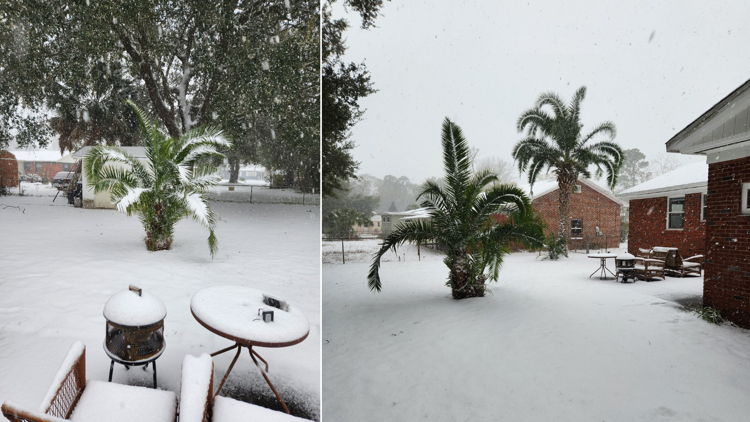
A remarkable winter event unfolded on January 21, 2025, as significant snowfall blanketed parts of Texas, Louisiana, and Florida, transforming these typically warm regions into a winter wonderland. The unexpected weather phenomenon covered an area stretching approximately 1,500 miles, leaving residents stunned and overwhelmed by the white landscape.
In Louisiana, the snowfall reached over 6 inches near Baton Rouge, with some areas of the Louisiana Delta receiving between 8 to 12 inches. The Florida Panhandle was similarly affected, with snow accumulation matching that of Louisiana, forcing residents to dig out of their homes and navigate treacherous roads. The heavy snowfall led to widespread disruptions, including closed highways and schools, as many Southerners experienced snow for the first time.
Rare Weather Patterns Bring Snow to the South
The Deep South is not known for blizzards, yet such snowfall events, albeit rare, do occur. Cold Arctic air occasionally moves southward, mixing with warm moisture from the Gulf of Mexico, which can lead to snow in these warmer climates. While cities like Atlanta, Birmingham, and Jackson have recorded snowfall within the last decade, the impact of such weather is profound due to the lack of infrastructure to manage it.
Unlike northern states equipped with snow removal fleets, southern states struggle to cope with even minimal snowfall. A single inch can cause traffic chaos, accidents, and gridlock, prompting schools and businesses to close. The National Weather Service sets different criteria for winter storm warnings in these regions; while northern states may issue warnings for accumulations of at least 6 inches, southern states do so for just 1 to 2 inches. This is due to the rarity of snow and the severe consequences it can bring.
In Alabama or Mississippi, a mere inch or two of snow can lead to hazardous conditions, including ice accumulation on power lines and trees. The combination of heavy, wet snow and freezing temperatures creates dangerous roadways, making even brief snowfalls impactful.
Snowfall Extends to Hawaii’s Peaks
Interestingly, snow is not exclusive to the mainland. Hawaii also experiences snowfall, particularly on its tallest volcanic peaks, Mauna Kea and Mauna Loa, which rise nearly 14,000 feet above sea level. These summits often accumulate several feet of snow during winter storms, demonstrating the unique climatic conditions that can exist even in tropical regions. Locals refer to this phenomenon as “pōhaku hau,” meaning “snow rock.” While this snowfall does not affect daily life for most residents at sea level, it highlights the diverse weather patterns across the United States.
Florida’s infrequent snowfall has become the stuff of local legend. The most notable event occurred on January 19, 1977, when snowflakes fell as far south as Miami. This singular event remains etched in the memories of long-time residents, with headlines proclaiming, “The Day It Snowed in Miami.” Since then, the northern regions of Florida, including Tallahassee and Pensacola, have seen sporadic snow and sleet during significant Arctic cold fronts.
From the beaches of the Gulf Coast to the volcanic summits of Hawaii, every U.S. state has recorded snowfall at some point in history. This variability is a reminder of how the right combination of cold temperatures and humidity can produce snow in the most unexpected locations. For southern states, it takes surprisingly little snow to disrupt daily life. Roads are not designed for freeze-thaw cycles, and vehicles typically lack snow tires. As a result, even a half inch of snow can paralyze communities unaccustomed to dealing with winter weather.
As the recent snowfall illustrated, the South is not completely immune to winter’s icy grasp. With changing weather patterns, these once rare occurrences may continue to surprise residents, leaving lasting memories of a winter wonderland in places characterized by sunshine.