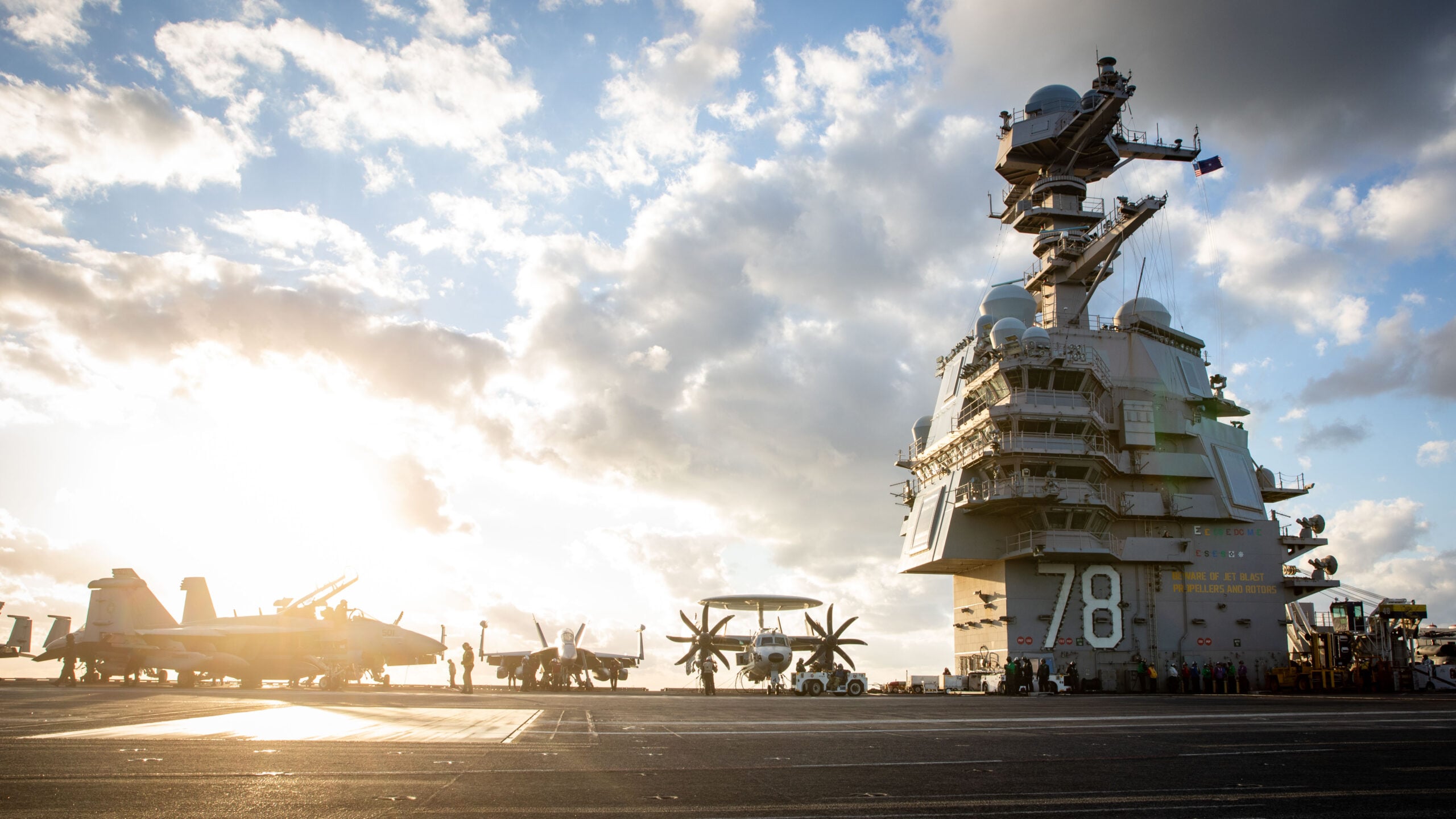
The aircraft carrier USS Gerald R. Ford (CVN-78) has been redirected from the Caribbean to the Middle East to support a U.S. naval buildup in response to ongoing tensions in the region. This shift could potentially lead to a record-setting deployment duration for the carrier, which is already a critical component of U.S. naval operations.
Currently stationed in the Caribbean Sea, the Ford will integrate with the Abraham Lincoln Carrier Strike Group at a time when the Iranian government is facing significant domestic unrest and engaging in complex nuclear negotiations with the United States. According to a U.S. official, this strategic move highlights the necessity of a robust military presence in light of escalating geopolitical challenges.
The New York Times first reported that the Ford could remain on deployment until May 2025. Originally, this strike group was deployed in June 2024, later retasked in October to operate in the Caribbean, and has been functioning under the U.S. Southern Command since mid-November. Notably, it provided aerial support during the capture of former Venezuelan President Nicolás Maduro in January 2025.
Extended Deployments Becoming Standard Practice
The U.S. Navy has seen a growing trend of extending East Coast carrier strike groups beyond their planned seven-month deployments. This change arises from an overburdened carrier force due to ongoing maintenance delays and increasing operational demands. Since December 2021, carrier strike groups have averaged nearly nine-month deployments, a significant increase from the historical norms.
Previously focused on Mediterranean operations, deployments have shifted toward the Middle East, particularly following the October 7, 2023 Hamas attacks in Southern Israel and rising Houthi aggression in the Red Sea. If the Ford remains deployed past April 15, it will surpass the 294-day record for carrier deployments established by the USS Abraham Lincoln in 2020. Should it continue operations into early May, it could rival the extended deployments exceeding 300 days that U.S. carriers historically undertook in the Gulf of Tonkin.
Data from USNI News indicates that carrier deployment metrics exclude training exercises and focus solely on operational missions tied to national tasking. This distinction is crucial for understanding the Navy’s operational tempo and readiness levels.
Future Deployments on the Horizon
Looking ahead, the next two U.S.-based carriers slated for deployment are the USS George H.W. Bush (CVN-77) from Norfolk, Virginia, and the USS Theodore Roosevelt (CVN-71) from San Diego, California. The Bush has recently initiated its final graduation exercise, a prerequisite for certification for national tasking that typically lasts at least one month. However, the Navy has demonstrated a willingness to expedite this process in light of pressing operational needs.
The announcement of the Ford’s new mission comes as the Navy works to optimize its carrier deployments amid ongoing efforts to recapitalize its surface and carrier fleets. The evolving military landscape necessitates a responsive and agile naval strategy, underscoring the importance of the Ford’s role in the Middle East.
As the situation develops, the Ford and its accompanying strike group are expected to play a pivotal role in shaping U.S. maritime operations and responding to emerging threats in the region.