Political uncertainty has deepened in Venezuela following the recent ousting of former President Nicolás Maduro. While many citizens initially expressed hope for a governmental transition, the prevailing atmosphere suggests a continuation of the existing regime. The U.S. military’s capture of Maduro over the weekend sparked optimism among opposition supporters, who anticipated significant changes. However, as days passed, that optimism has begun to fade.
The Venezuelan government has intensified its grip on power, with no political prisoners released since Maduro’s removal. Authorities have arrested individuals accused of celebrating his capture, indicating a swift response to any potential dissent. The security landscape remains heavily fortified, characterized by the presence of masked paramilitary groups, known as “colectivos,” and military intelligence agents in civilian attire patrolling the streets.
A recent classified intelligence assessment has revealed that key figures from the Maduro administration, including the newly sworn-in interim president Delcy Rodriguez, are likely to maintain their positions of power. This assessment coincided with remarks from U.S. President Donald Trump, who dismissed exiled opposition leader Maria Corina Machado as a viable candidate for leadership, further complicating the opposition’s prospects.
For many Venezuelans, including 34-year-old architect Michelle, this situation is disheartening. “For many years I wished for my country’s government to change, and I thought that when that day came I would feel very happy. But that’s not the case,” she stated. Michelle, who returned to Venezuela last year, voiced concern that the country’s future is being overlooked in the broader geopolitical struggle for resources.
Trump has expressed a keen interest in Venezuela, a nation rich in oil reserves. He recently announced that Venezuela would “be turning over” up to 50 million barrels of oil to the U.S., projecting that this revenue would benefit both nations. Yet, many Venezuelans harbor skepticism about these intentions, fearing that their country is merely a pawn in a larger game.
Not all in the opposition share this pessimism. Luis Mata, a former political prisoner, remains hopeful. “It’s like eating a pizza — they go slice by slice. We have to trust the process,” he remarked, highlighting the complexity of the situation. Mata, who was imprisoned for four months in Tocorón Jail after the controversial elections on July 28, 2024, believes that change is imminent now that Maduro is no longer in the country.
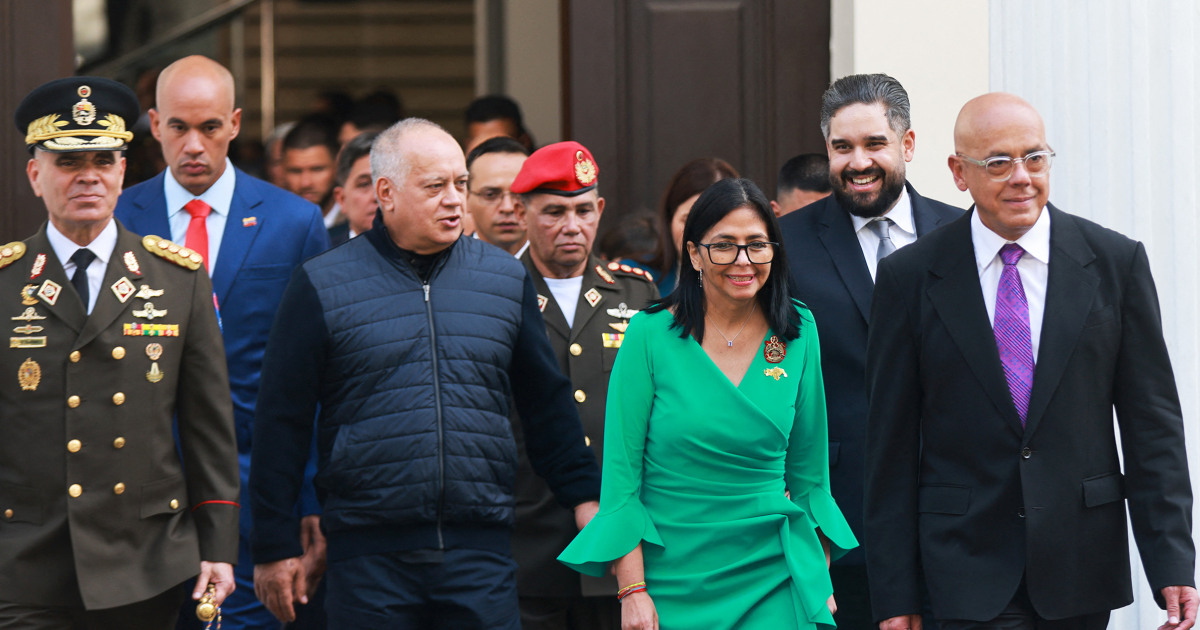
Despite the uncertainty, the Maduro regime is working to project stability. Rodriguez’s inauguration was marked by a display of solidarity among the country’s leadership, with prominent figures such as Diosdado Cabello and Vladimir Padrino participating in the ceremony. Such imagery serves to reinforce the government’s continuity amid claims from leaders like Trump that the U.S. is “in charge” in Venezuela.
James Story, former U.S. ambassador to Venezuela, commented on the government’s crackdown on individuals perceived to have supported U.S. efforts to remove Maduro. “They’re going to go round them up, and they’ve already rounded up some people. If they’re doing that, then we don’t run the country,” he explained during an event hosted by the Atlantic Council.
In the streets of Caracas, perspectives vary. Marlenis, a domestic worker, expressed a sense of resignation. “What else can we lose?” she questioned, reflecting on the hardships faced by Venezuelans over the past 25 years. “If everything goes badly, people are already used to bad things.”
As Venezuela navigates this complex landscape, the interplay between hope and despair continues to shape the sentiments of its citizens. The recent political developments have laid bare the challenges ahead, leaving many to wonder what the future holds for a country rich in resources yet struggling for stability.