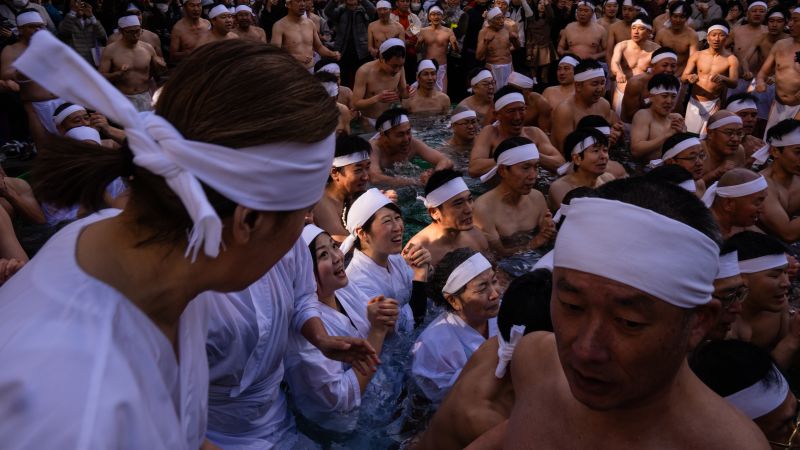
Dozens of worshippers plunged into icy waters at the Teppuzu Inari Shrine in Tokyo on January 1, 2024, continuing the traditional New Year ritual known as Kanchu Misogi. This event, aimed at purifying the soul and praying for good health, attracted around 100 participants, primarily men in white loincloths and women in flowing white robes.
As the ritual commenced, percussion and flute music reverberated through the shrine’s courtyard, setting a solemn yet invigorating atmosphere. The participants, after gathering their courage, clasped their hands in front of their chests and chanted “Haraedo-no-Okami,” invoking the Goddess of purification. Their prayers focused on cleansing their sins as they prepared for the physical challenge ahead.
The event featured a knee-deep pool filled with ice chunks, where participants engaged in warm-up exercises and a jog around the shrine before taking the plunge. Once in the water, they scooped icy water over themselves using wooden buckets, shouting “ai” to strengthen their resolve while being cheered on by fellow worshippers.
This year marks the 71st anniversary of the ritual at the Teppuzu Inari Shrine, which originally served as a purification rite for the local deity. Over the years, it has evolved to allow public participation, with registration closing early this year due to heightened interest from the community.
Purification holds significant importance in Shinto, Japan’s ancient indigenous religion, which dates back centuries. Practitioners believe that purification rituals help to ward off evil spirits. Shinto teachings emphasize that sacred spirits inhabit nature and all living things.
Japan’s New Year celebrations, known as Shōgatsu, run from January 1 to January 3 and integrate ancient Shinto customs with broader cultural practices. A prominent tradition during this period is “Hatsumode,” the first shrine visit of the year, where individuals pray for good fortune and health.
Japan is a constitutional monarchy led by Emperor Naruhito, who is regarded as the highest authority in Shinto, despite limited political powers. The continuation of Kanchu Misogi illustrates the enduring significance of these ancient traditions in modern Japanese society.