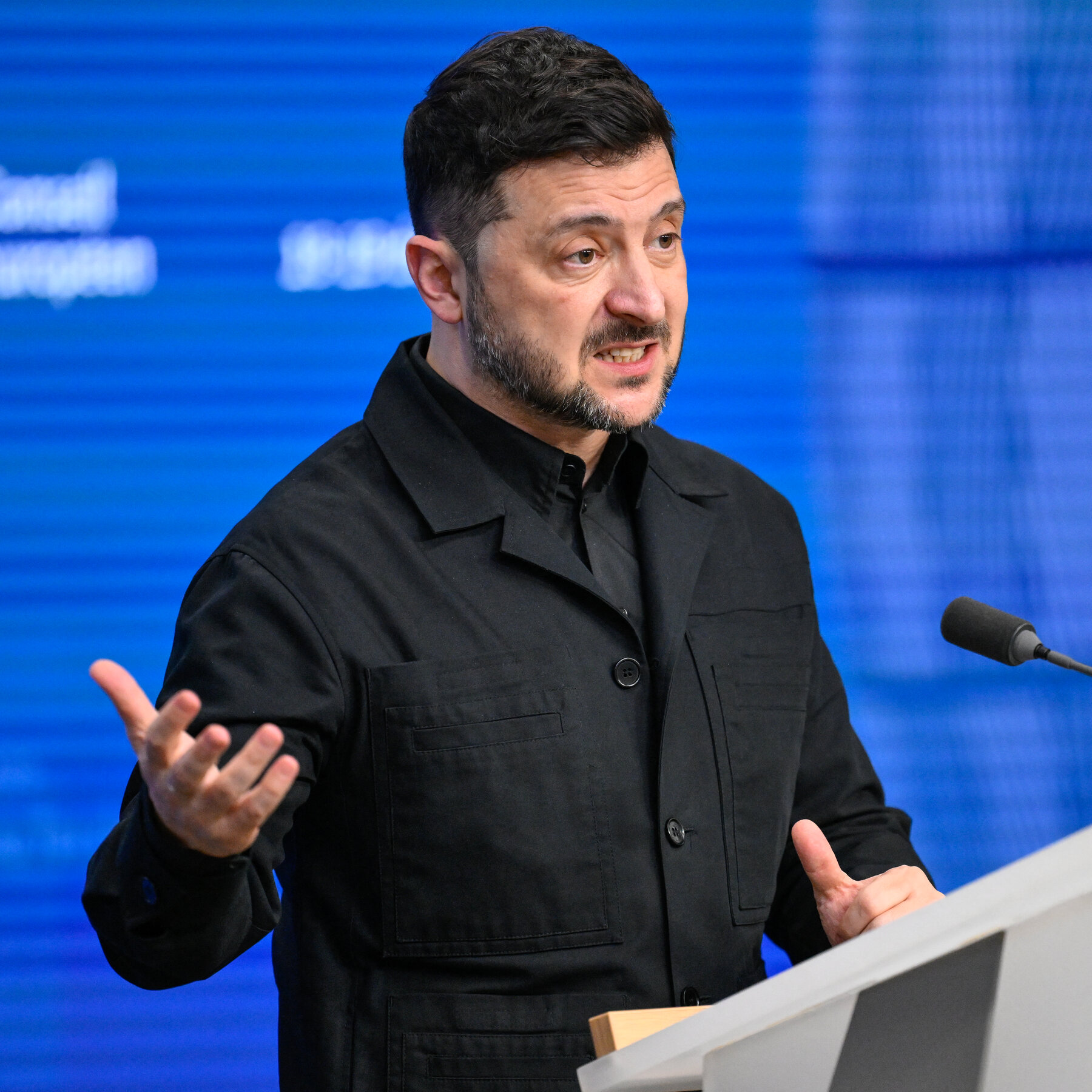
Ukrainian President Volodymyr Zelensky called on European Union leaders in Brussels to release frozen Russian assets to bolster his country’s defense efforts amid ongoing conflict. During the summit, Zelensky emphasized that without access to these funds, Ukraine would face significant challenges in maintaining its drone production capabilities, which have become crucial for its military operations.
The request for the release of approximately €300 billion (around $320 billion) in frozen Russian assets underscores the financial strain on Ukraine as it continues to defend itself against Russian aggression. Zelensky articulated that this financial support is not merely a matter of military necessity but a strategic imperative for Ukraine’s sovereignty and security.
In his address to the EU leaders, Zelensky highlighted the vital role drones play in modern warfare, stating that a reduction in production could severely impact Ukraine’s operational effectiveness on the battlefield. He remarked that while the nation has made significant strides in drone technology, the lack of funding could undo much of that progress.
The EU has been actively involved in supporting Ukraine since the beginning of the conflict, providing military aid and economic assistance. However, Zelensky’s appeal marks a shift towards seeking more direct financial resources that can be utilized immediately for military purposes.
There has been a growing consensus among EU member states regarding the importance of addressing the financing of Ukraine’s defense. Some leaders echoed Zelensky’s call for action, recognizing that the release of these funds could enable Ukraine to enhance its military capabilities significantly.
The issue of frozen Russian assets has been a contentious topic within the EU, with some member states advocating for their use in support of Ukraine. Others remain cautious, concerned about the legal implications and the precedent it may set for international financial protocols.
As the conflict continues, Zelensky’s request may serve as a pivotal moment in the EU’s approach to supporting Ukraine. The leaders’ discussions in Brussels are expected to pave the way for further deliberations on financial strategies to assist Ukraine in its ongoing struggle.
In conclusion, Zelensky’s appeal for the release of frozen Russian funds reflects the urgent need for financial resources to sustain Ukraine’s defense capabilities. As the war persists, the response from EU leaders will be closely monitored, with potential implications for both Ukraine’s military strategy and the broader geopolitical landscape.