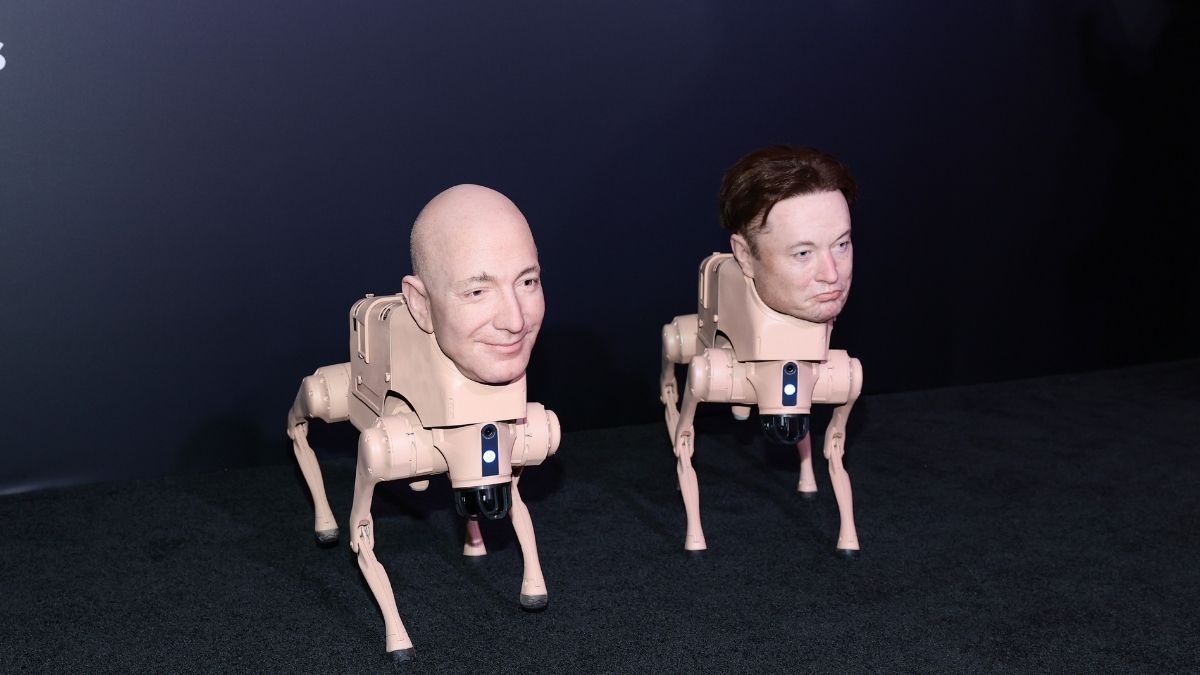
Robot Dogs With Elon Musk and Jeff Bezos Heads Roam Berlin Museum, Sparking Viral Frenzy
BERLIN — A striking new art installation featuring robotic dogs topped with hyper-realistic silicone heads of tech titans Elon Musk, Jeff Bezos, and other global power figures is capturing worldwide attention right now. The surreal exhibit is currently mesmerizing visitors at Berlin’s Neue Nationalgalerie, where these uncanny machines roam freely, igniting a firestorm of online reactions and intense debate.
The provocative display, titled “Regular Animals,” is the work of the renowned American digital artist Mike Winkelmann, famously known as Beeple. Famous for his cutting commentary on technology and capitalism, Beeple has pushed the envelope with this latest creation, using life-like silicone heads modeled after influential figures including Elon Musk, Jeff Bezos, Mark Zuckerberg, and Kim Jong Un.
Viral Sensation Grips Social Media and News Outlets
Footage of the robotic dogs wandering through the museum went viral after it was shared by The Associated Press on April 29, 2026. The video quickly spread across platforms including X (formerly Twitter), where it sparked a surge of commentary ranging from fascination to discomfort.
“Robot dogs with hyper-realistic silicone heads modeled after Elon Musk, Mark Zuckerberg, Jeff Bezos, Kim Jong Un and other global figures roam around a Berlin museum in an exhibit by American artist Beeple,” the AP captioned their post.
Adding to the installation’s eerie nature, the robotic dogs “poo” printed images of the museum surroundings on the ground, visuals altered by AI technology to reflect the tones and personalities of the figures they wear. Integrated cameras capture these moments, amplifying the unsettling lifelike effect.
Artist Explains Powerful Message Behind the Spectacle
Beeple shared with the Associated Press that the exhibit is a deliberate commentary on the immense control tech billionaires have on public perception in the digital age. He highlighted, “Our view of the world is shaped by tech billionaires who own powerful algorithms that decide what we see and what we don’t see.”
He emphasized that unlike traditional power structures, these individuals wield influence through invisible tech mechanisms. “They don’t need to lobby the U.N. or get legislation passed — they just change algorithms overnight,” Beeple noted, underlining the urgency of recognizing this new form of authority.
Why This Matters to US and Delaware Readers
As Delaware continues to evolve as a tech and innovation hub, especially with its concentration of tech firms and data centers, the exhibit’s message resonates locally and nationally. The portrayal of tech moguls as mechanized, unpredictably roaming entities invites reflection on the dominance of digital platforms shaping American society and governance.
The exhibit reignites the urgent debate over algorithmic transparency, digital ethics, and the unchecked power of Silicon Valley giants—a crucial conversation for all Americans in 2026 navigating information overload and fast-changing tech landscapes.
What to Watch Next
The installation is expected to remain on display at the Neue Nationalgalerie for several more weeks, drawing continued visitor interest and online scrutiny. Art critics, tech analysts, and cultural commentators are closely watching how public opinion evolves around this fusion of art, technology, and political satire.
Meanwhile, in the broader US context, policy makers and rights groups are debating new regulations around algorithmic control and the accountability of tech giants. Beeple’s installation adds visible, tangible urgency to these discussions at a time when algorithmic influence impacts elections, news dissemination, and cultural attitudes.
For Delaware’s digitally connected residents and the broader American public, this eye-catching, unsettling spectacle is a stark reminder: the real power of tech moguls is no longer abstract—it’s roaming museums and social feeds, challenging how we see and understand the modern world.