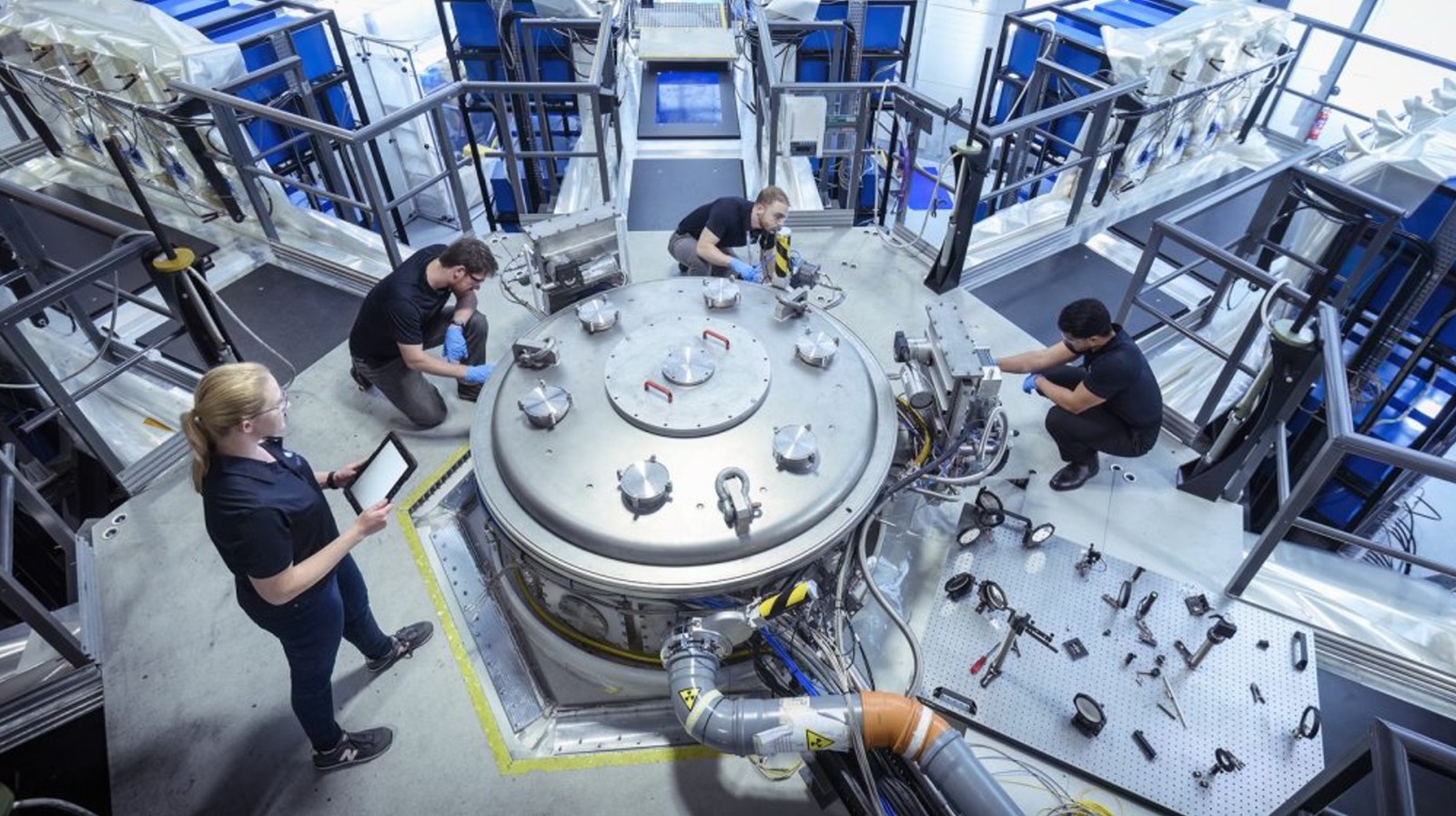
A significant advancement in fusion power has emerged from the United Kingdom, bringing humanity closer to harnessing what could be a virtually limitless energy source. First Light Fusion (FLF) has successfully developed a method for achieving “high gain” inertial fusion, a milestone that may eventually lead to the creation of commercially viable fusion reactors.
Fusion power derives energy from the heat released during nuclear fusion reactions, where two light atomic nuclei merge to form a heavier nucleus. This process releases substantial energy, and if effectively harnessed, could provide a sustainable alternative to fossil fuels. Despite decades of research, no operational fusion reactor has yet been established; however, FLF’s recent breakthrough marks a notable step forward in the quest for sustainable energy.
First Light Fusion’s Innovative Approach
The innovative technique, known as FLARE (Fusion via Low-power Assembly and Rapid Excitation), has the potential to achieve a gain of 1,000. This is a significant leap from previous experimental gains, such as the gain of four reported by the U.S. Department of Energy’s National Ignition Facility in May 2025. In the context of fusion power, “gain” refers to a situation where the energy produced by a fusion reaction exceeds the energy required to initiate it.
FLARE operates by separating the compression and heating processes of the fuel. By compressing the fuel first, FLF generates a large surplus of energy through a method known as “fast ignition.” This approach is a practical application of technology that had previously been theoretical, positioning FLF as a leader in the field.
According to FLF’s white paper, just one kilogram (2.2 lbs.) of the fusion fuel contains as much energy potential as approximately 10 million kilograms (22,046,226 lbs.) of coal. Achieving ignition, which involves heating the fuel to around 100 million kelvin (179,999,540 degrees Fahrenheit), is a critical step in the process, as it leads to a self-sustaining reaction.
A Long Journey Ahead
While this achievement represents a monumental step in fusion research, it is crucial to recognize that it is only one part of a lengthy journey toward establishing practical fusion power plants. The ultimate goal is to replace non-renewable energy sources with a far more efficient and environmentally friendly alternative.
The implications of a successful FLARE process are far-reaching. If it performs as theorized, it could enable the establishment of multiple fusion reactors capable of generating sufficient energy to power the planet. This development could significantly reduce reliance on coal and gas, thus mitigating emissions that contribute to climate change.
The global energy landscape is on the brink of transformation, and the advancements in fusion power research could soon redefine how energy is produced and consumed. As breakthroughs continue to emerge, the prospect of achieving sustainable and limitless energy may be more a question of when rather than if.