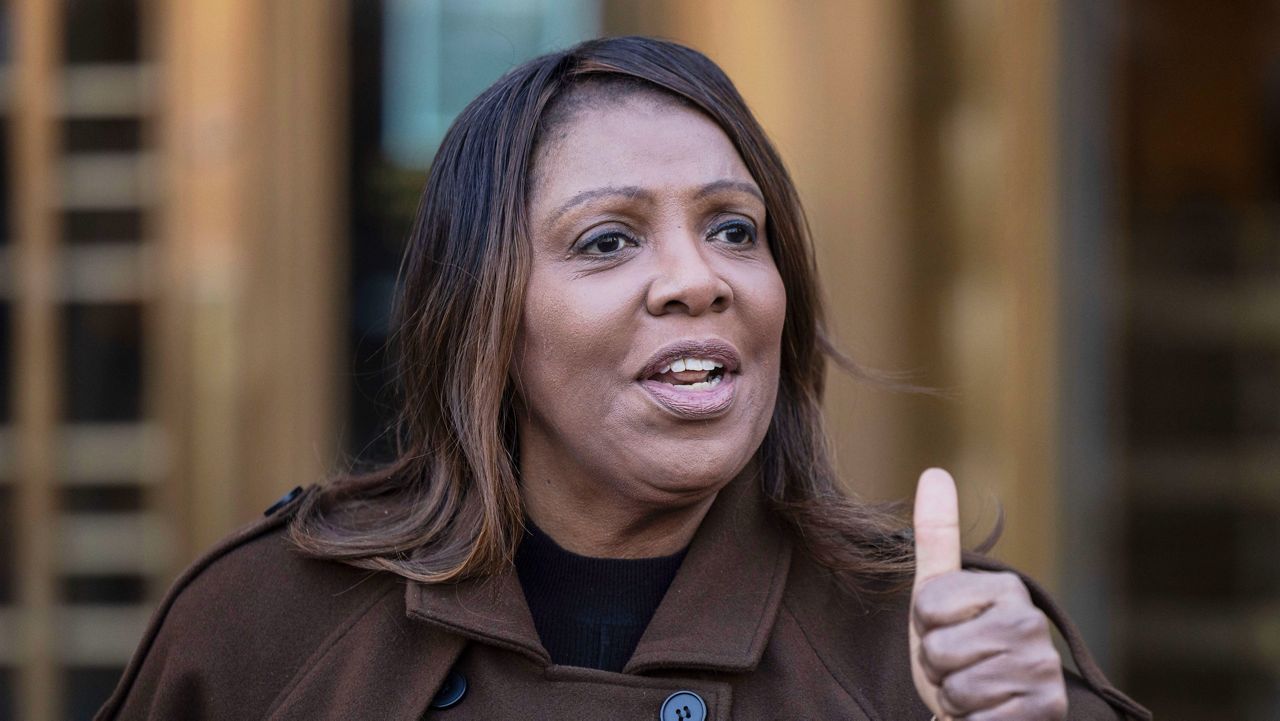
UPDATE: New York Attorney General Letitia James has just announced a bold move alongside a bipartisan coalition of 36 attorneys general to urge Congress to reject provisions in the National Defense Authorization Act that would restrict state-level regulation of artificial intelligence (AI). The coalition warns that such restrictions pose a serious threat to public safety and security.
As congressional leaders deliberate on this critical legislation, James emphasizes the need for states to protect their residents from the potential dangers of AI technologies. “Every state should be able to enact and enforce its own AI regulations to protect its residents,” she stated. The urgency of the matter is underscored by alarming reports about AI chatbots adversely affecting children’s mental health and the proliferation of AI-generated deepfakes leading to scams.
New York is ramping up its AI regulatory efforts. New regulations effective this month mandate that AI companion operators implement safety features that monitor user engagement, alerting them if they are interacting for extended periods. Additionally, protocols are in place for instances of suicidal ideation, including automatic referrals to crisis centers.
Another significant legislative development is the Responsible AI Safety and Education (RAISE) Act, pending approval from Gov. Kathy Hochul. This bill would require major AI companies to disclose safety protocols and hold developers accountable for public safety threats, including restrictions on using AI for creating bioweapons.
Despite uncertainty at the federal level, New York is committed to balancing safety regulations with economic development pressures. Justin Wilcox, executive director of Upstate United, advocates for a “smart” regulatory approach. He highlights the need for investments in the power grid and a diversified energy portfolio, arguing that current climate laws hinder these necessary changes to maintain energy reliability.
Conversely, some bills in the New York legislature aim to impose limits and reporting requirements on energy consumption by data centers, adding another layer of complexity to the regulatory landscape.
Dr. Michael Mandel, vice president and chief economist at the Progressive Policy Institute, has developed a toolbox for states shaping AI policy. His strategies include enhancing the energy grid and fostering educational partnerships, like Empire AI, to stimulate job growth. Mandel insists that any initiatives must be coupled with robust tax incentives to attract innovation.
The stakes are high as the coalition pushes back against federal overreach, asserting that local governments are best equipped to implement tailored solutions for AI regulation. The outcome of this legislative battle will have lasting implications for safety, innovation, and the future landscape of AI governance in the United States.
As this story develops, stakeholders and residents alike are urged to stay informed about the ongoing discussions in Congress and the potential impacts on state authority over AI regulations.