
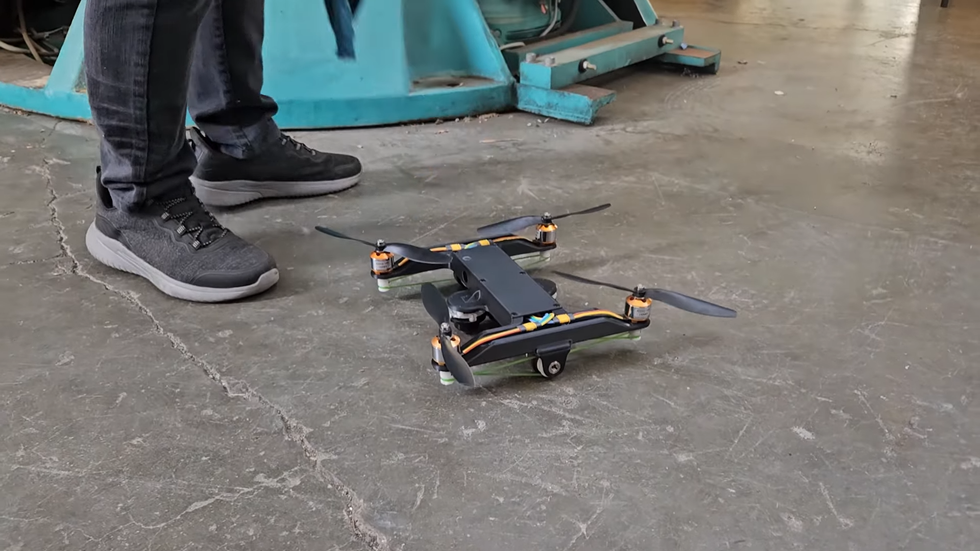
Recent advancements in robotics have showcased remarkable innovations, particularly with the development of a drone that can both drive and fly seamlessly. This hybrid capability reflects the ongoing evolution in the field, where versatility and functionality are increasingly prioritized. The latest updates were highlighted in the weekly segment by IEEE Spectrum, which features a collection of captivating robotics videos and a calendar of upcoming events.
Highlighting Innovations in Robotics
One fascinating example of design innovation is the NEO robotic hand. While its aesthetic appeal is commendable, some experts express concerns about the fragility of its fingers, raising questions about durability in practical applications. Another noteworthy project comes from Pollen Robotics, which offered a playful Halloween message through its recent social media updates, demonstrating the lighter side of robotics.
Collaboration across academic institutions is evident in various projects. For instance, the Smart Microsystems Laboratory at Michigan State University and the GRASP Lab at the University of Pennsylvania have contributed significant research to the field, furthering the understanding and capabilities of robotic systems.
At the upcoming IROS 2025, the Astribot will be showcased for its ability to autonomously manage tasks, emphasizing its practicality in real-world applications. The event will gather experts from various institutions, including the Max Planck Institute and Naver Labs, to discuss advancements and their implications.
Other notable entries include a paper from the Autonomous Robots Lab at the Norwegian University of Science and Technology, which explores the operational efficiency of non-humanoid robots. These systems, while not designed to mimic human form, are proving to be effective and cost-efficient alternatives for various tasks.
Upcoming Events and Educational Insights
In the realm of academic contributions, the Carnegie Mellon University Robotics Institute is hosting a seminar featuring Yuke Zhu from the University of Texas at Austin. The seminar, titled “Toward Generalist Humanoid Robots: Recent Advances, Opportunities, and Challenges,” aims to delve into the potential future of humanoid robotics and the hurdles that lie ahead.
With these developments, the robotics community continues to push boundaries, combining creativity with engineering prowess. As researchers and developers collaborate, the prospect of advanced robotic systems that can operate in diverse environments becomes increasingly tangible. The innovations presented in recent videos and upcoming seminars are a testament to the vibrant future of robotics.
Engagement from the public and academia alike is essential as these technologies evolve. Enthusiasts and experts are encouraged to participate in discussions and contribute their own events for future editions of the IEEE Spectrum robotics feature.


