San Diego, CA — San Diego State men’s basketball is facing unprecedented challenges as exploding player salaries and power-conference spending upend college hoops recruiting. With payrolls surpassing $20 million at many top programs, the Aztecs are caught in the middle — a powerhouse program stuck with a mid-major budget, struggling to hold on to top talent.
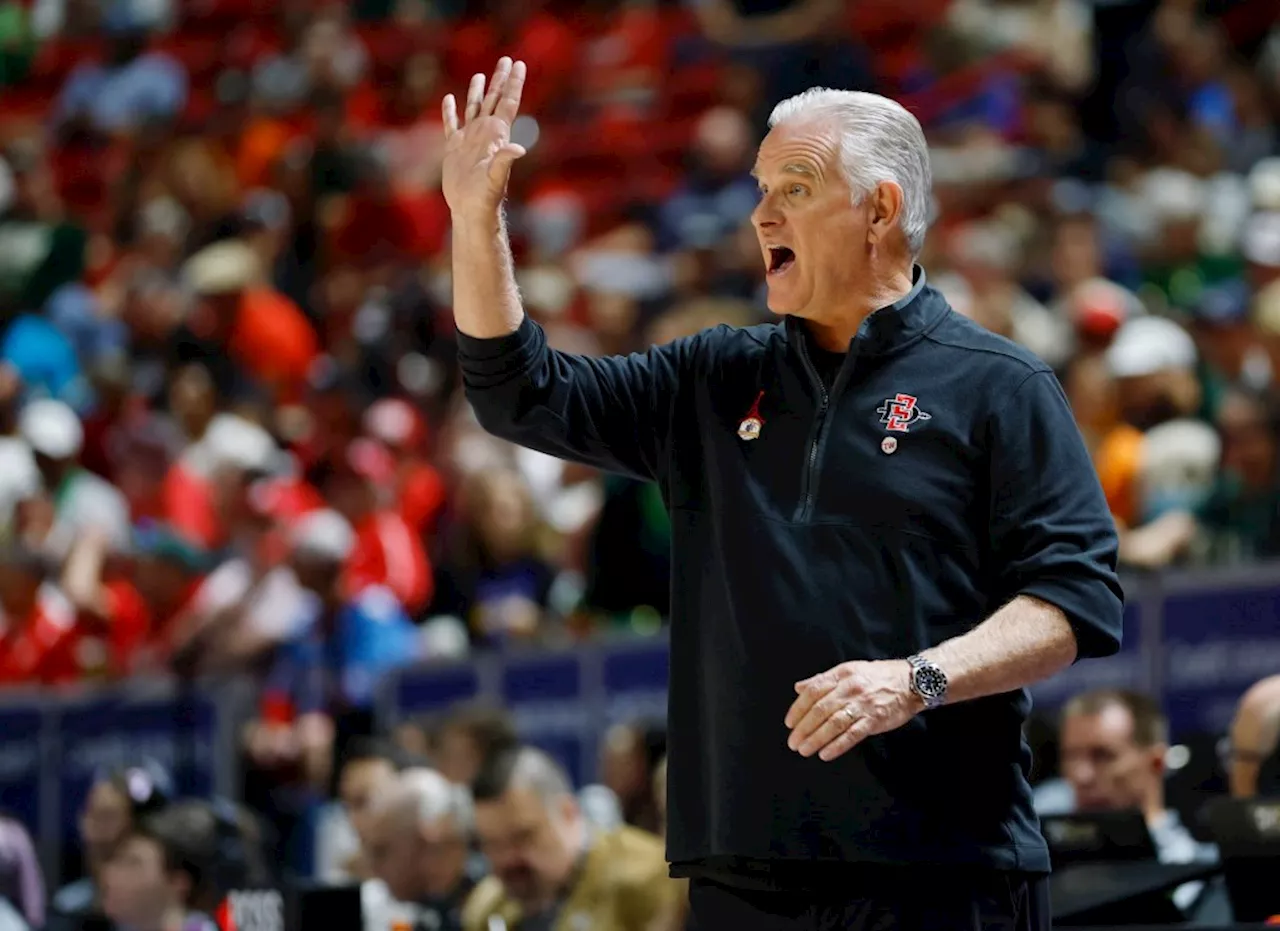
Coach Brian Dutcher recently confirmed the shifting landscape, noting, “There’s a lot of money available out there, and power conference schools have more money than anybody.” Yet SDSU, a longtime Mountain West contender, must adapt quickly to retain its competitive edge against well-funded ACC, Big Ten, and Pac-12 programs.
Power Conferences Poaching Aztecs Talent with Massive Pay
In a reversal of historic trends, SDSU has lost 11 players to power conferences in just the last four years while attracting only one notable transfer, Reese Dixon-Waters from USC in 2023. This spring alone, the Aztecs saw six key players depart for schools including Providence, DePaul, Creighton, Oregon, Nebraska, and Virginia Tech — each receiving combined NIL offers totaling an estimated $9 million to $10 million.
Dutcher revealed that last year’s roster had a theoretical value of $12 million in player contracts — a figure SDSU did not match thanks to sharp scouting and finding high-upside, undervalued players. Still, the team faces intensifying pressure as power programs leverage massive TV deals to bankroll bigger NIL packages and player salaries.
Rebuilding by Uncovering Hidden Gems and Global Talent
With direct bidding wars out of reach, the Aztecs have shifted recruiting tactics toward “panning for gold” in overlooked areas. Dutcher spotlighted new signees like a 6-11 center from his hometown who overcame knee surgery, a guard who rose from Division III and low-major teams, and international pros such as Italy’s David Torresani, a speedy point guard and under-20 European champion.
This new global approach marks a significant change from SDSU’s historical focus on Southern California talent. The international players bring pro experience, often facing stiffer competition overseas than in college basketball.
MESA Foundation and NIL Growth Fuel New Team Dynamics
San Diego State’s NIL collective, the MESA Foundation, launched in 2022-23 with a modest budget of $350,000. That figure has swelled to an expected $4 million to $5 million this upcoming season, including revenue sharing and donor contributions. Despite these increases, the athletic department reportedly operates with eight-figure deficits, highlighting financial strain.
Yet Dutcher remains confident. “I’ve dealt with a lot of eras of basketball,” he said. “I embraced it; I will put together a team next year that Aztec fans will be proud of.” The challenge is forming chemistry with just four returning players and integrating diverse new talent into a roster resembling a puzzle.
Why This Matters to Delaware and U.S. College Basketball Fans
SDSU embodies the emerging divide in college basketball between the “haves” and “have-nots” as power conferences dominate the NIL market. With roughly 20 to 25 programs expected to field payrolls over $20 million next season, programs like San Diego State face growing hurdles to stay competitive, similar to how some Major League Baseball teams navigate uneven payroll landscapes.
The Aztecs’ story underscores how recruiting battles and NIL spending are reshaping college basketball nationwide — creating ripple effects across smaller programs and geographic regions, including the Atlantic region where Delaware fans watch the ACC and Big East fuel NIL spending wars.
Next Steps and What to Watch
San Diego State is preparing for what might be one of its most challenging nonconference schedules in school history, stacked with power-conference opponents. How effectively the Aztecs can gel their eclectic roster by the season’s tip-off will be critical.
Meanwhile, the expanding arms race in college basketball NIL payments raises profound questions about competitive balance and the future of mid-major programs nationwide. SDSU’s approach of patient scouting and international recruiting may serve as a blueprint for others navigating this new environment.
Brian Dutcher: “Time will tell. You think you have a good team, but until you put them on the same page, you don’t really know.”